Canada is moving toward one of the most aggressive digital safety regimes in the developed world, and that matters because it could redraw the rulebook for how Google, Meta and AI companies make money from engagement.
Canada Safe Social Media Act Targets Big Tech

The Liberal government’s Safe Social Media Act would bar under-16s from social platforms unless firms can prove “sufficient safeguards,” create a digital safety commission with audit and enforcement powers, and extend liability to AI chatbots that encourage delusions, suicide ideation or other harmful behavior. That is a direct challenge to the business model of the largest platforms, which still rely on maximizing time spent, ad load and algorithmic amplification to monetize attention.
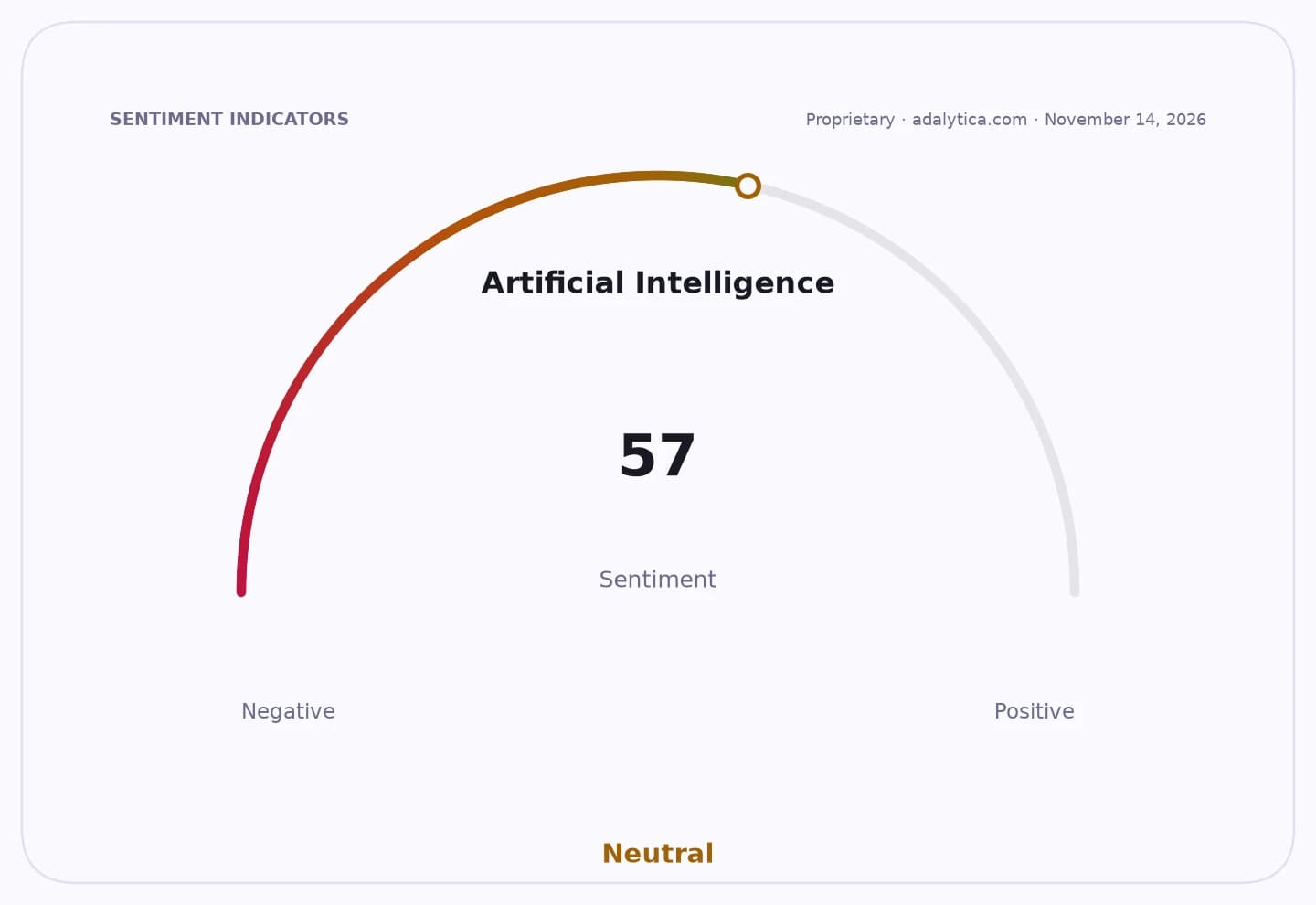
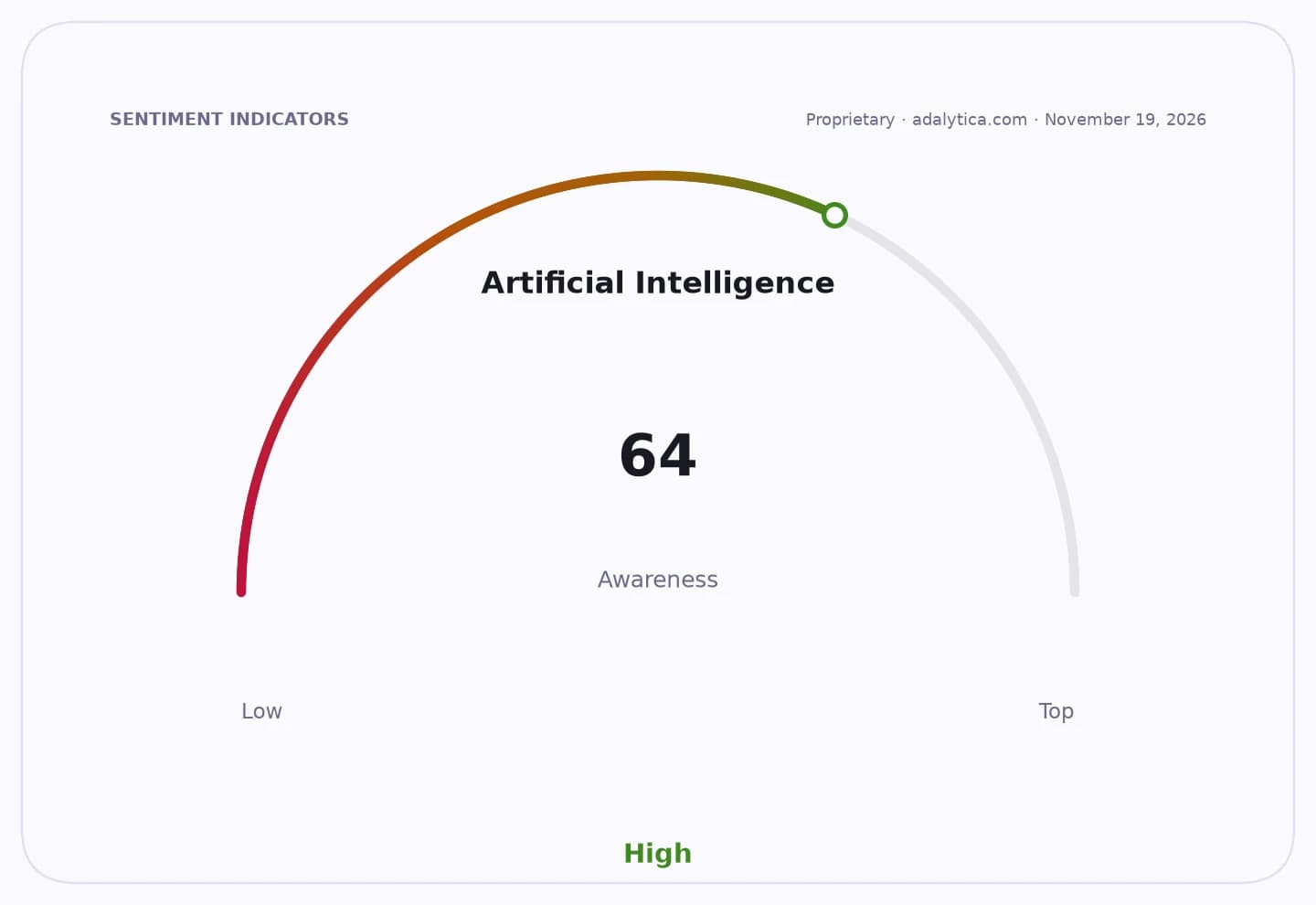
Sentiment Indicators
Artificial Intelligence
For investors, the issue is not just compliance cost. It is precedent. Canada is effectively testing whether a middle power can force Big Tech to internalize the social costs of its products without waiting for Washington. If Ottawa succeeds, lawmakers elsewhere will have a template for tougher age-gating, transparency and product-safety rules — all of which could pressure margins, slow product rollouts and raise legal risk across the sector.
That is why Imran Ahmed’s arrival in Ottawa is more than activist theater. The founder of the Center for Countering Digital Harm has spent years helping shape digital safety laws in the U.K., EU, Australia and U.S. states, and he now has an office in Canada to push for country-specific research and tougher enforcement. His presence signals that the fight over platform accountability is shifting to another jurisdiction that matters politically and economically.
The timing is especially sensitive for Alphabet and Meta, whose shares have already been volatile. Alphabet’s stock has fallen to $267.39 from $382.50 in May, while Meta dropped to $562.63 from a September peak of $777.59. Those declines do not prove regulation is the sole driver, but they do show how exposed mega-cap tech can be when growth expectations collide with rising policy risk, heavy AI spending and investor fatigue. Alphabet’s RSI near 42 and Meta’s around 39 point to momentum that has already cooled sharply, while both are trading well below recent highs.
The broader market story is that digital platforms are no longer being judged only on user growth and ad pricing. They are being assessed as critical infrastructure with social obligations. That shifts capital toward the companies best positioned to absorb compliance costs, build safer products and defend their moats — while increasing the penalty for firms that treat regulation as an afterthought.
Big Tech will fight the bill, and it may water down before becoming law. But even a diluted version would reinforce a trend investors should not ignore: the era of easy scale in social media and consumer AI is giving way to an era of oversight, liability and operating discipline. In that environment, the winners are likely to be the platforms with the deepest engineering budgets and the strongest balance sheets. The losers are the ones still pretending this is only about content.
| Entity | Gains | Losses |
|---|---|---|
| Canadian regulators | ▲More oversight power | ▼Political backlash |
| Google/Alphabet | ▲Can adapt with scale | ▼Higher compliance burden |
| Meta | ▲Safety-products opportunity | ▼Monetization pressure |
| OpenAI and AI peers | ▲Demand for trusted AI tools | ▼Liability risk |