The Canadian dollar slipped against the U.S. currency as investors moved into safer assets, with a broad risk-off tone pushing up Treasury demand and reinforcing the dollar’s appeal.
Canadian dollar slips as investors move to safety

The move matters because it reflects more than a day of thin FX trading: when markets turn defensive, capital typically exits cyclical currencies such as the loonie and rotates toward the greenback and U.S. government debt. That dynamic can tighten financial conditions in Canada, raise the local cost of imported goods and complicate the outlook for the Bank of Canada if the currency weakness persists.
Sentiment IndicatorsⓘProprietary · adalytica.com · October 9, 2026
This is a snapshot — live sentiment, awareness and momentum for 130+ markets update continuously in the dashboard.Open AlphaPulse

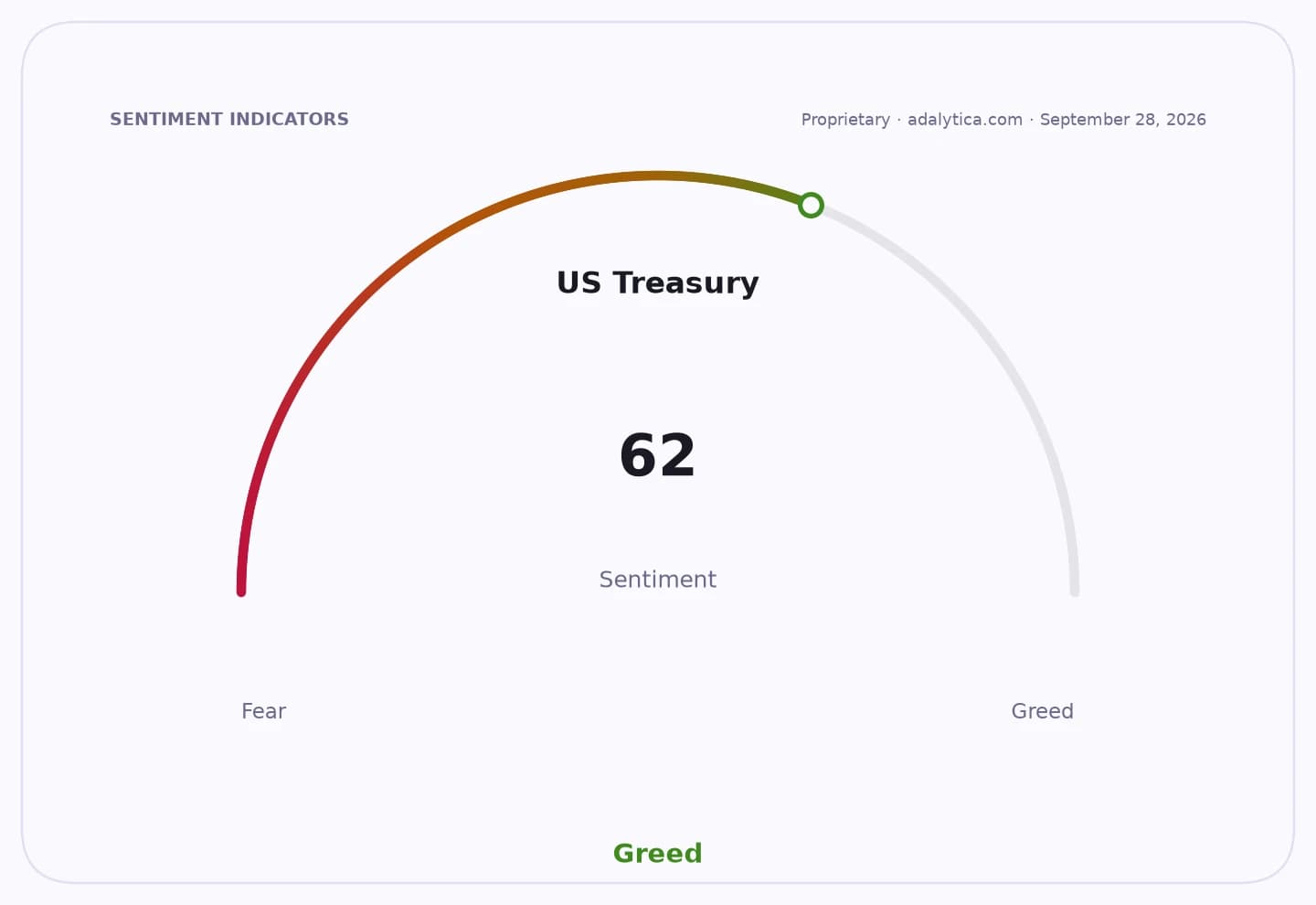
The U.S. dollar has gained traction alongside a rebound in Treasuries, while risk appetite has softened across equities. Adalytica’s U.S. dollar trade signals show sentiment at 57, in neutral territory, but awareness remains elevated at 79, consistent with a market that is paying close attention to the dollar’s move. By contrast, Adalytica’s U.S. Treasury bond signals have shifted to “fear,” with sentiment at 22, underscoring the extent of the flight to safety.
That defensive bid was visible in the bond market as well. The 10-year Treasury yield was around 5.27%-5.31%, while the 2-year yielded 4.77%-4.84%, levels that keep U.S. returns attractive relative to other developed markets and support the dollar in periods of stress. TLT, the iShares 20+ Year Treasury Bond ETF, has also been volatile, with the fund trading near 77.87 after a sharp slide earlier in the week, highlighting how quickly duration assets can swing when investors reposition for growth and policy uncertainty.

For the loonie, the pressure comes at an awkward time. FXC, the CurrencyShares Canadian Dollar Trust, was last at 68.70, below its 50-day moving average of 69.89 and its 200-day average of 70.49, a technical backdrop that suggests the currency remains vulnerable if risk aversion persists. Its relative strength index at 21.1 points to an oversold reading, which may limit immediate downside, but does not by itself change the broader tone.
The near-term question for investors is whether this is a temporary safety trade or the start of a more durable shift in positioning. If U.S. yields stay elevated and equity volatility remains firm, the dollar’s bid could extend and keep the Canadian currency under pressure. A stabilization in equities or a pullback in Treasury yields would likely give the loonie some breathing room, but for now the market is still favoring cash, dollars and government bonds over higher-beta currencies.
| Entity | Gains | Losses |
|---|---|---|
| U.S. dollar | ▲Safe-haven demand | ▼Risk-sensitive currencies |
| U.S. Treasuries | ▲Flight-to-quality inflows | ▼Equity risk appetite |
| Canadian dollar | ▲Oversold bounce potential | ▼Broad risk-off flows |
| Canadian importers | ▲Softer domestic demand pressure | ▼Higher FX hedging costs |