Several Canadian mortgage lenders and mortgage-adjacent firms have landed on Great Place to Work’s 2026 workplace lists, a small but telling sign that competition for talent is becoming a strategic issue in a sector still under pressure from high borrowing costs, weak housing affordability and slower loan demand.
Canadian mortgage lenders land on workplace lists
Capital Asset Lending topped the category for companies with fewer than 100 employees, while Neighbourhood Holdings also made that list. Canada Guaranty placed 10th among firms with 100 to 999 employees, MCAN Financial Group was 49th and FCT ranked 17th among employers with at least 1,000 workers. First National, meanwhile, appeared on four specialized lists, including Best Workplaces in Financial Services and Insurance.
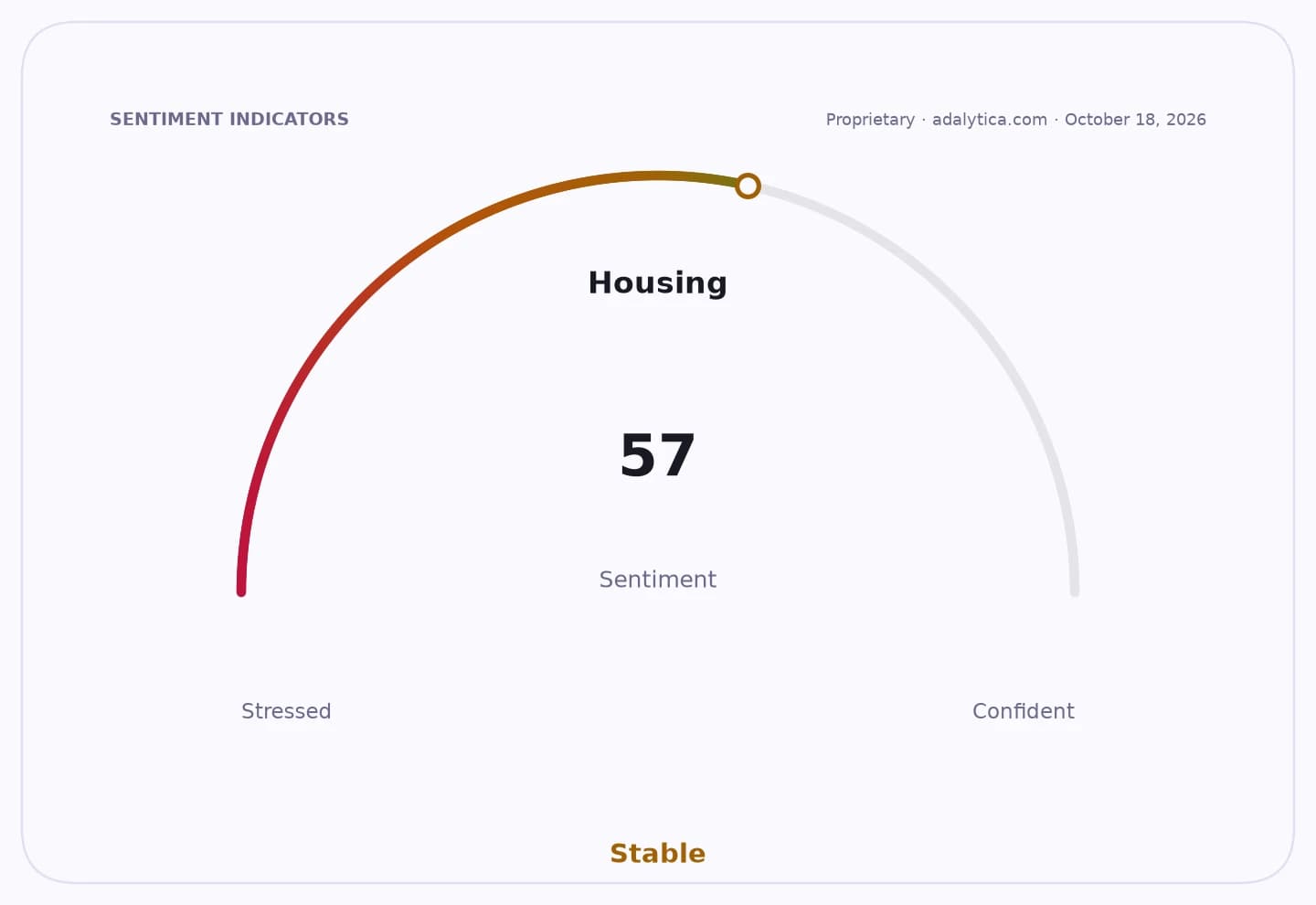
Sentiment IndicatorsⓘProprietary · adalytica.com · October 17, 2026
This is a snapshot — live sentiment, awareness and momentum for 130+ markets update continuously in the dashboard.Open AlphaPulse
The rankings are based largely on confidential employee feedback and assessments of workplace culture and programs, which makes them more than a vanity exercise for lenders trying to hold onto brokers, underwriters and servicing staff in a difficult operating backdrop. In a market where mortgage origination volumes can swing with interest rates and housing demand, stable staffing and lower turnover can help firms preserve service quality and keep costs from becoming even more volatile.
That matters for investors because the mortgage business is labor-intensive and highly competitive. The sector has already been squeezed by higher funding costs, a slowing housing cycle and pressure on borrowers, all of which can crimp margins and make efficiency harder to sustain. Companies that score well on culture may be better placed to retain staff without continually paying up in a tighter labor market, especially if the industry has to navigate another round of refinancing strain or credit stress.
The recognition also highlights a split between smaller specialists and larger diversified lenders. Smaller firms such as Capital Asset Lending and Neighbourhood Holdings can use workplace awards as recruiting tools, while larger names like FCT and First National may lean on them to reinforce brand strength and retain institutional credibility. Canada Guaranty and MCAN’s multiple appearances suggest the mortgage insurance and lending ecosystem is trying to shore up morale at the same time it is coping with a more difficult housing-finance backdrop.
TD and Scotiabank also appeared on the lists, but their broader banking franchises make them less directly comparable. Still, their inclusion underlines that mortgage operations at big banks are facing the same labor and culture pressures as specialized lenders.
For investors, the immediate takeaway is not that these rankings change earnings overnight. But they do point to a sector where human capital is becoming part of the competitive moat. If housing activity stays subdued and credit conditions remain tight, firms that can keep experienced employees and maintain client service may be better positioned to protect market share and margins than those forced into churn.
| Entity | Gains | Losses |
|---|---|---|
| Capital Asset Lending | ▲Talent recruiting edge | ▼Rival lenders |
| Canada Guaranty, MCAN, FCT, First National | ▲Employer brand | ▼Firms with weaker culture scores |
| Mortgage borrowers and brokers | ▲Better service continuity | ▼None directly |
| Investors in mortgage lenders | ▲Potentially steadier execution | ▼Higher-turnover operators |