Canadian home sales fell for a second straight month in September as higher mortgage rates and rising odds of another Bank of Canada increase cooled demand, underscoring how quickly housing activity can sag when borrowing costs move up.
Canadian home sales fall again in September
The Canadian Real Estate Association said national sales dropped 2.3% from August, after a 0.7% decline the month before, while transactions were down 7.7% from a year earlier on an unadjusted basis. The group’s home price index fell 0.4% on the month and 3.4% from a year ago, a sign that weaker demand is now feeding through to prices as well as volumes.
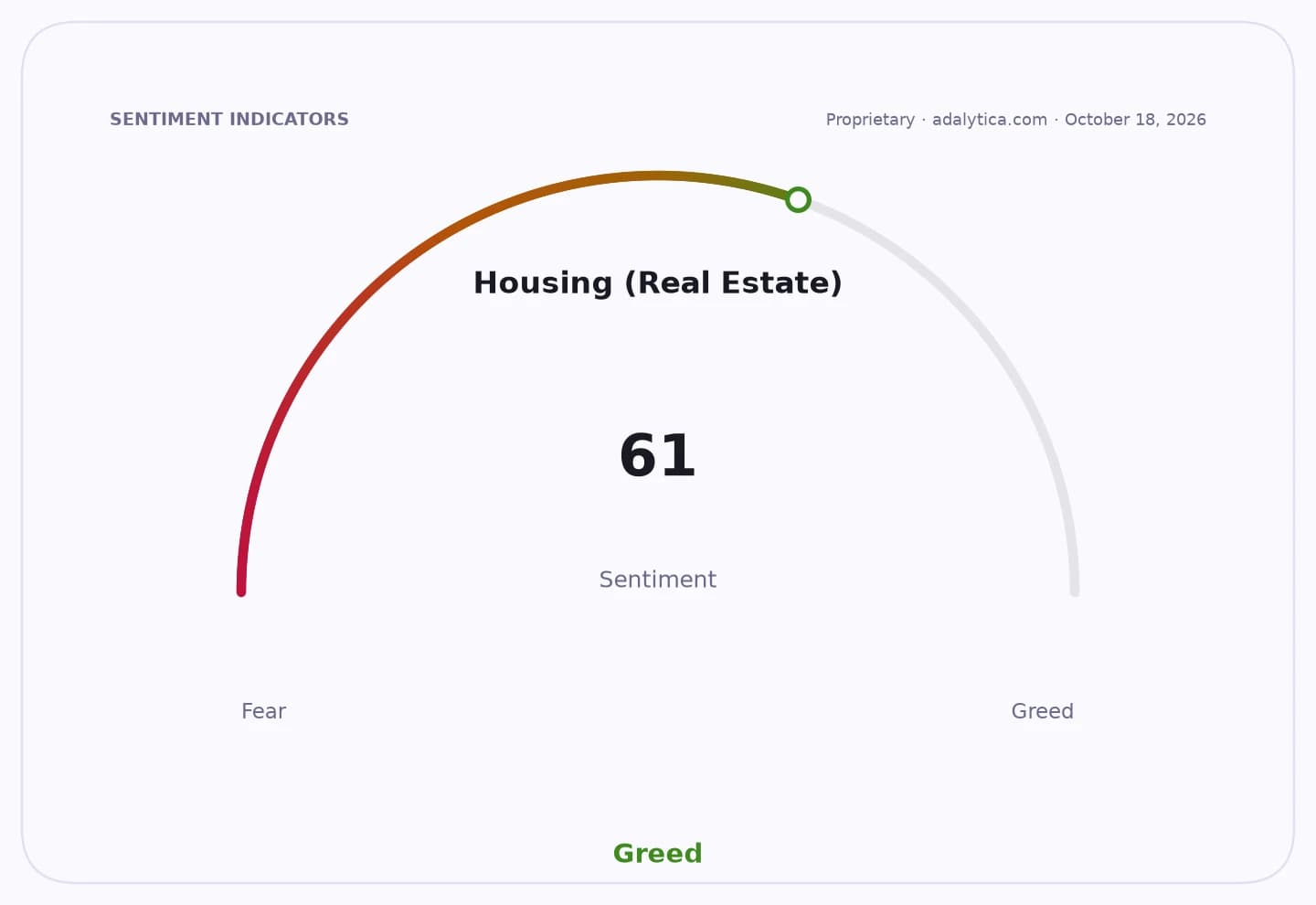
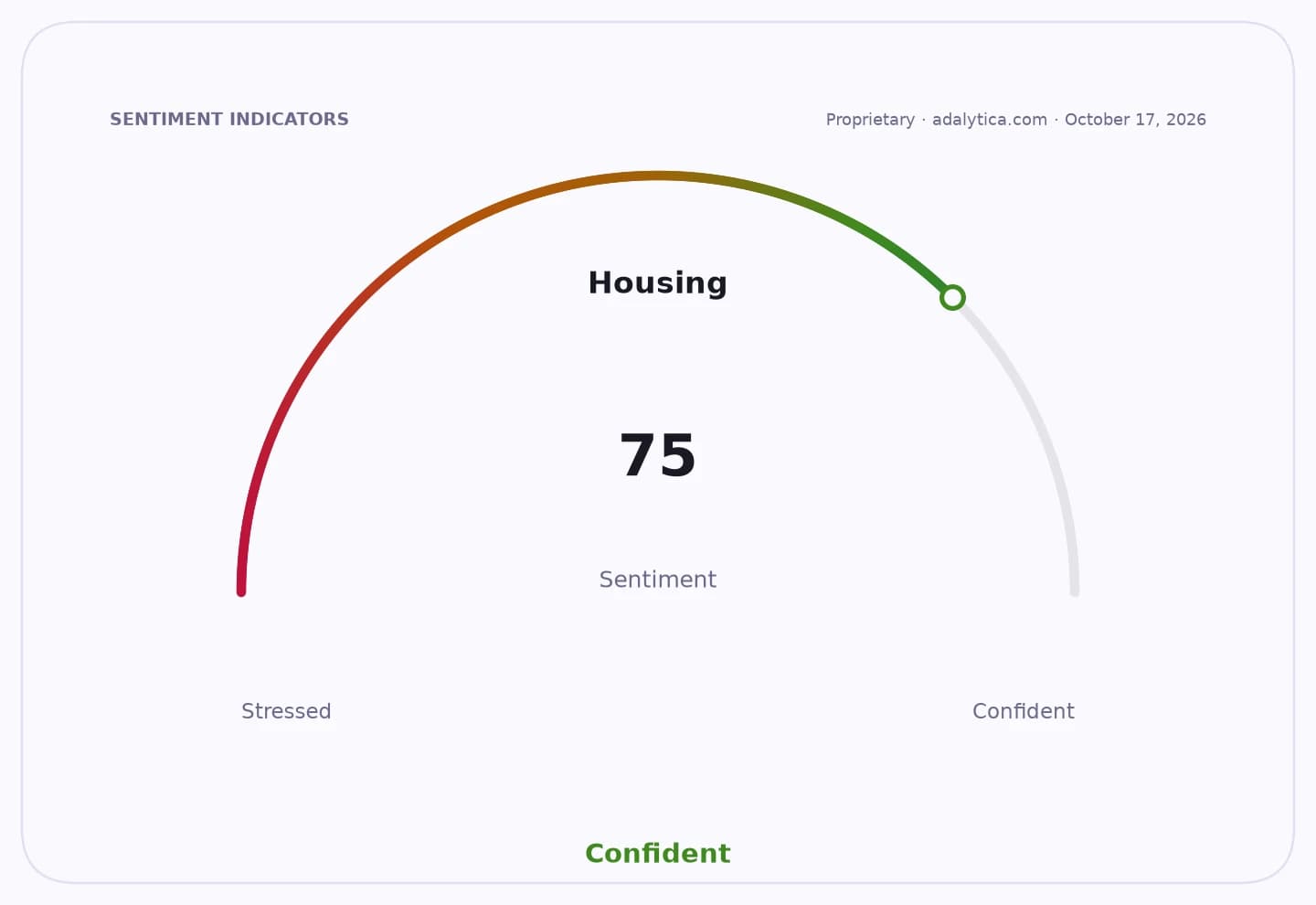
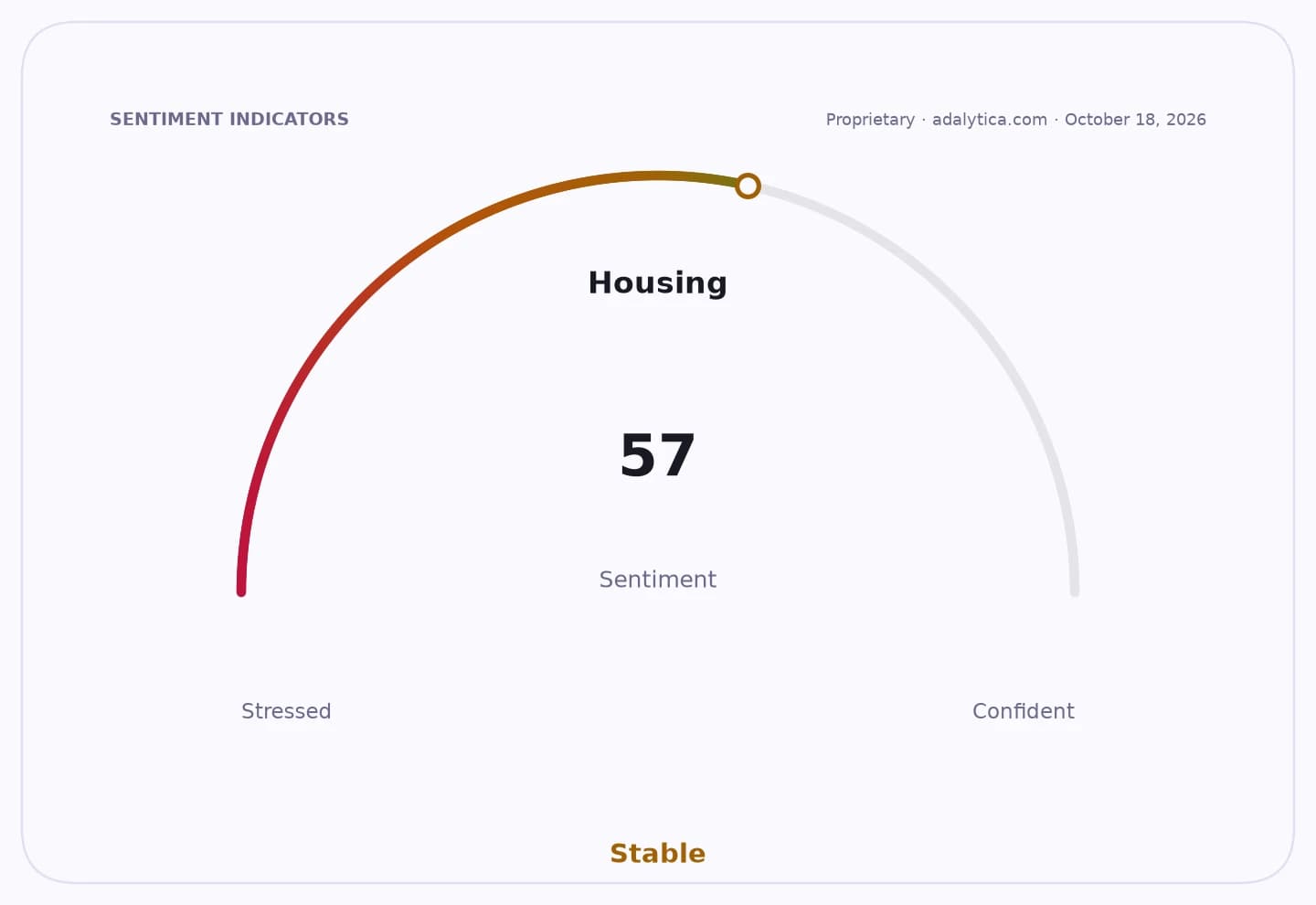
Sentiment IndicatorsⓘProprietary · adalytica.com · October 18, 2026
This is a snapshot — live sentiment, awareness and momentum for 130+ markets update continuously in the dashboard.Open AlphaPulse
For investors, the message is simple: Canada’s housing market is re-pricing around a higher-for-longer rate backdrop, and that has knock-on effects across lenders, brokers, builders and consumer spending. Fewer sales mean fewer commissions, slower mortgage origination and less turnover in the broader economy, while softer prices can erode household confidence and curb the wealth effect that supports discretionary demand.
CREA senior economist Shaun Cathcart said the pullback was “hardly surprising” given the latest jump in fixed mortgage rates and expectations the Bank of Canada will still hike before year-end. The central bank is not expected to move at its Oct. 28 meeting, but money markets are pricing in a 25-basis-point increase in December, keeping pressure on rate-sensitive sectors.
New listings also slipped 1.8% after rebounding in August, while the sales-to-new-listings ratio eased to 48.8% from 49.1%, below the long-term average of 54.7%. That combination suggests the market is not just slowing because buyers are stepping back; it is also losing the balance that tends to support pricing power.
The trade here is increasingly clear for markets. Homebuilders, mortgage lenders and real-estate platforms are exposed if financing conditions stay tight, while bond investors and rate-sensitive stocks may find support if the slowdown pushes policymakers toward caution. For now, the Canadian housing thesis is not recovery — it is affordability pressure, slower activity and a market still adjusting to higher borrowing costs.
| Entity | Gains | Losses |
|---|---|---|
| Canadian bondholders | ▲Higher yield appeal | ▼Housing demand stays soft |
| Bank of Canada hawks | ▲Inflation-fighting credibility | ▼Growth-sensitive sectors |
| Homebuyers | ▲More negotiating power | ▼Higher mortgage costs |
| Homebuilders and brokers | ▲None | ▼Fewer sales and thinner margins |