Montreal’s housing market is cooling in transactions, but not enough to give buyers the leverage many hoped for.
Montreal home sales fall 11.6% as inventory rises

Home sales across the Montreal area fell 11.6% in September from a year earlier, according to the Quebec Professional Association of Real Estate Brokers, even as prices edged higher and inventory rose. That combination matters because it shows a market that is less frantic than last year but still tilted toward sellers, keeping affordability pressure alive for households and limiting the risk of a broad price correction.
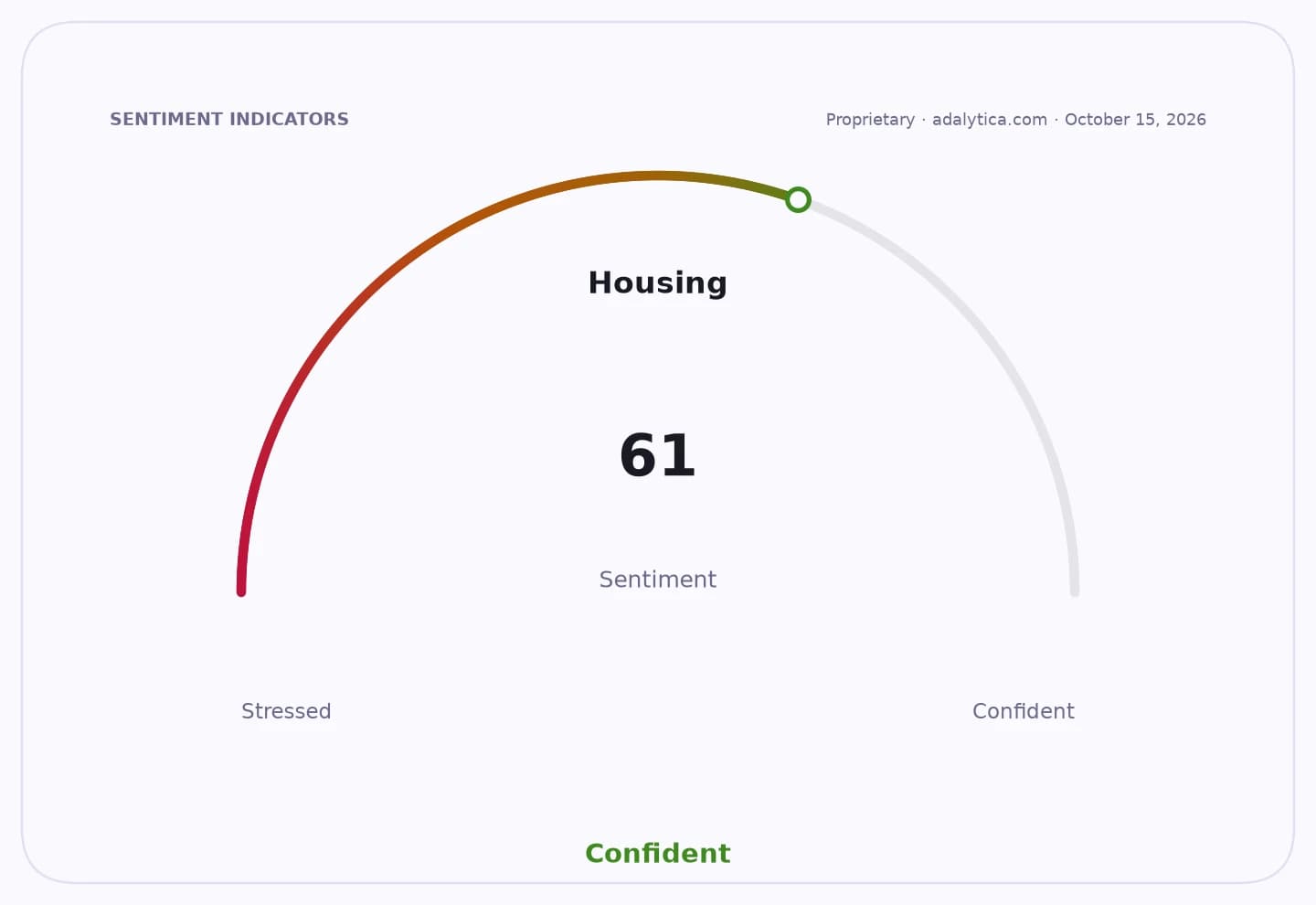
Sentiment IndicatorsⓘProprietary · adalytica.com · October 15, 2026
This is a snapshot — live sentiment, awareness and momentum for 130+ markets update continuously in the dashboard.Open AlphaPulse
A total of 3,082 residential properties changed hands in the Montreal census metropolitan area, down from 3,486 a year earlier. New listings rose 7.2% to 7,494, while total inventory jumped 19.9% to 21,793 units. Yet the board says Quebec’s residential market remains “a long way” from balance between supply and demand, and sellers are still in a strong negotiating position across the province.
That imbalance is the key investing and economic takeaway. Higher listings and more inventory usually point to improving choice for buyers, but in Montreal they have not been enough to shift pricing power decisively. The median price of a single-family home rose 0.5% to $635,000, while condos were flat at $430,000. Plexes, often a closely watched segment in a city with strong rental demand, posted the biggest gain, up 2.5% to a median $861,000.
For the broader economy, a resilient housing market can support consumer confidence and household wealth, but it also keeps pressure on affordability in one of Canada’s major urban centers. If sales keep sagging while prices hold up, first-time buyers will continue to face a difficult path into ownership, and existing owners may be less inclined to move, further constraining turnover.
For investors, the story is less about a sudden downturn than about a market that is normalizing only slowly. Residential real estate-linked businesses, from brokers to mortgage lenders and home service providers, benefit from transaction volume, not just price levels. A market with fewer deals can still be healthy for sellers, but it is usually less helpful for the companies that rely on churn.
The next question is whether inventory keeps building enough to finally shift bargaining power. If sales remain weak into the fall and winter, Montreal could move closer to balance. For now, though, the message is simple: buyers have more choice, but sellers still hold the stronger hand, and that is why this market remains worth watching for long-term investors.
| Entity | Gains | Losses |
|---|---|---|
| Sellers | ▲Stronger pricing power | ▼Faster sales |
| Buyers | ▲More listings to choose from | ▼Bargaining leverage |
| Homeowners | ▲Stable home values | ▼Easier affordability relief |
| Real estate brokers | ▲Steady price support | ▼Transaction volume |