Canada escaped a housing-led recession even after home prices fell more than 20%, and that may be one of the most important economic stories for long-term investors watching the country’s next growth cycle.
Canada Housing Prices Fall Without Recession

BMO chief economist Doug Porter’s analysis offers a useful reminder that not every housing correction becomes a financial crisis. Canadian home prices have kept drifting lower since early 2022, but GDP growth has still averaged nearly 2% over that stretch. That resilience matters because housing is one of the biggest transmission channels from falling asset prices to the real economy: when prices collapse, consumers retrench, mortgage defaults rise and banks tighten credit. Canada avoided that spiral.
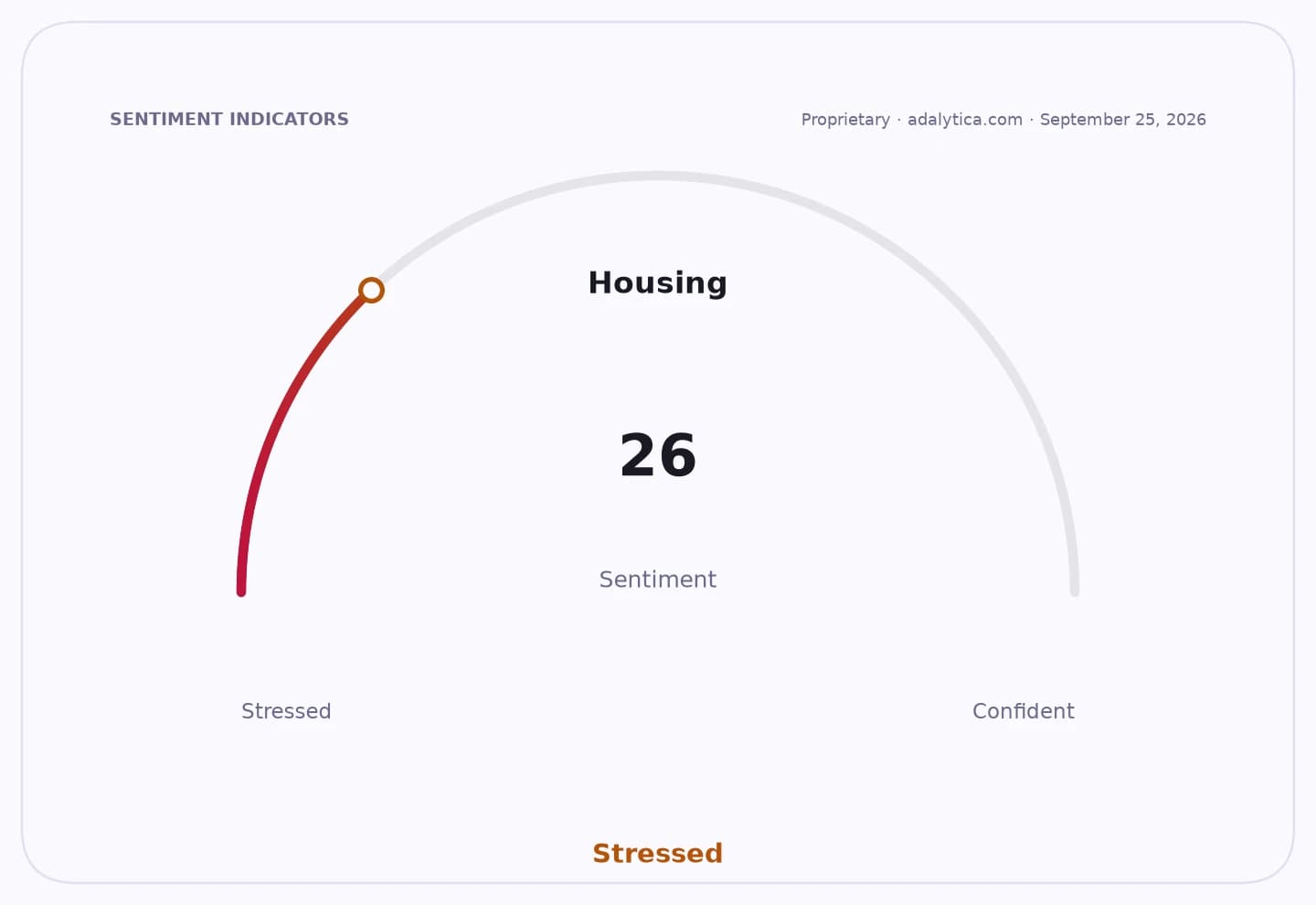
Sentiment IndicatorsⓘProprietary · adalytica.com · October 11, 2026
This is a snapshot — live sentiment, awareness and momentum for 130+ markets update continuously in the dashboard.Open AlphaPulse
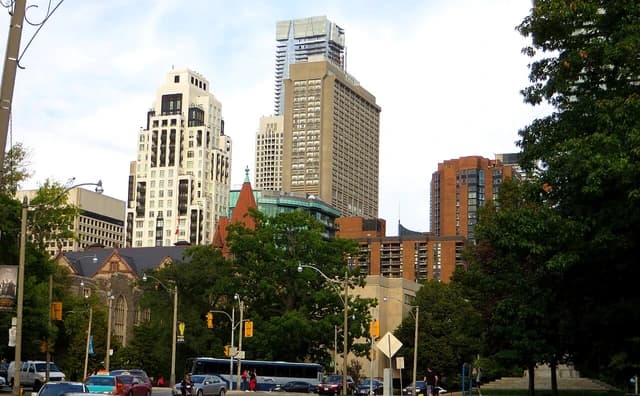
The reason is partly timing and geography. Unlike the U.S. ahead of the global financial crisis, Canada’s housing surge was shorter and more abrupt, which meant fewer buyers were trapped at the top. The correction has also been uneven, concentrated in Ontario and British Columbia rather than nationwide. Just as important, mortgage debt was in stronger hands, helped by Canada’s stress tests, which forced borrowers to qualify at higher rates and left the system better prepared when prices rolled over.
That has real investment implications. For banks such as Royal Bank of Canada and Toronto-Dominion, a controlled housing reset is far easier to absorb than a credit event. For the broader market, it reinforces the idea that Canada’s economy can endure higher rates without the kind of balance-sheet damage that often turns a slowdown into a recession. Investors should also note the policy backdrop: Ontario and Ottawa are now putting $1 billion toward housing-related infrastructure, while Toronto business leaders are pushing for regulatory reform to unlock supply. Those steps won’t reverse the correction overnight, but they do point to a longer-term fix centered on affordability rather than speculation.
For investors, the key takeaway is that Canadian housing is no longer a one-way bet on rising prices. But that is not necessarily bad news. A market that clears excesses without breaking the economy can set up healthier fundamentals over time — for lenders, builders, and eventually households that need more affordable entry points. The story to watch now is whether policy can turn this painful reset into a more durable housing cycle, one that supports growth without repeating the excesses of the last boom.
| Entity | Gains | Losses |
|---|---|---|
| Canadian economy | ▲Avoids recession | ▼Still faces slower housing growth |
| Banks | ▲Better credit stability | ▼Less mortgage-driven loan growth |
| Homebuyers | ▲Improved affordability over time | ▼Existing owners see lower prices |
| Ontario/B.C. homeowners | ▲Stabilization from policy support | ▼Biggest paper losses from correction |