Over half of executives say artificial intelligence is costing far more than they planned, a warning that could reshape how companies budget for one of the most hyped technology shifts in years.
Capgemini survey finds AI costs exceed budgets

That matters because the AI boom has largely been sold as a story of falling unit costs and rising productivity. Capgemini’s research points to a messier reality: even as token prices ease for popular models, total spending is climbing once companies add training, governance, human oversight and the repeated work needed to make AI outputs usable in the real world.
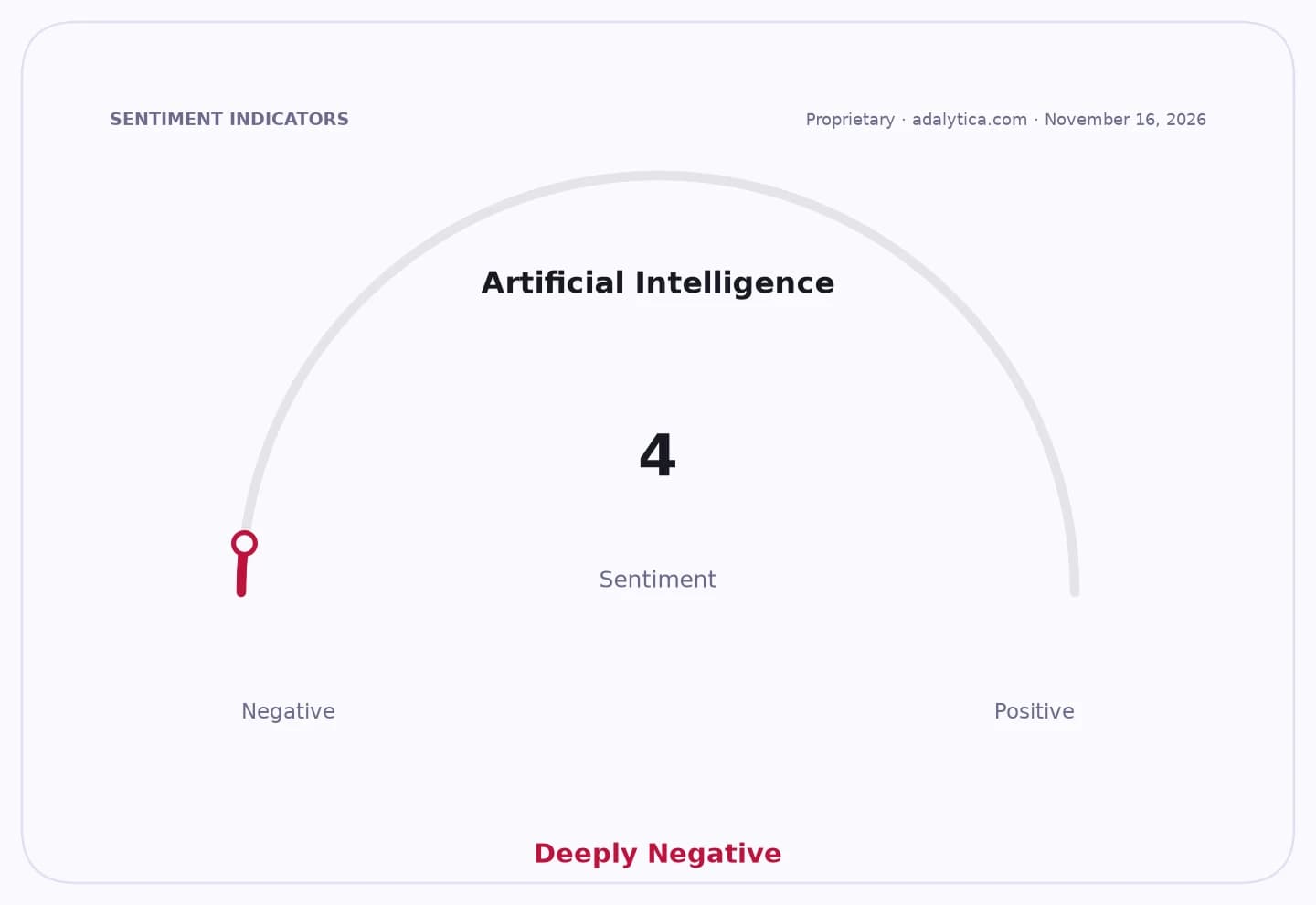
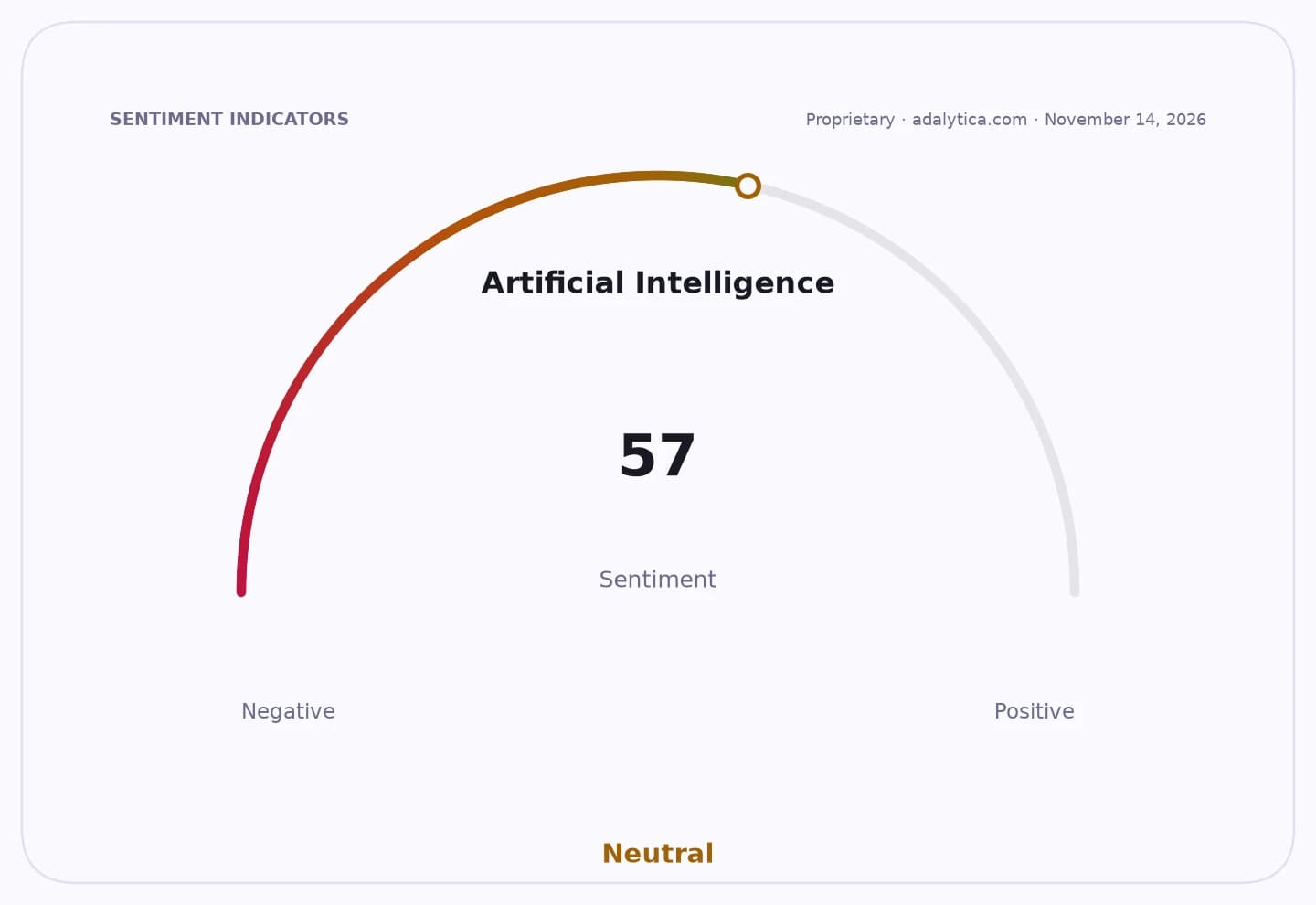
Sentiment Indicators
Artificial Intelligence
The survey of 500 senior executives found 53% are worried about AI costs, while 59% said their AI spending has already exceeded expectations. One in five said budgets were blown by more than 30%. For investors, that is a reminder that AI adoption does not automatically translate into clean margin expansion. In many companies, the first wave of AI spending is looking more like infrastructure and process investment than an immediate profit engine.
That also helps explain why chief financial officers are taking a bigger role in AI decisions. Capgemini said firms are increasingly using multi-model strategies, choosing different AI systems based on cost, capability, latency and risk rather than defaulting to one provider. Three in five executives expect to adopt that approach in the next 12 months. In practical terms, that could pressure pricing power across the AI stack, even as overall demand remains strong.
The bigger issue for long-term investors is value creation. Capgemini said only a small share of organizations can clearly connect AI use to business outcomes, which makes it harder to justify rising spending. The company wants executives to focus on what it calls “AI Yield,” a metric that ties cost, quality and measurable business value together. That is exactly the kind of discipline investors should want to see before assuming AI spend will automatically compound into higher earnings.
For Microsoft, Nvidia and the rest of the AI ecosystem, that does not mean demand is fading. It does mean the market may need to get more selective about which businesses can turn AI enthusiasm into durable cash flow. Winners will be the companies that help customers prove return on investment, control total deployment costs and scale safely. Losers will be firms that treat AI as a blank-check experiment.
| Entity | Gains | Losses |
|---|---|---|
| Companies with measurable AI ROI | ▲Stronger budgets | ▼Harder-pressed peers |
| CFOs and finance teams | ▲More control over spend | ▼Fast-moving project teams |
| Multi-model AI providers | ▲More customer choice | ▼One-model lock-in |
| AI investors without earnings proof | ▲Longer diligence window | ▼Easy growth narratives |