Tesla, Meta and IBM just offered investors a useful reminder: the AI boom is no longer only about ambition, it is starting to run into the real-world limits of training data, customer spending, and return on investment.
Tesla, Meta and IBM on AI spending discipline
That matters because the market has spent much of the past two years rewarding any company that could attach itself to AI. Now the conversation is getting more practical. Tesla is trimming capital spending to $20 billion from a prior $25 billion plan as it says its Optimus robots still need far more training before they are ready for the field. Meta’s Zuckerberg said the company had to raise credit limits in the first week of its Muse AI agent because shopping volumes came in above expectations. IBM, meanwhile, is hearing from corporate buyers who are growing more disciplined about what AI actually returns.
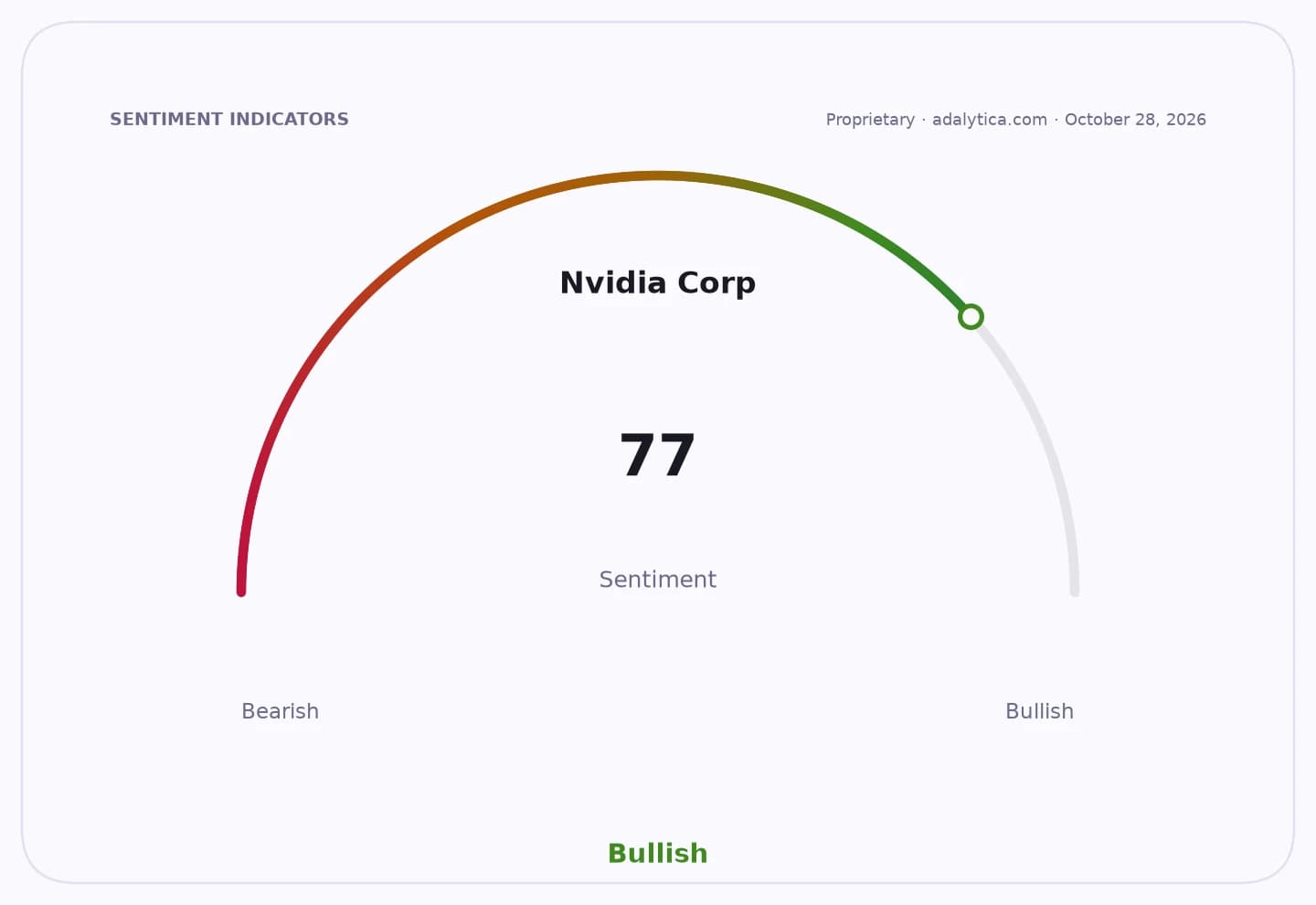
Sentiment Indicators
Tesla Inc
For investors, that combination is important because it separates the companies that can turn AI excitement into durable profits from those that are still burning money in the hope that useful products arrive later. The long-term winners in AI will not be the firms that merely spend the most. They will be the ones that can convert heavy investment into repeatable, scalable use cases with strong economics.
Tesla’s comments are a good example. Cutting capital spending is not automatically a bearish signal, but Musk’s comparison of Optimus to a toddler underscores how far the robotics story still has to go. Unlike Tesla’s cars, robots do not yet benefit from a vast fleet of deployed machines feeding training data back into the system. That means the payoff from humanoid robotics may be real, but it is likely to be slower and more capital-intensive than the most enthusiastic bulls hope. Investors should treat Optimus as a long-duration option, not an earnings engine.
Meta’s Muse story points to a different kind of AI risk: not invention, but usage. If more than a quarter of users are shopping and average purchases top $200, that is a meaningful sign that AI agents can influence consumer behavior. It also raises uncomfortable questions for retailers, payment networks and banks. Convenient shopping assistants could lift transaction volumes, but they could also create more refunds, fraud, delinquencies or charge-offs if AI-driven buying becomes too easy or too impulsive. That is the sort of downstream effect Wall Street still has not fully priced.
IBM brings the story back to the enterprise. Krishna’s comments suggest large customers are becoming more selective about AI budgets and more focused on measurable productivity gains. That is exactly what you would expect after the initial frenzy of adoption. Over time, enterprise technology spending tends to reward software that clearly saves money, speeds work or improves margins. It does not reward vague promises. IBM’s message is that AI demand is still real, but buyers are getting more demanding.
The broader takeaway for investors is that AI is moving from narrative to discipline. That is healthy for the sector, even if it is uncomfortable in the short run. Companies with strong balance sheets, real distribution and products that solve a concrete problem should keep compounding. Companies that rely on hype, or on a long delay between spending and monetization, may find the market less forgiving.
The stocks may continue to swing around earnings and headlines, but the underlying lesson is likely to last much longer: in AI, economics matter. Investors should keep watching who can turn the technology into durable cash flow, and who still needs time, capital and a lot more proof.
| Entity | Gains | Losses |
|---|---|---|
| Tesla | ▲Long-term robotics upside | ▼Near-term capital efficiency |
| Meta | ▲AI commerce engagement | ▼Retailers and lenders facing risk |
| IBM | ▲Disciplined enterprise AI demand | ▼Vendors tied to weak ROI spending |
| AI skeptics | ▲Better pricing discipline | ▼Easy hype-driven narratives |