Contemporary Amperex Technology is drawing renewed attention from investors after Nomura raised its price target to 408 yuan, even as the battery maker faces its slowest profit growth in two years and a sharp selloff in its mainland shares. The move underscores a familiar tension in China’s electric-vehicle supply chain: CATL remains the sector’s dominant franchise, but pricing pressure and a more uncertain EV market are starting to weigh on earnings momentum.
CATL Shares Fall After Nomura Raises Target to 408 Yuan
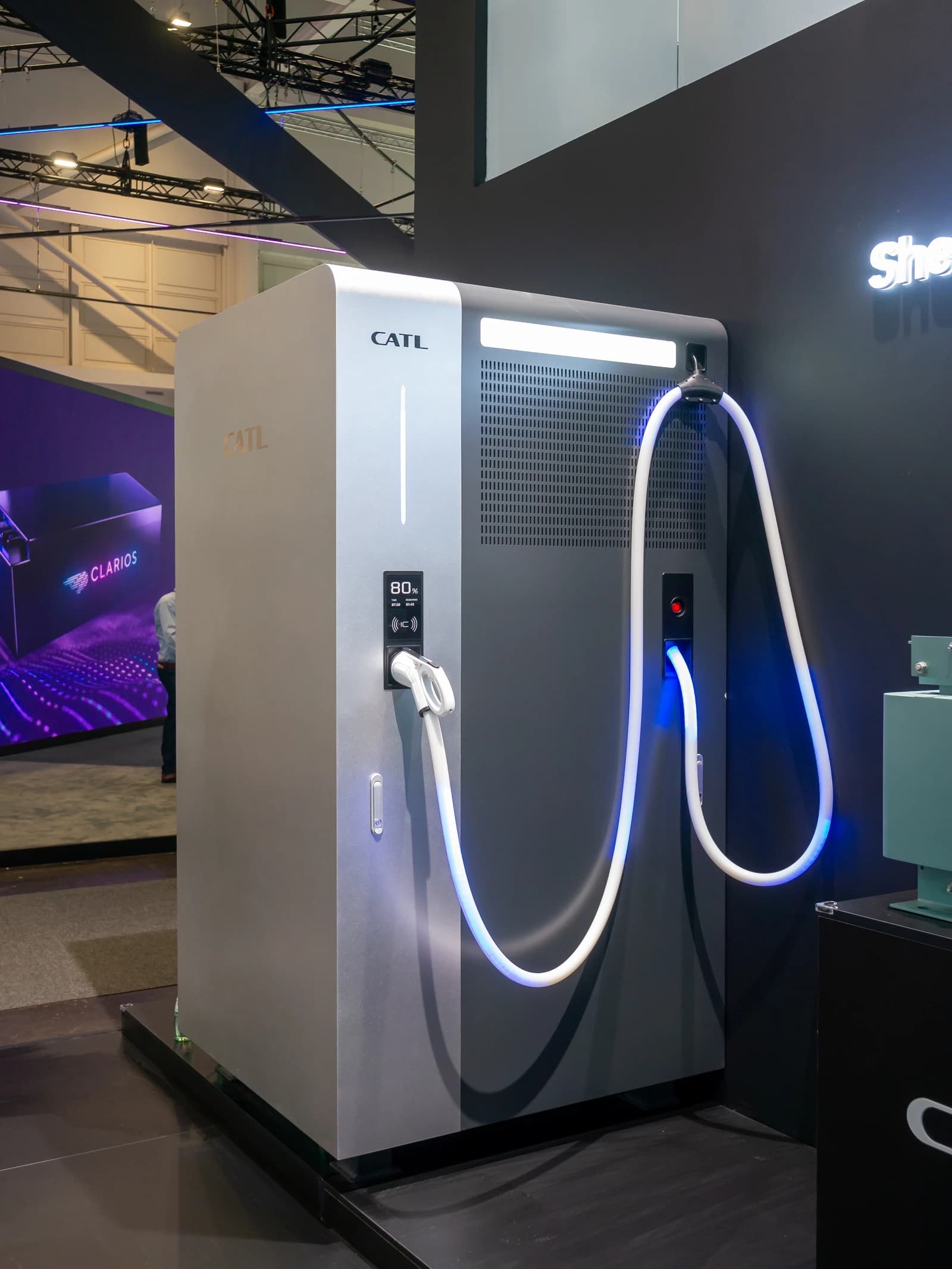
The upgrade matters because CATL sits at the center of the global battery cycle. Its results are often read as a barometer for EV demand, pricing power and the health of Chinese industrial policy. A higher target from a major broker suggests the market may be pricing in too much cyclical weakness, or at least underestimating the company’s ability to defend margins through scale, product mix and expansion into adjacent businesses such as battery swapping, heavy trucks and energy storage.
That said, the backdrop is clearly more difficult than it was earlier in the year. CATL said third-quarter net profit rose 14.5%, the slowest pace in two years, even as revenue jumped almost 60%. For a company long valued on its growth consistency, that combination is a warning sign: sales are still expanding quickly, but competition is absorbing more of the benefit. Mainland-listed shares fell more than 10% after the results, reflecting investor concern that battery makers may be entering a prolonged period of margin compression.
The Hong Kong line has also been volatile. CATL’s H-share, 3750.HK, has swung from a March high above 730 to 356.8 on Oct. 23, leaving it well below its 50-day and 200-day moving averages. On the Shenzhen market, 300750.SZ closed at 237.6 after touching 249, with the stock still deeply below both its 50-day and 200-day averages. The technical picture points to a market that is still digesting the earnings reset rather than fully embracing the valuation case.
For investors, the key question is whether CATL’s strategic moves can offset the slowdown in its core battery business. The company has been broadening into battery swapping, sodium-ion technology and overseas energy-storage markets, while also backing ventures such as AI startup DeepSeek. Bullish investors will argue that these efforts extend CATL’s addressable market and reduce its dependence on passenger EV batteries in China. The bear case is that diversification takes capital and time, while the core market remains crowded and price competition continues to erode returns.
Broader market signals point to a sector still under pressure. By contrast, BYD’s shares have been far less damaged, suggesting the market is rewarding vertically integrated auto makers that can absorb battery costs better than standalone suppliers. That divergence matters for portfolio positioning: if EV demand stabilizes but pricing remains weak, integrated players may outperform pure battery names; if CATL can prove that new businesses are scaling faster than expected, the recent weakness could become a buying opportunity.
For now, Nomura’s higher target looks less like a clean endorsement and more like a bet that the stock has already discounted a lot of bad news. The next catalyst will be whether CATL can show that its new growth engines are beginning to replace lost pricing power in the core business.
| Entity | Gains | Losses |
|---|---|---|
| CATL | ▲valuation support | ▼margin pressure |
| Nomura | ▲contrarian call credibility | ▼if earnings weaken further |
| EV competitors | ▲pricing relief | ▼share gains versus CATL |
| CATL shareholders | ▲rebound potential | ▼near-term volatility |