Changan’s latest Qiyuan Q07 SUV underscores how quickly China’s plug-in hybrid market is moving upmarket, with a mid-size model priced from 139,800 yuan that pairs 374 horsepower with a claimed 1,400-kilometre combined range.
Changan Qiyuan Q07 launches from 139,800 yuan
The 2027 Qiyuan Q07 Tian Shu Navigator Edition is not just another new SUV launch. It is a sign that Chinese automakers are pushing advanced driver assistance, long-range electrification and premium features into the mass-market price band, intensifying pressure on both domestic rivals and global brands that still rely on higher-priced trims to justify similar technology.
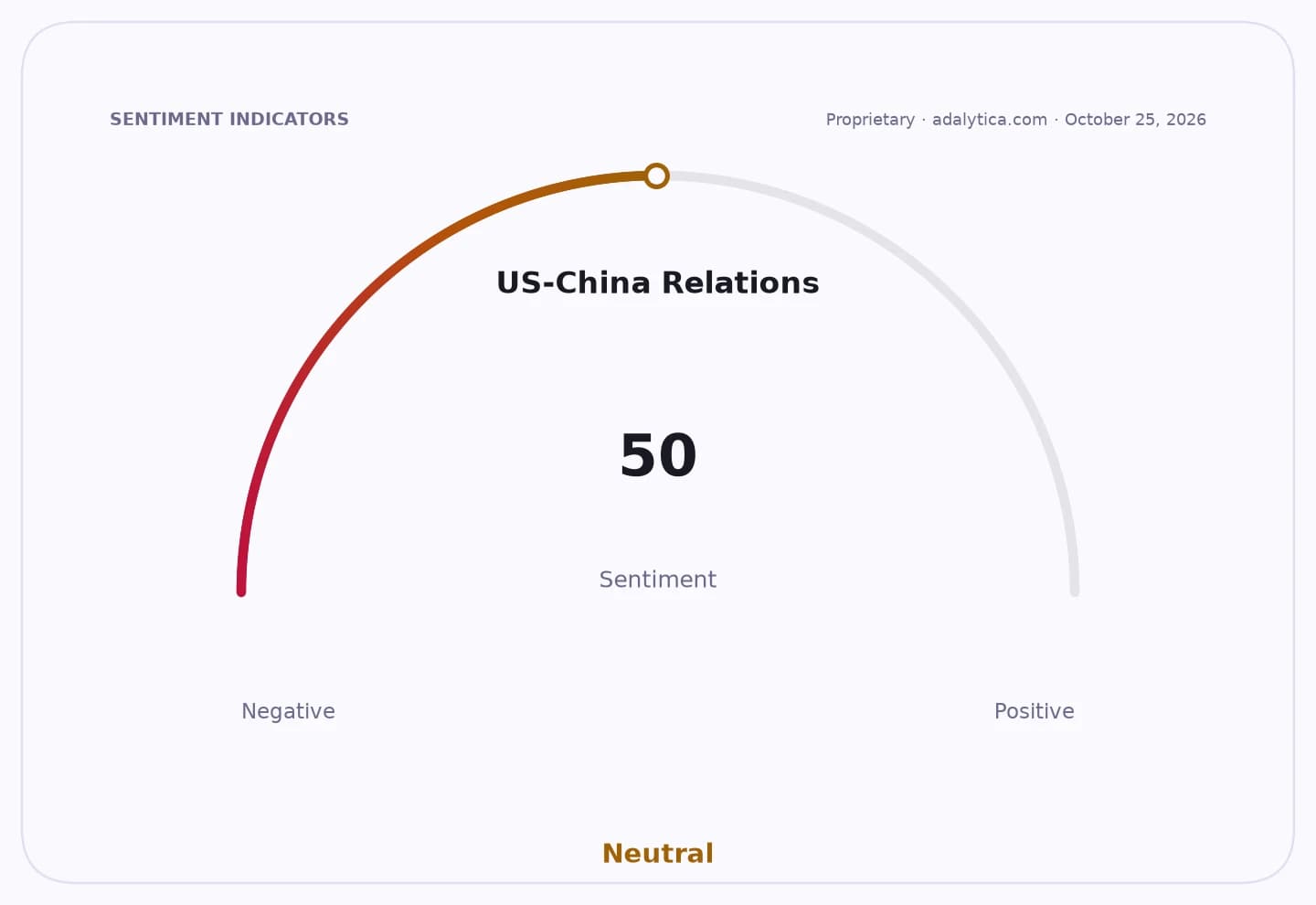
Sentiment IndicatorsⓘProprietary · adalytica.com · October 25, 2026
This is a snapshot — live sentiment, awareness and momentum for 130+ markets update continuously in the dashboard.Open AlphaPulse
The model comes in four configurations priced between 139,800 and 169,800 yuan, equivalent to about 541.8 million to 658.1 million Vietnamese dong. That places it squarely in a segment where Chinese consumers are increasingly able to buy technology that would have been reserved for far more expensive vehicles only a few years ago.
Changan is making driver assistance a standard feature across the line-up. The SUV includes lidar, three millimetre-wave radars, 11 high-definition cameras and 12 ultrasonic radars, powered by Horizon Robotics’ Journey 6M chip with 128 TOPS of computing capacity. The package supports the Tianshu Navigator Pro system, a reminder that software and sensing are becoming core selling points in China’s auto market, not optional extras.
That matters because the competitive battle in China is no longer just about battery range or engine output. It is about combining range, autonomy features, fast charging and cabin technology at a price that can appeal to middle-class buyers. Changan’s hybrid system uses a CATL battery and Golden Bell battery technology, with a CLTC-rated 215-kilometre electric-only range and 3C fast charging that can take the battery from 30% to 80% in about 15 minutes.
For buyers, the proposition is straightforward: the car offers SUV size, strong power and low fuel use without the range anxiety that can still limit pure electric adoption outside major cities. Changan says fuel consumption falls to 3.9 litres per 100 kilometres when the battery is depleted, while total range exceeds 1,400 kilometres. That combination may resonate in China, where consumers are still weighing charging convenience against running costs and where plug-in hybrids remain a bridge technology.
The launch also highlights the scale of competitive pressure on incumbents such as Tesla and foreign joint ventures in China. Tesla’s stock has been volatile as investors assess whether its premium pricing can hold against a flood of local alternatives with increasingly sophisticated technology. In the broader US and global market, General Motors has continued to lean on SUVs and pickups for margin support, but China remains one of the most difficult arenas for legacy automakers as domestic brands narrow the technology gap and undercut on price.
Changan’s move fits a wider industry pattern: Chinese carmakers are using integrated supply chains, domestic chip partnerships and battery-scale advantages to push premium-feeling vehicles into lower price brackets. The result is a market where feature content is rising faster than pricing power, forcing rivals to either cut margins, accelerate product refreshes or risk being left behind in the fastest-evolving part of the auto sector.
For investors, the key question is whether this kind of launch signals a durable advantage for Chinese manufacturers in the home market and eventually abroad. If Changan can pair advanced driver assistance and long range with aggressive pricing, it strengthens the case that China’s auto industry can keep gaining share in both electrified and intelligent vehicles. The risk for competitors is that the bar for what counts as a “value” SUV keeps rising, making it harder to defend brand premiums without matching the technology.
| Entity | Gains | Losses |
|---|---|---|
| Changan Qiyuan | ▲Higher value perception | ▼Margin pressure from pricing |
| Chinese buyers | ▲More tech at lower cost | ▼Faster model turnover |
| Foreign automakers | ▲ | ▼Share and pricing power |
| Tesla / premium EV rivals | ▲ | ▼Stronger local competition |