A former Tesla battery executive is trying to build a Western alternative to China’s dominance in cathodes, timing Holyvolt’s first commercial products for 2027, just as U.S. defense rules start blocking the Pentagon from buying cells from several major Chinese suppliers.
Holyvolt Raises $45M for DRX Battery Cathodes
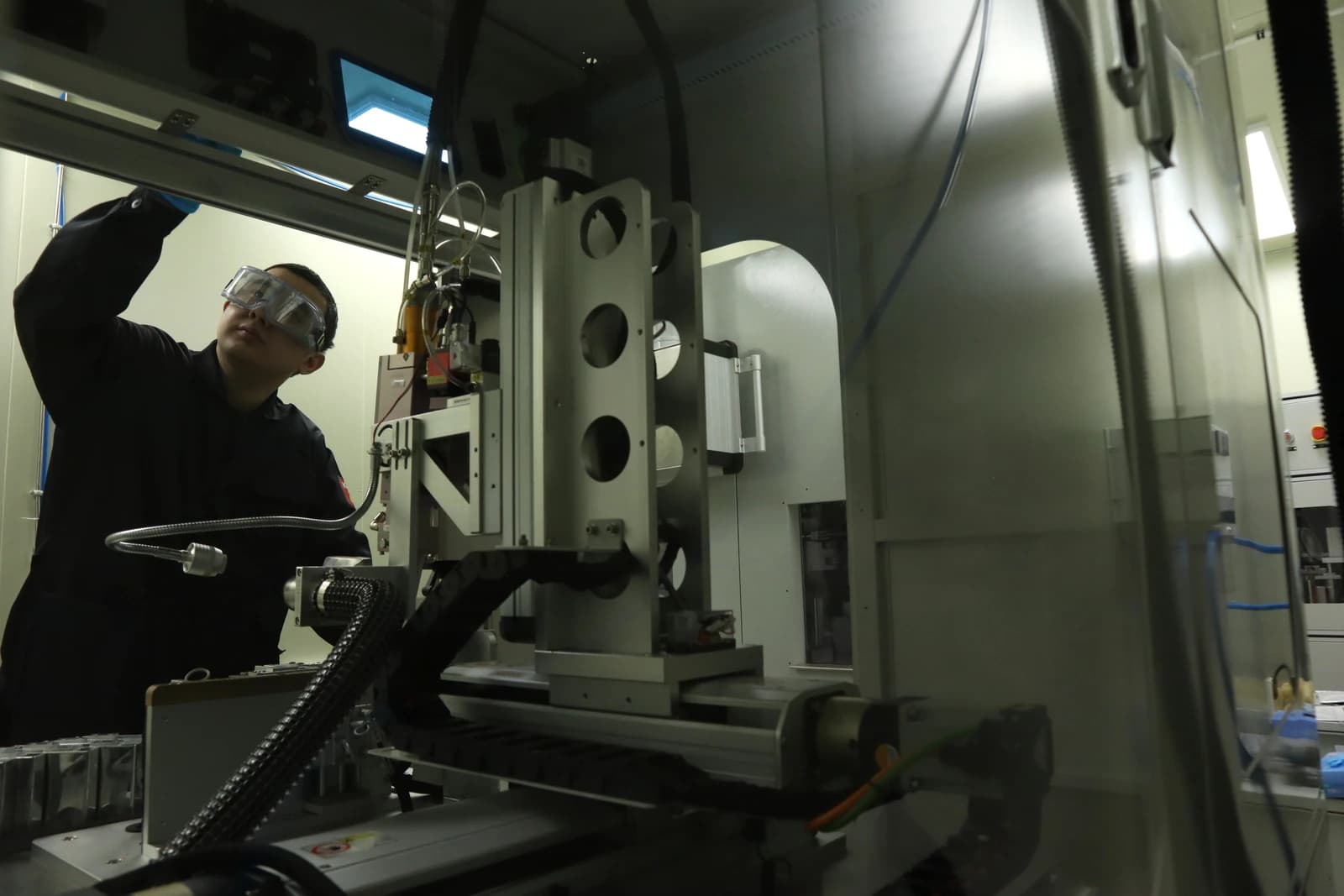
That matters because batteries are now a strategic input for defense, EVs, grid storage and data centers, and China still controls the overwhelming share of the supply chain. Holyvolt’s pitch is not to outcompete China on today’s lithium-ion chemistries, but to sidestep them with new materials that do not rely on nickel, cobalt or Chinese-controlled processing.
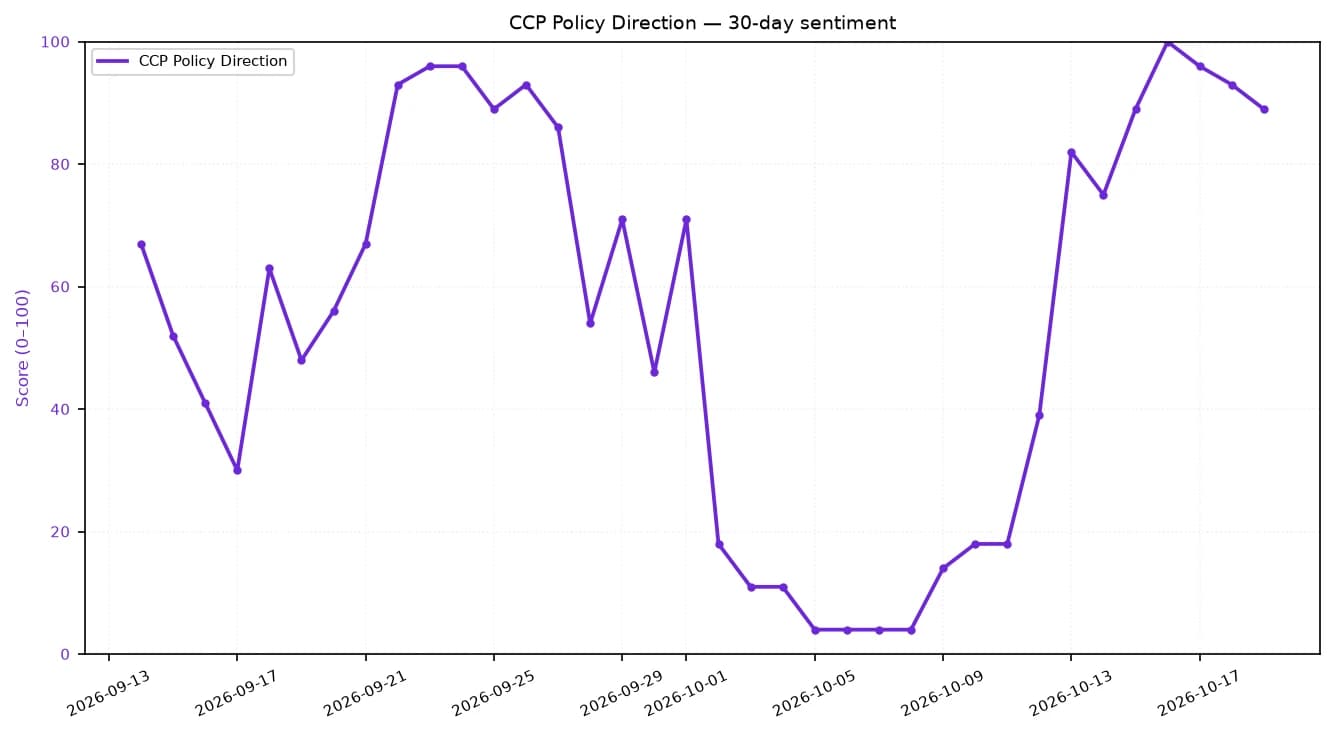
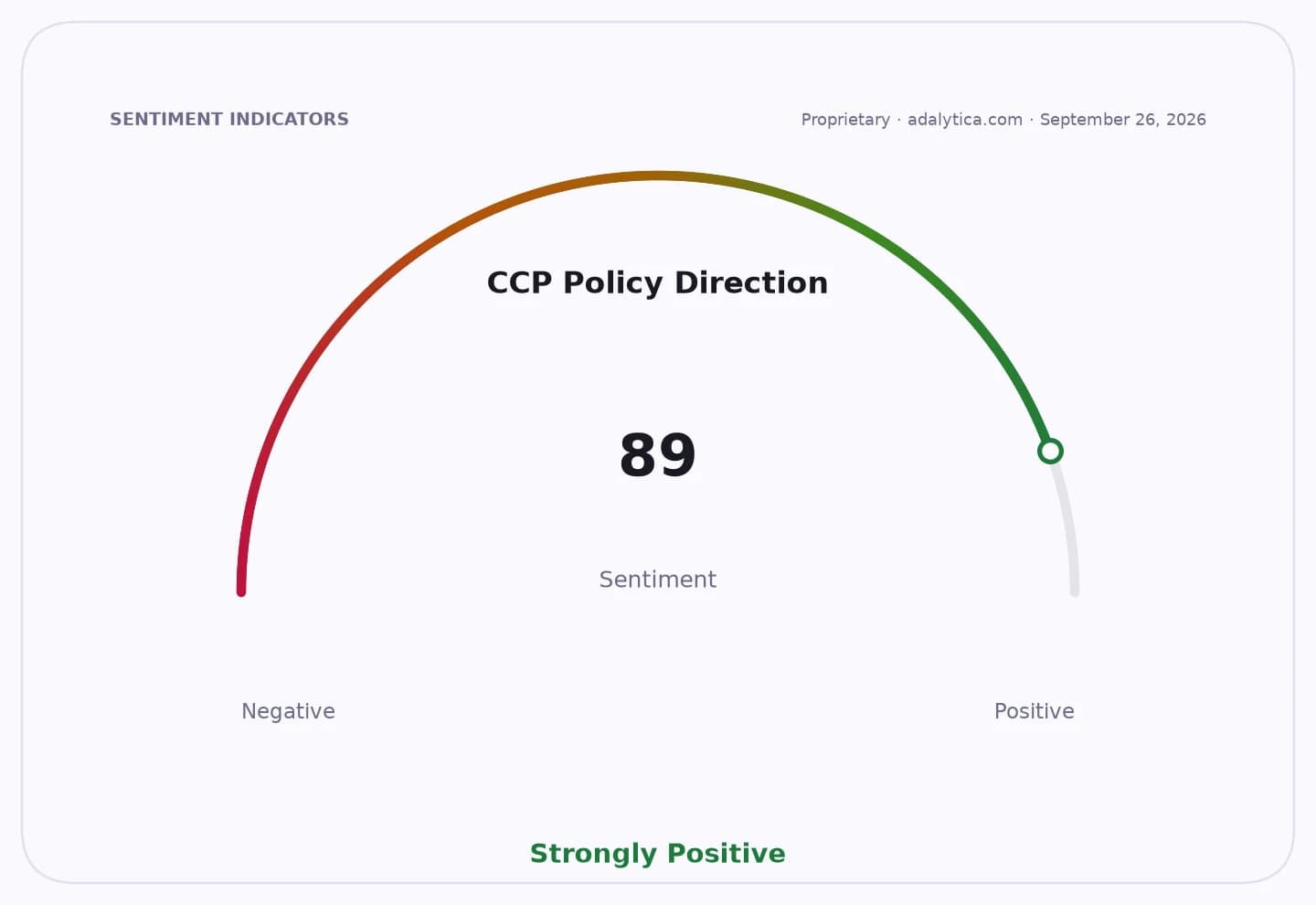
Sentiment IndicatorsⓘProprietary · adalytica.com · October 21, 2026
This is a snapshot — live sentiment, awareness and momentum for 130+ markets update continuously in the dashboard.Open AlphaPulse
Steven Prast, a former Tesla production manager and now chief operating officer of Stockholm-based Holyvolt, says lithium-ion is only “10% to 20%” of the way through its development curve, but the West cannot win by copying China’s existing scale advantages in NMC and lithium-iron-phosphate batteries. China makes about 85% of the world’s cathode active material and roughly 80% of battery cells, giving it control over both cost and capacity in technologies that dominate the market today.
Holyvolt is backing that thesis with $45 million in equity financing from investors including Fifth Wall, Zone II and CC.VC, valuing the company at $245 million, according to a person familiar with the deal. The startup is centering its work on DRX, a class of disordered rock salt cathode materials that it says can deliver NMC-like performance at costs comparable with LFP in North America while keeping the supply chain within “friendly” countries.
The investment case is tied to geopolitics as much as chemistry. Under a defense law passed in 2024, the Pentagon will be barred from buying batteries from CATL, BYD and four other named Chinese manufacturers from Oct. 1, 2027. Holyvolt says it wants to begin commercializing DRX in 2027, initially for unmanned aerial vehicles before moving into mobility and then high-power data-center applications.
If Holyvolt can prove the chemistry and scale it, the upside is a new non-Chinese sourcing option for Western buyers who are increasingly constrained by industrial policy and supply-chain risk. Prast says the company’s lab-and-AI loop, built around the legacy Wildcat Discovery platform, already runs about 10 times faster than conventional R&D in one customer case, and could accelerate further as models are refined by test data.
The bear case is just as clear. Battery chemistry is notoriously hard to de-risk at commercial scale, and Holyvolt itself acknowledges that the jump from lab success to industrial production is the “death blow” for most projects. The company also says it is open to licensing or joint ventures rather than building gigafactories itself, underscoring how much it will depend on partners to turn research into supply.
For investors, the story is less about one startup than about a broader reordering of the battery trade. Western capital is increasingly funding attempts to break China’s grip on critical materials, while strategic buyers from defense to data centers are being pushed to diversify away from Chinese supply. That creates a potential market for new chemistries — but only if they can meet cost, performance and scale thresholds at the same time.
| Entity | Gains | Losses |
|---|---|---|
| Holyvolt | ▲New funding; policy tailwind | ▼Scale-up risk |
| Western OEMs and defense buyers | ▲Non-Chinese battery option | ▼Reliance on unproven chemistry |
| China’s battery incumbents | ▲Existing scale economics | ▼Loss of addressable market |
| Investors in battery materials | ▲New optionality | ▼Commercialization uncertainty |