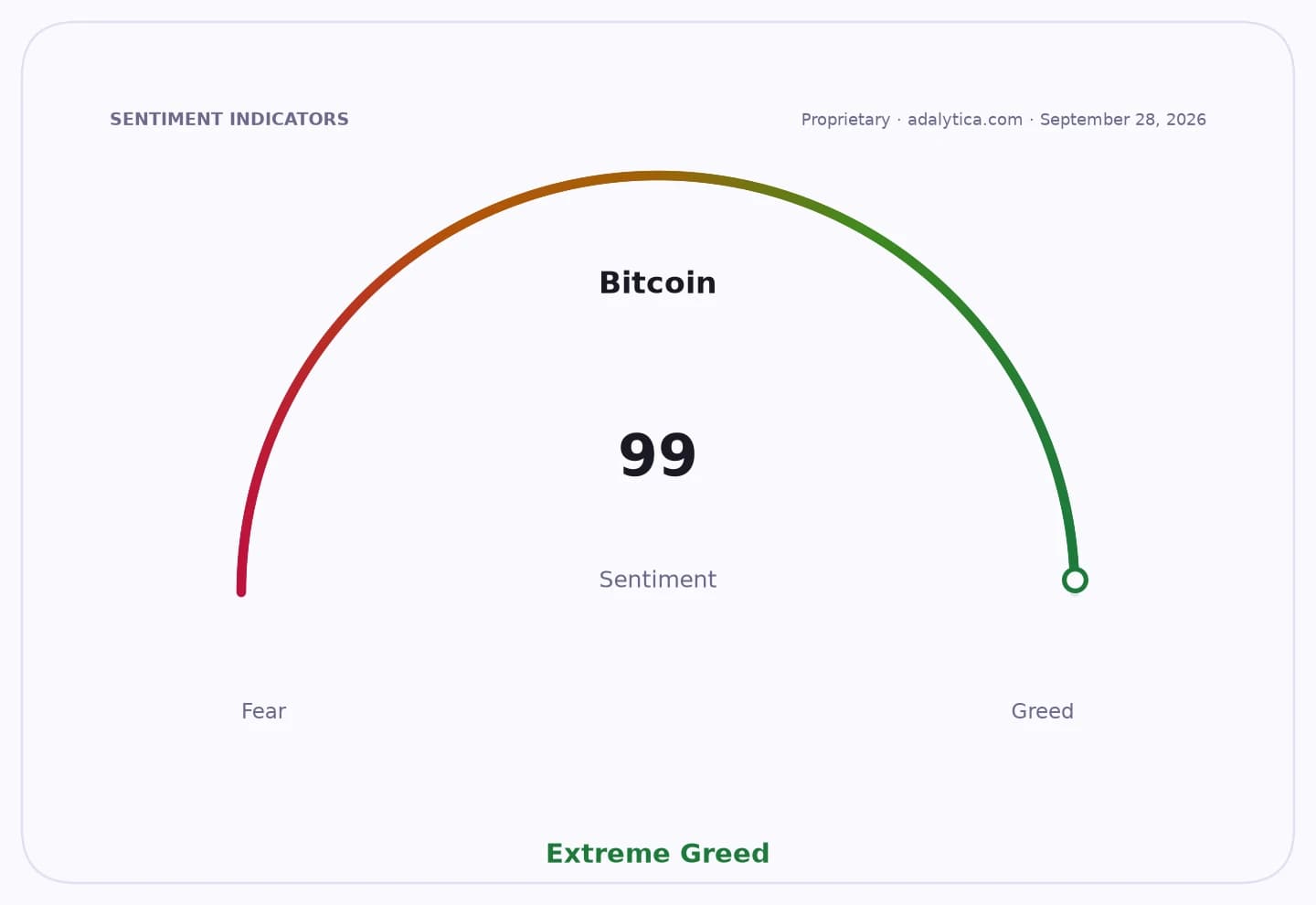
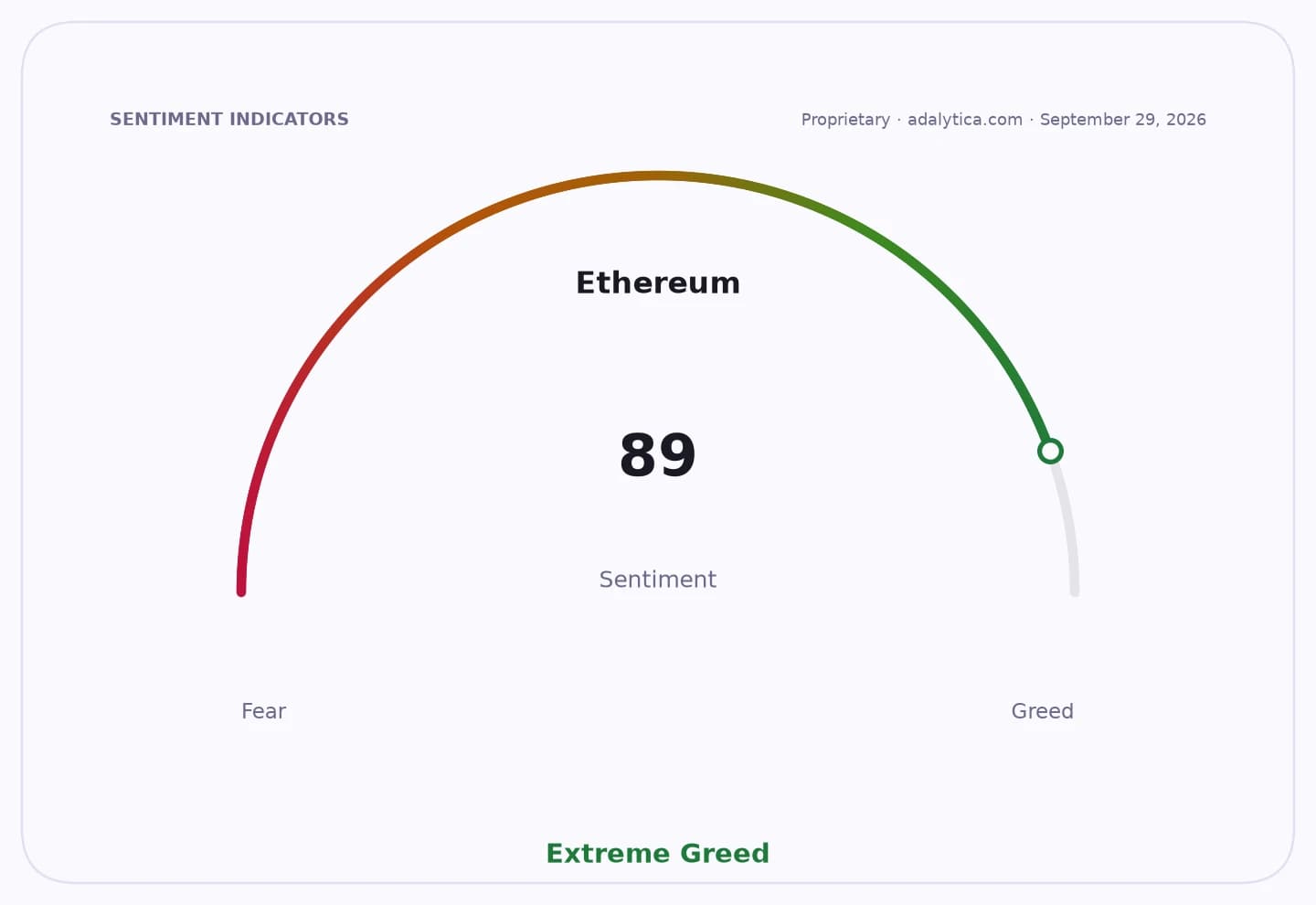
The U.S. Commodity Futures Trading Commission has moved to make room for tokenized assets and blockchain recordkeeping inside its existing rules, but it stopped well short of giving regulated firms permission to invest customer funds directly in Bitcoin or Ether.
CFTC Clarifies Tokenized Assets, Not Bitcoin Fund Use

That distinction matters because the agency is easing the path for crypto-style infrastructure without opening the door to direct crypto exposure in customer accounts. For banks, futures commission merchants and clearing houses, the updated guidance offers a clearer operating framework for tokenized Treasuries, corporate bonds and money-market fund shares, while preserving the CFTC’s long-standing restrictions on where customer funds can go.
Sentiment IndicatorsⓘProprietary · adalytica.com · October 1, 2026
This is a snapshot — live sentiment, awareness and momentum for 130+ markets update continuously in the dashboard.Open AlphaPulse
In updated FAQs from its Market Participants Division, Division of Market Oversight and Division of Clearing and Risk, the CFTC said assets already permitted under its rules can be held in tokenized form, provided the blockchain version carries the same legal and economic rights as the traditional asset. The move could speed adoption of tokenization across collateral, settlement and treasury operations, where firms have long argued that distributed ledger technology can cut reconciliation costs and improve transparency.
At the same time, the agency made clear that Staff Letter 26-05 does not expand the list of allowable customer-fund investments to include Bitcoin or Ether. Crypto assets may still be used in some cases as margin collateral if conditions are met, but that is different from letting customer money sit directly in the two biggest digital assets.
The CFTC also said regulated firms may use blockchain and distributed ledger technology for recordkeeping, as long as the records remain authentic, reliable, retained and accessible. That could reduce the need to maintain separate on-chain and off-chain systems, but firms would still have to produce records if networks go down or become inaccessible.
For investors, the update is another sign that U.S. regulators are trying to adapt legacy market rules to blockchain without endorsing crypto as a mainstream customer-fund asset. It is constructive for exchange operators, custodians and infrastructure providers that earn fees from tokenization, and less immediately helpful for Bitcoin and Ether bulls looking for a direct regulatory green light from the CFTC.
The timing also matters. The Senate’s failure to advance the CLARITY Act has left broader U.S. market-structure legislation stalled, forcing the industry to lean on agency guidance rather than a comprehensive law. Bitcoin was trading around $84,770 on Wednesday, while Ether was near $2,698, with both hovering below recent highs as traders weighed regulatory progress against the absence of a full federal framework.
Coinbase shares were also in focus as investors tracked whether the latest guidance could deepen institutional adoption of tokenized products, though the CFTC’s stance does not amount to an approval for direct crypto investment by customer funds. The next catalyst is whether other U.S. regulators follow with similar guidance or whether lawmakers revive stalled crypto legislation.
| Entity | Gains | Losses |
|---|---|---|
| Tokenization firms | ▲Clearer rule path | ▼Less legal uncertainty |
| Futures commission merchants | ▲More blockchain flexibility | ▼More compliance scrutiny |
| Bitcoin and Ether bulls | ▲Broader institutional narrative | ▼No direct CFTC approval |
| Traditional recordkeeping systems | ▲Less relevant | ▼Share in back-office workflows |