Chile’s central bank kept the countercyclical capital buffer for banks at 1% of risk-weighted assets, signaling that policymakers see no need to loosen safeguards even as the domestic financial system remains broadly stable.
Chile Central Bank Keeps Bank Capital Buffer at 1%

The decision matters because the buffer is one of the main tools regulators use to force lenders to build extra loss-absorbing capital in good times, leaving them better positioned to absorb shocks when conditions worsen. By leaving the requirement at the neutral level, the bank is effectively saying Chile’s lenders can keep operating with a standard capital cushion, but not one that would justify a more aggressive release to support lending growth.
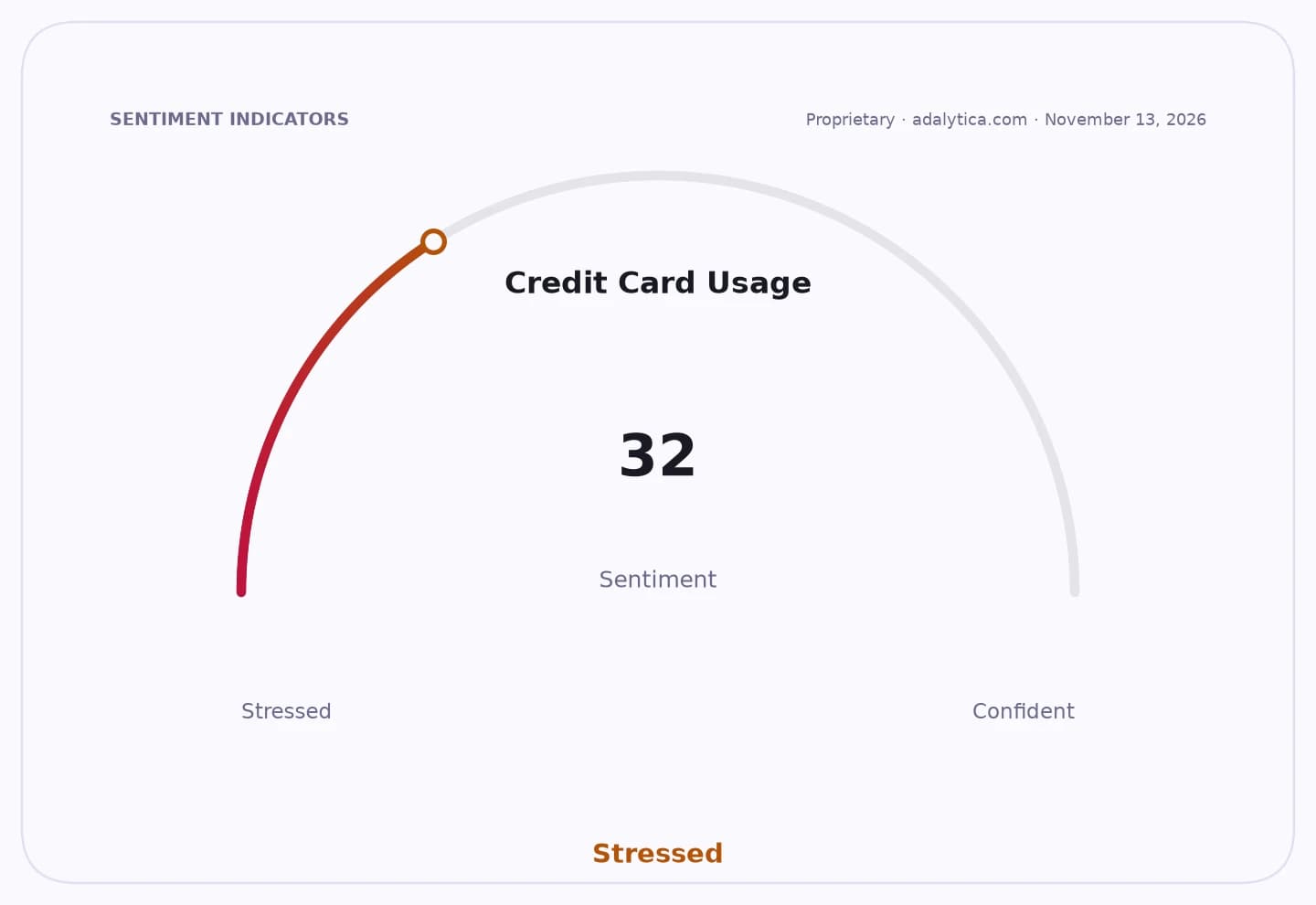
Sentiment Indicators
In its statement, the central bank pointed to global financial market risks as the main threat to local financial stability. That framing is important: Chile’s policy stance is being driven less by signs of immediate stress at home than by the risk of imported volatility from tighter funding conditions, swings in commodity prices, and broader market repricing abroad. For a small open economy, that combination can quickly feed through to credit costs, funding spreads and asset quality.
For investors, the holding pattern is a mixed signal. On one hand, it avoids an additional capital drag on banks including Banco Santander-Chile, Banco de Chile and Itaú CorpBanca, which helps preserve room for dividend payments and balance-sheet flexibility. On the other, it also shows regulators are not yet convinced the external backdrop is benign enough to relax prudential settings, limiting hopes for a faster pro-credit policy impulse.
Bank stocks have already shown how sensitive they are to changes in risk appetite and policy expectations. Santander Chile shares have recovered from earlier weakness, while Banco de Chile and Itaú CorpBanca have also swung sharply this year, underscoring that investors remain focused on the interaction between capital rules, funding conditions and earnings durability rather than on loan growth alone.
The broader narrative is one of caution, not crisis. Chile’s authorities are keeping the banking system in a neutral defensive posture while waiting to see whether global markets stay orderly. If external volatility rises, regulators have kept room to tighten further; if conditions settle, the same framework could eventually support a more favorable stance for lenders and their shareholders.
| Entity | Gains | Losses |
|---|---|---|
| Chilean banks | ▲Capital flexibility preserved | ▼No regulatory relief |
| Regulators | ▲Financial stability cushion | ▼Less room to boost credit fast |
| Shareholders | ▲Dividend capacity protected | ▼Lower upside from easing policy |
| Borrowers | ▲Banking system remains sound | ▼No extra lending tailwind |