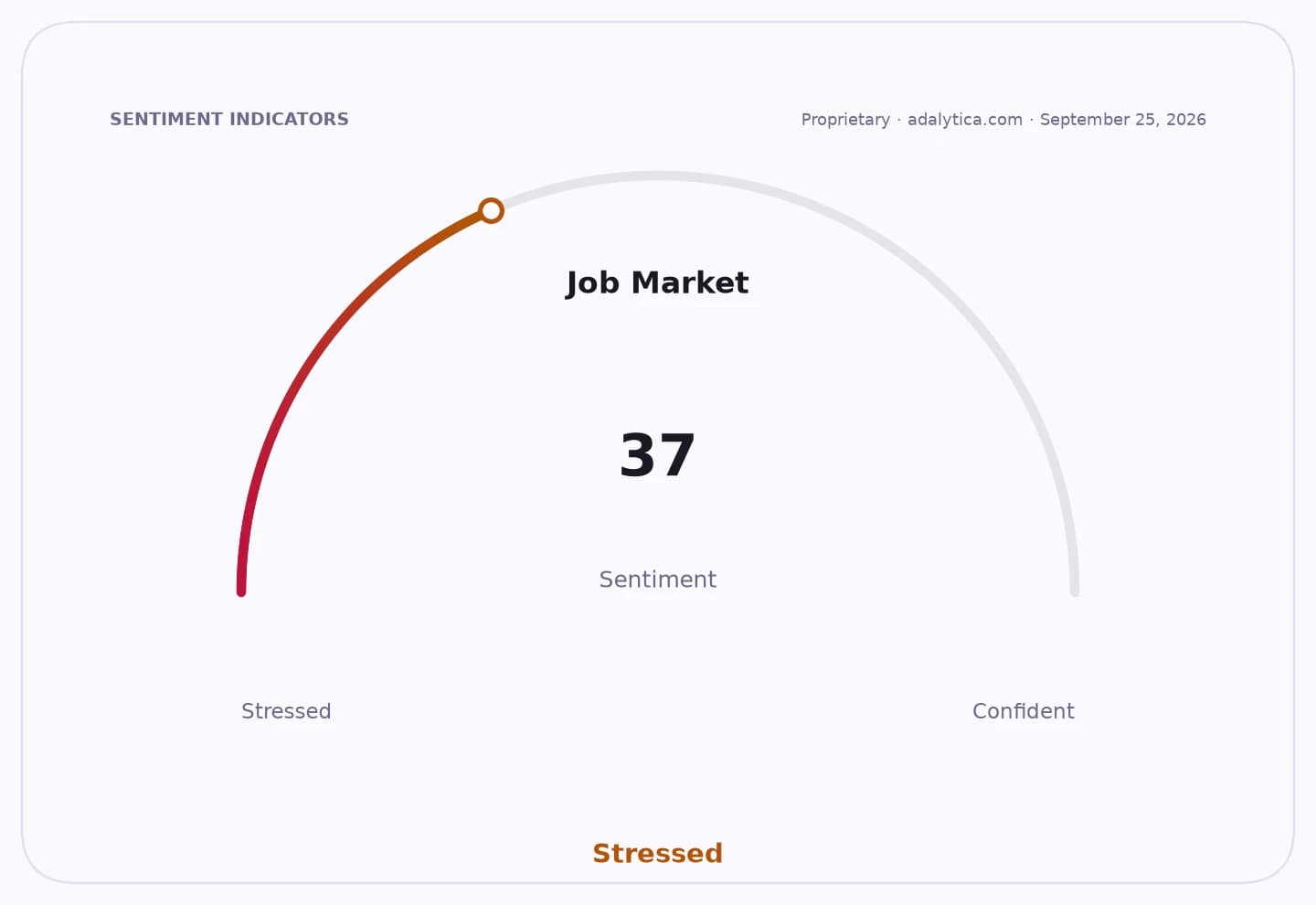
Chile’s labor market has tipped into net job destruction for the first time in 15 years outside the pandemic, a deterioration that points to weaker household income, softer consumption and less room for the central bank to lean against a slowing economy.
Chile jobs fall, unemployment rises to 9.5%

A Horizontal report said 16,292 jobs were lost year on year in the May-July moving quarter, with the employment rate falling 0.59 percentage point to 55.9% and unemployment rising 0.83 point to 9.5%. Labor force participation was nearly flat at 61.7%, suggesting the rise in joblessness is being driven by weaker hiring rather than a surge in new entrants.
Sentiment IndicatorsⓘProprietary · adalytica.com · September 7, 2026
This is a snapshot — live sentiment, awareness and momentum for 130+ markets update continuously in the dashboard.Open AlphaPulse

The quality of work is worsening too. Horizontal’s employment quality indicator fell 1.2 points to 68.4%, implying 127,800 workers no longer met the four conditions the group uses to define a quality job, including formal contracts, pension and health contributions, and no underemployment.
The loss of formal jobs is doing most of the damage. Formal employment fell by 54,100 over 12 months while informal work rose by 37,800, cushioning the headline employment drop but leaving the labor market more precarious and less productive. Underutilization rose to 23.1%, up 1.2 points from a year earlier, driven by a 10.4% jump in the number of unemployed people, or 92,071 additional job seekers.
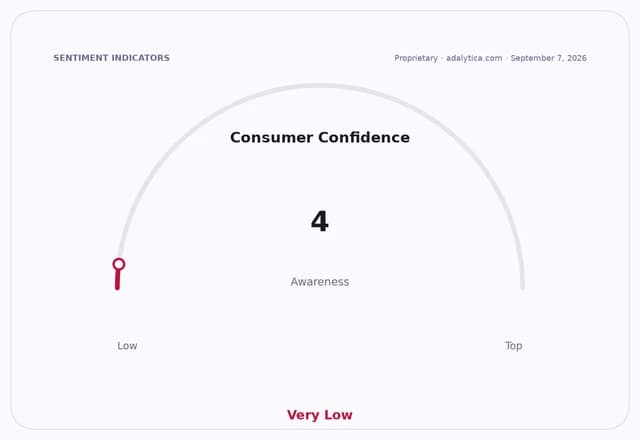
For investors, the message is that Chile is moving from a cooling labor market to one that is actively subtracting demand from the economy. That typically weighs on retail sales, services activity and tax revenue, while increasing pressure on policymakers to balance growth support against inflation risks.
The data also arrive with a sharper political and policy edge because they point to a labor slowdown that is broadening rather than stabilizing. If the weakness persists, markets will watch whether softer employment and falling job quality force a more dovish stance from policymakers, even as inflation and fiscal concerns limit how far they can go.
| Entity | Gains | Losses |
|---|---|---|
| Job seekers | ▲potential policy support | ▼weaker hiring conditions |
| Informal workers | ▲relative employment shelter | ▼lower job quality |
| Chilean consumers | ▲possible policy easing | ▼slower income growth |
| Policymakers | ▲case for stimulus | ▼harder trade-off with inflation |