China has moved to curb emotionally anthropomorphized AI chatbots, a policy shift that could reshape how tens of millions of users interact with generative AI and deepen pressure on a sector already hit by a reported $480 billion wipeout.
China Curbs AI Chatbots, Pressuring ByteDance and Tencent
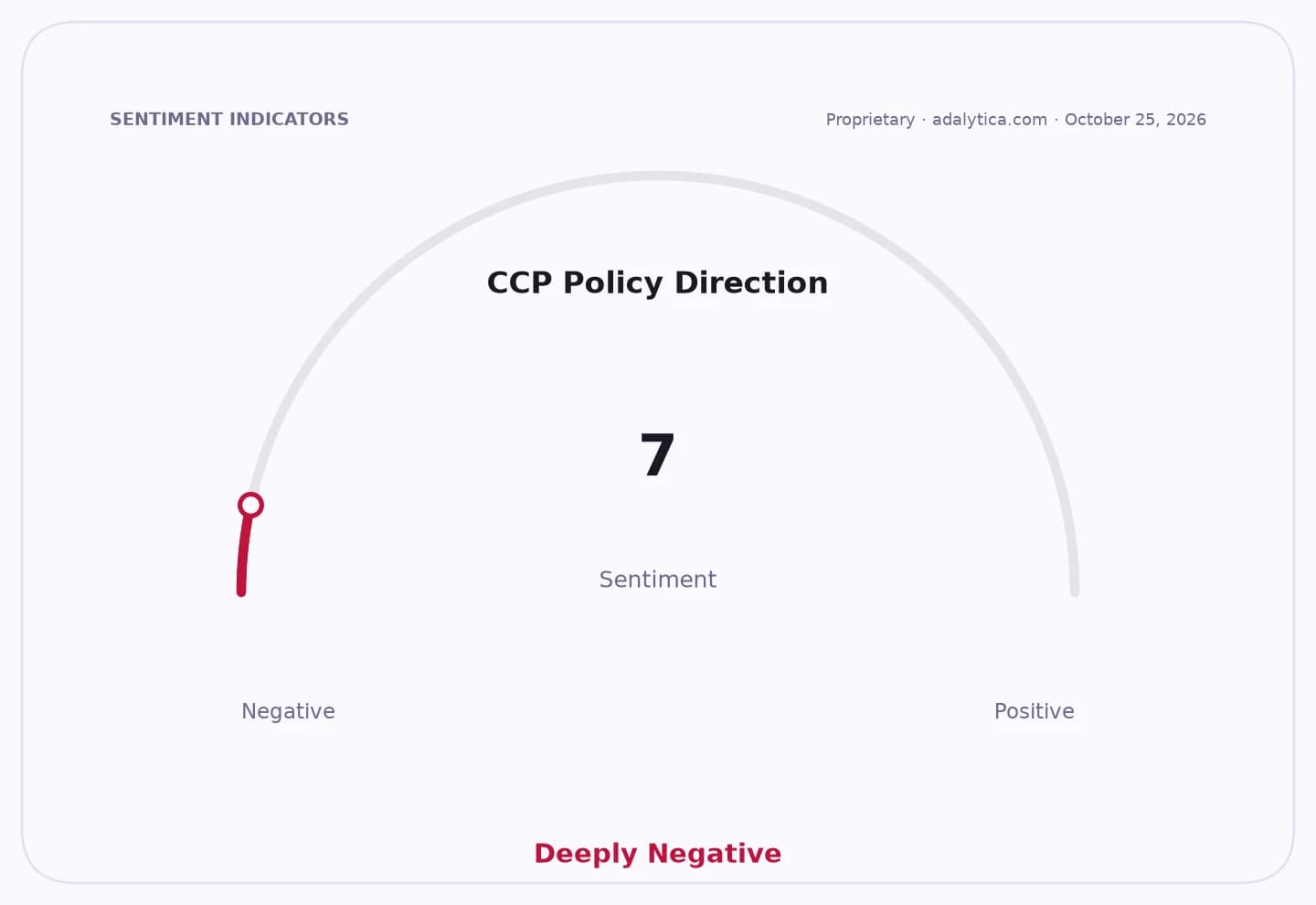
CCP Policy Direction
The new rules matter because China is not just regulating model quality or data use; it is intervening in the most commercially sticky part of AI — the companion-style products that keep users engaged for long periods. That raises the bar for domestic platforms including ByteDance’s Doubao and could slow monetization in a market where emotional attachment has become a key growth engine.
Sentiment Indicators
Users have been reacting sharply after Doubao ended a feature in July that let people customize the chatbot’s gender, personality, background and tone. The app has more than 300 million users, and complaints flooded social media, with one user saying it felt like a close friend had suddenly disappeared after the bot had spent months encouraging them through exam season.
The backlash underscores why regulators are stepping in. Chinese state media and social posts have highlighted a growing reliance on AI for advice, companionship and even romance, especially among younger users facing academic and work pressure. Beijing is framing the intervention as a solution to excessive psychological dependence on AI, but the move also shows the government’s willingness to trade user stickiness for social control.
CCP Policy Direction vs BABAadalytica.com
Explore this data interactively — full history, time series and cross-market comparisons.
For investors, the issue cuts beyond consumer sentiment. China’s AI leaders have been trying to build scale quickly in a fiercely competitive market, and companion features have helped boost engagement, retention and subscription potential. Limiting those features may crimp growth for companies such as ByteDance, Baidu and Tencent even as they keep pouring capital into AI infrastructure and model development.
The policy also lands against a tougher backdrop for Chinese tech. Beijing is still pushing to build out domestic AI capabilities amid U.S. export controls, while market sentiment around Chinese internet stocks remains fragile. Alibaba, Baidu and Tencent shares all remain well below their recent highs, with technical indicators showing Baidu and Tencent trading under their 50-day and 200-day moving averages and Alibaba below its 200-day average, a sign that investors remain skeptical about the sector’s near-term earnings power.
The next test is whether regulators broaden the rules or turn their attention to more direct restrictions on AI companionship products. If they do, the trade-off between social stability and commercial growth could become one of the defining issues in China’s AI rollout.
| Entity | Gains | Losses |
|---|---|---|
| Chinese regulators | ▲More control over AI use | ▼Faster consumer adoption |
| ByteDance/Doubao | ▲Less reputational risk | ▼Engagement and retention |
| Alibaba, Baidu, Tencent | ▲Clearer policy boundaries | ▼Monetization upside |
| Young AI users | ▲Reduced psychological harm | ▼Loss of personalized companions |