China has created a new state-owned enterprise to manage data resources, a move that deepens Beijing’s grip on the raw material underpinning artificial intelligence, cloud services and the wider digital economy.
China Data Group Created to Manage Data Resources
China National Data Group Co., Ltd. was officially inaugurated in Xiongan New Area in Hebei province and is now one of 100 central government-owned SOEs. The company has been assigned to develop and use data resources, strengthen data infrastructure connectivity and serve as a national force for data-related science and technology innovation.
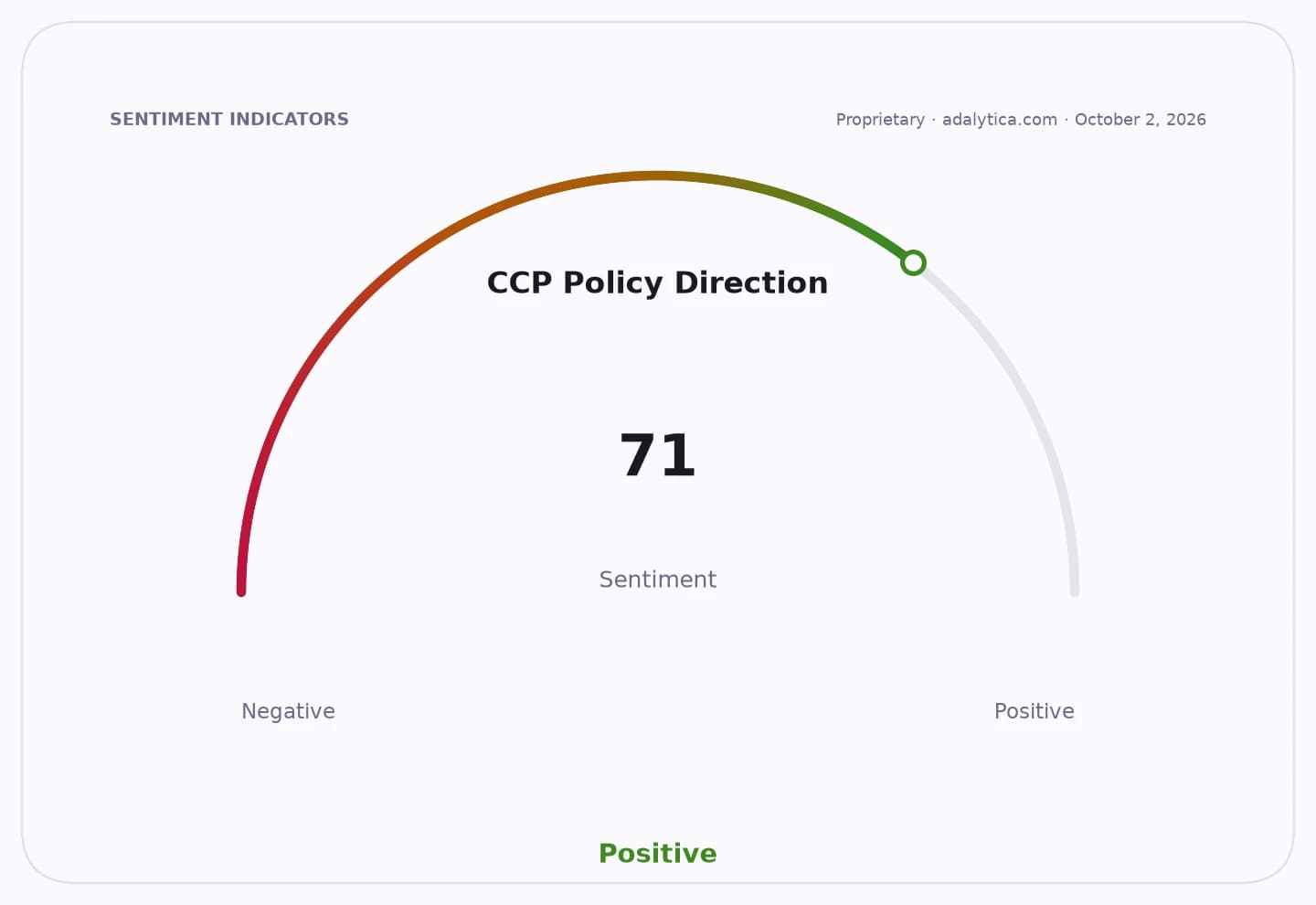
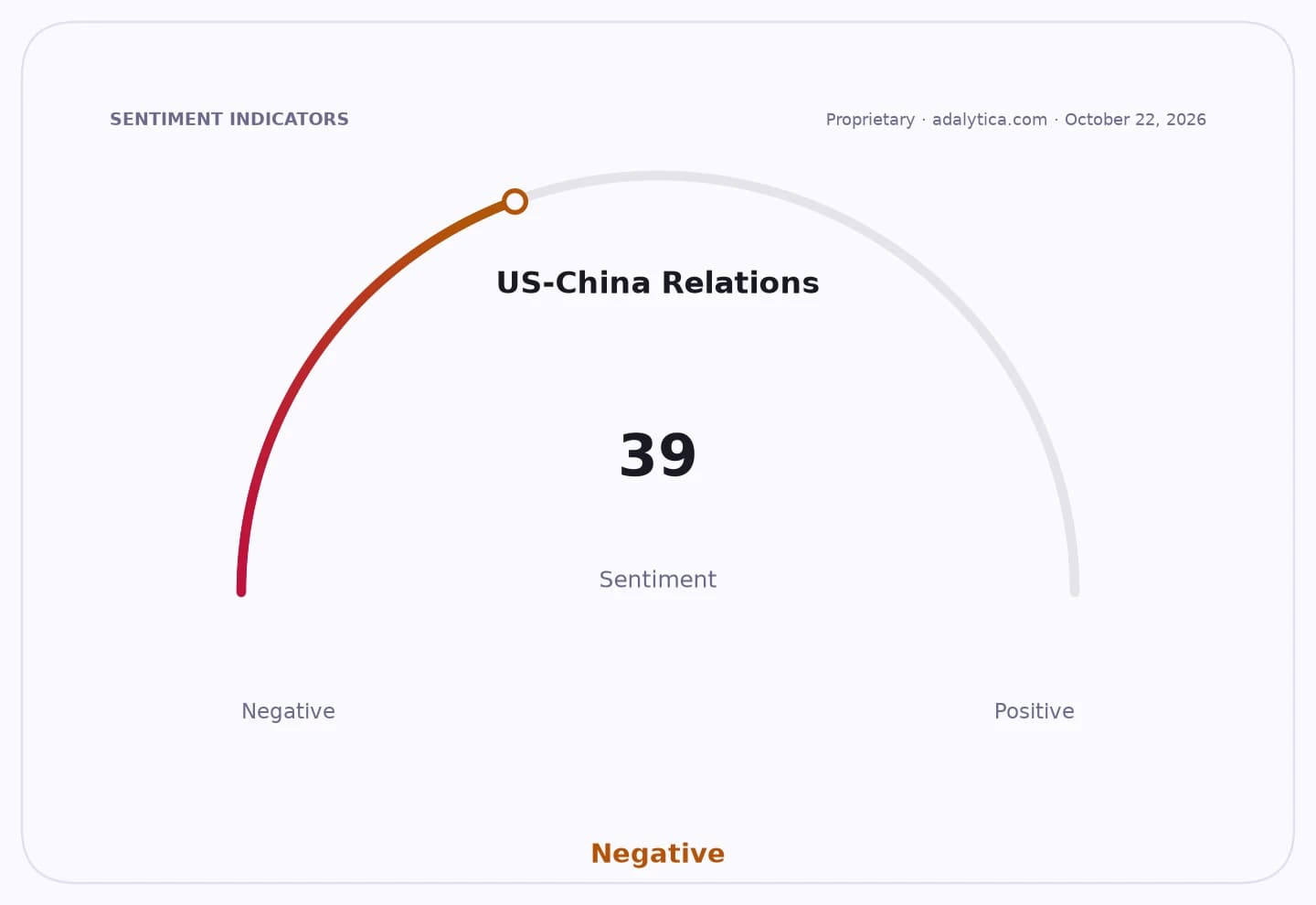
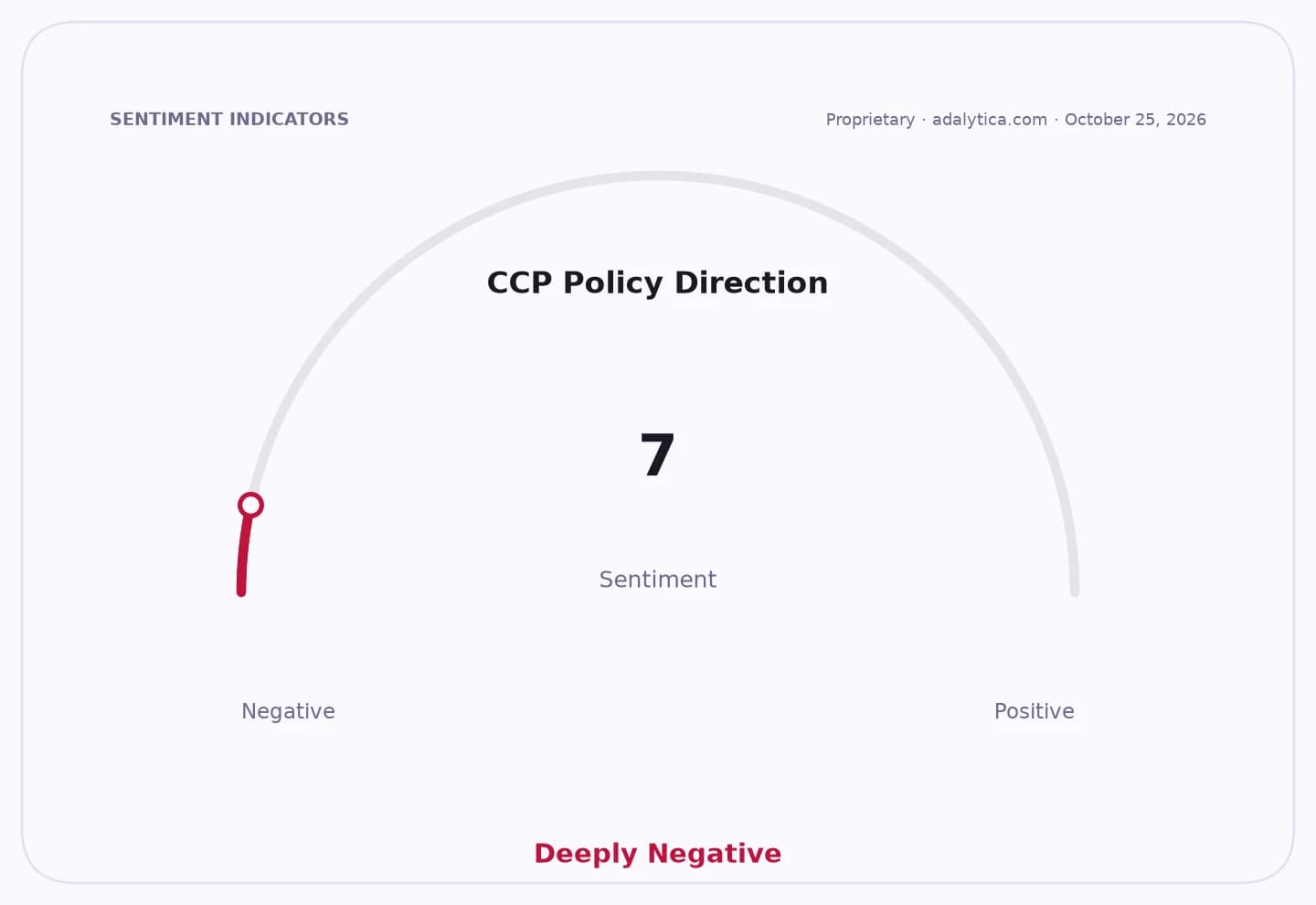
Sentiment IndicatorsⓘProprietary · adalytica.com · October 25, 2026
This is a snapshot — live sentiment, awareness and momentum for 130+ markets update continuously in the dashboard.Open AlphaPulse
The significance goes beyond another bureaucratic launch. By elevating data management to a centrally controlled enterprise, Beijing is signaling that data is no longer just an input for private tech firms but a strategic asset to be organized, standardized and mobilized by the state. That could help reduce fragmentation across local governments and state agencies, improve interoperability of digital systems and accelerate the build-out of China’s AI and industrial software stack.
It also fits a broader policy pattern: tighter control over critical digital infrastructure, greater emphasis on technological self-sufficiency and a more state-directed approach to scaling the economy’s next growth engines. For China, the logic is economic as much as geopolitical. A more coordinated data network can lower duplication, support public-sector digitization and potentially improve the efficiency of sectors from finance to manufacturing. For Beijing, it also creates another instrument to steer sensitive information flows and reduce dependence on foreign technology ecosystems.
For investors, the immediate read-through is mixed. Chinese internet and AI names could benefit if the new entity helps unlock more standardized data access, faster adoption of AI applications and more infrastructure spending. But the state-led model also raises questions about how much commercial upside private platforms will keep if data becomes more tightly governed and routed through official channels. The policy tilt may be supportive for long-term digital investment, yet it can also compress margins, increase compliance burdens and limit the autonomy of listed technology groups.
The market backdrop remains cautious. Chinese technology shares have been volatile, with investors weighing policy support against weaker growth, regulatory uncertainty and a slowing external environment. In that setting, a new state data champion is less a one-off corporate event than another sign that Beijing intends to use public institutions to build the foundations of its digital economy, rather than leave that role entirely to Alibaba, Baidu, Tencent and their peers.
The key question now is execution: whether the group becomes a meaningful platform for data integration and AI deployment, or mainly another layer of central bureaucracy. If it can improve the flow, quality and commercial use of data across China’s economy, it could become an important policy tool with lasting implications for productivity, capital spending and the valuation of the country’s tech sector.
| Entity | Gains | Losses |
|---|---|---|
| China National Data Group | ▲Policy backing; infrastructure mandate | ▼Execution pressure |
| Chinese state sector | ▲Centralized data control | ▼Less local autonomy |
| Alibaba, Baidu, Tencent | ▲Potential data/AI tailwinds | ▼Tighter oversight |
| Foreign tech firms | ▲Limited direct benefit | ▼Harder market access |