China’s most impressive AI breakthroughs are not translating into lasting support for its equity market because investors remain focused on the economy’s weaker foundations: deflation, a property slump, soft consumer demand and the lack of broad-based reform. That disconnect has helped drive Chinese shares into bear-market territory even as the country narrows the gap with the US in frontier AI models.
China AI gains fail to lift stocks

The CSI 300 is down 11% this year and has shed about $2.4 trillion in market value since May, while Taiwan and South Korea — markets with far richer exposure to AI chips and hardware — have surged. The divergence underlines a simple market reality: innovation alone does not lift valuations if the index does not capture the winners, earnings remain under pressure and policy credibility is still in doubt.
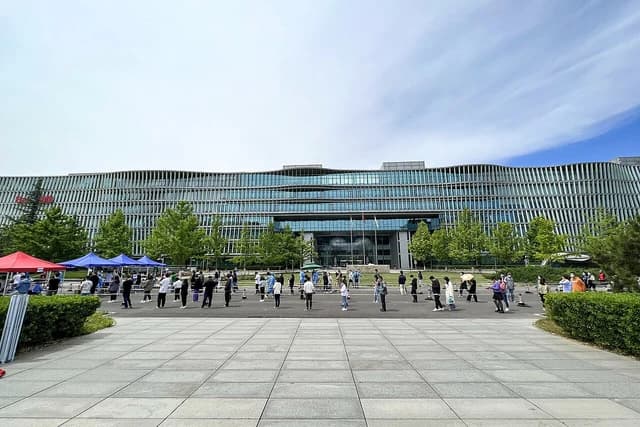
Sentiment Indicators
The irony is that China keeps producing headline-grabbing AI advances. Since the “DeepSeek shock” in January, domestic labs have continued to impress, with Moonshot AI’s Kimi K3 and fresh assessments from Stanford suggesting China is closing in on the US. DeepSeek has reportedly raised about $15 billion, yet listed AI developers such as MiniMax and Z.AI are being sold down, highlighting how little of the excitement is filtering through to public markets.
Part of the problem is mechanical. The CSI 300 has limited exposure to AI hardware, unlike the benchmarks in Taiwan and South Korea, which are loaded with TSMC, Samsung Electronics and SK Hynix. That means China can dominate parts of the model race and still miss the equity rally that has powered Asian tech elsewhere. Japan has also benefited from the global AI trade despite lacking major model breakthroughs of its own.
The bigger drag is macroeconomic. Years of falling property prices, near-record youth unemployment and deflation have left households and businesses cautious. Roughly 70% of household wealth is tied to real estate, so the housing slump has hit confidence, spending and balance sheets all at once. Local government finances are also strained by the legacy of borrowing through financing vehicles that funded a boom in roads, airports and apartments now struggling to deliver returns.
Beijing has responded by reviving its “national team” of state-backed funds, insurers and regulators to steady the market, a tactic that has worked before. But market support is not the same as restoring confidence. Bloomberg Intelligence’s Rebecca Sin warns that without a global equities rebound to lean on, official buying may need to be larger and last longer than in prior rescues.
The policy backdrop has not helped. Xi Jinping’s tech clampdowns since 2020 left many foreign investors viewing China as “uninvestable,” and US export controls on advanced chips continue to weigh on valuations. That combination of regulatory risk and geopolitical friction means even strong AI execution is being discounted rather than rewarded.
The government has tried to offset the slowdown with targeted stimulus. Third-quarter GDP grew 4.5% year on year, and the People’s Bank of China cut its pledged supplementary lending rate and expanded relending quotas. But the measures are still narrow relative to the scale of the property problem, and the IMF and other analysts continue to warn that growth could slow toward 4% in 2027 if broader reflation does not take hold.
For investors, the message is that China’s AI story is no longer enough on its own. The market is demanding evidence that Beijing can stabilise housing, repair confidence and allow private capital to participate more freely in growth. Until then, AI triumphs may keep improving China’s technological standing, but they are unlikely to halt the equity market’s broader loss of faith.
| Entity | Gains | Losses |
|---|---|---|
| AI developers in China | ▲Higher strategic relevance | ▼Weak listed valuations |
| Taiwan and South Korea tech stocks | ▲AI hardware demand | ▼Less direct benefit from China’s AI advances |
| Beijing’s national team | ▲Short-term market stability | ▼Long-term credibility if rescue support persists |
| Chinese households and consumers | ▲Potential policy support | ▼Ongoing wealth and confidence erosion |