AI financing worries are spreading from smaller cloud players to the biggest names in tech, rattling global semiconductor shares and sending South Korea’s KOSPI into a sharp October selloff.
AI financing worries hit Big Tech and KOSPI
The shift matters because the market is no longer treating AI as a pure growth story. Rising borrowing costs, tied to a jump in global sovereign yields and tighter credit conditions, are forcing investors to question whether AI capex can keep outrunning the cost of capital.
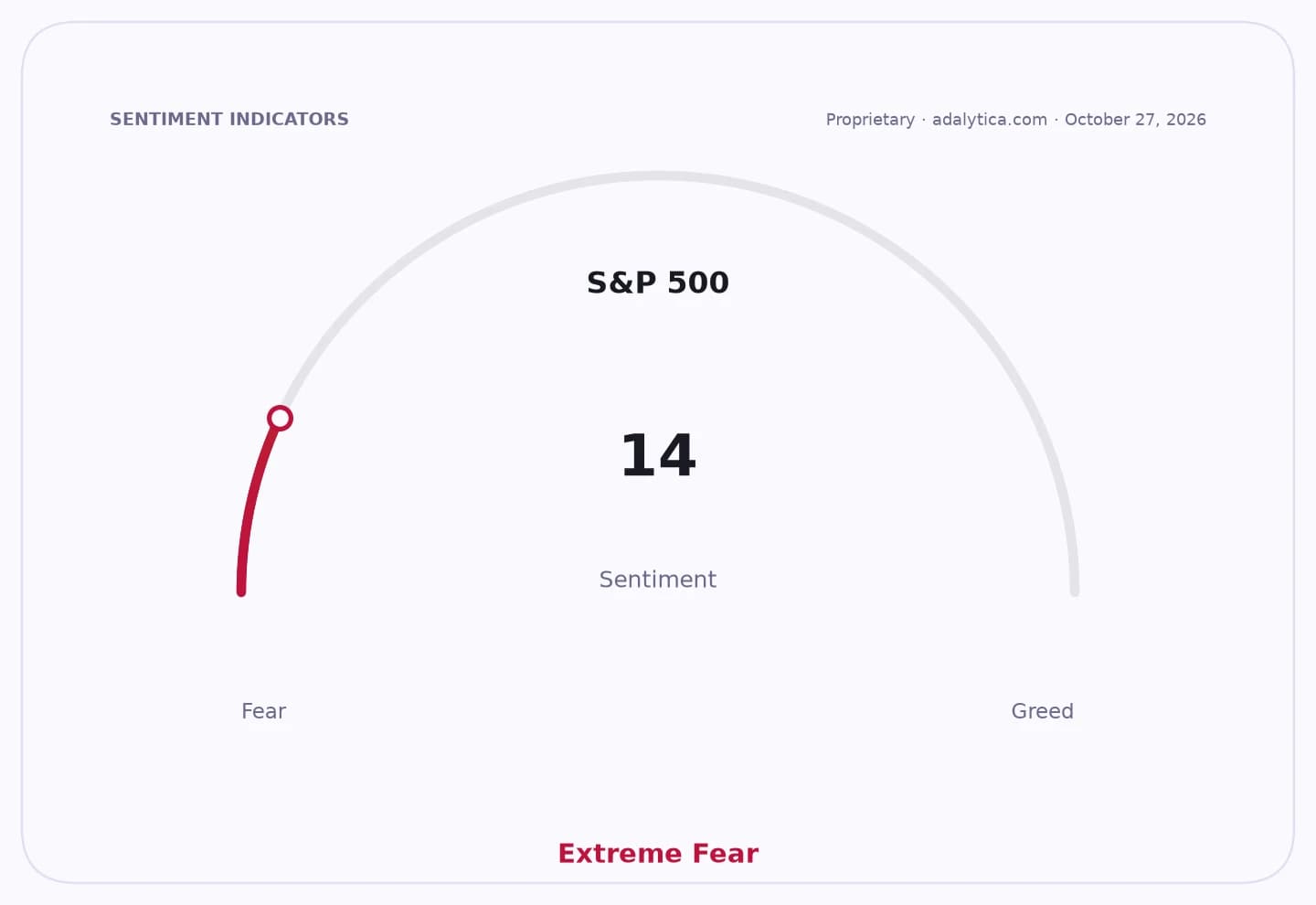
Sentiment Indicators
That pressure is now showing up in credit markets. Meta’s five-year credit default swap premium jumped about 7 basis points to a record high overnight, a sign the concern that began with neocloud names such as CoreWeave is leaking into Big Tech balance sheets. The move comes even as the largest AI-linked companies continue to post strong operating results, underscoring that the problem is not revenue collapse but financing stress.
The catalyst is a broader macro shock. Higher energy costs from the protracted US-Iran conflict have pushed up global bond yields, lifting funding costs across the AI supply chain and hitting firms that rely heavily on capital markets to fund data-center buildouts. Anthropic’s latest third-quarter revenue growth also slowed to 45% sequentially, or $16.8 billion, reinforcing doubts that AI demand can justify the current pace of investment.
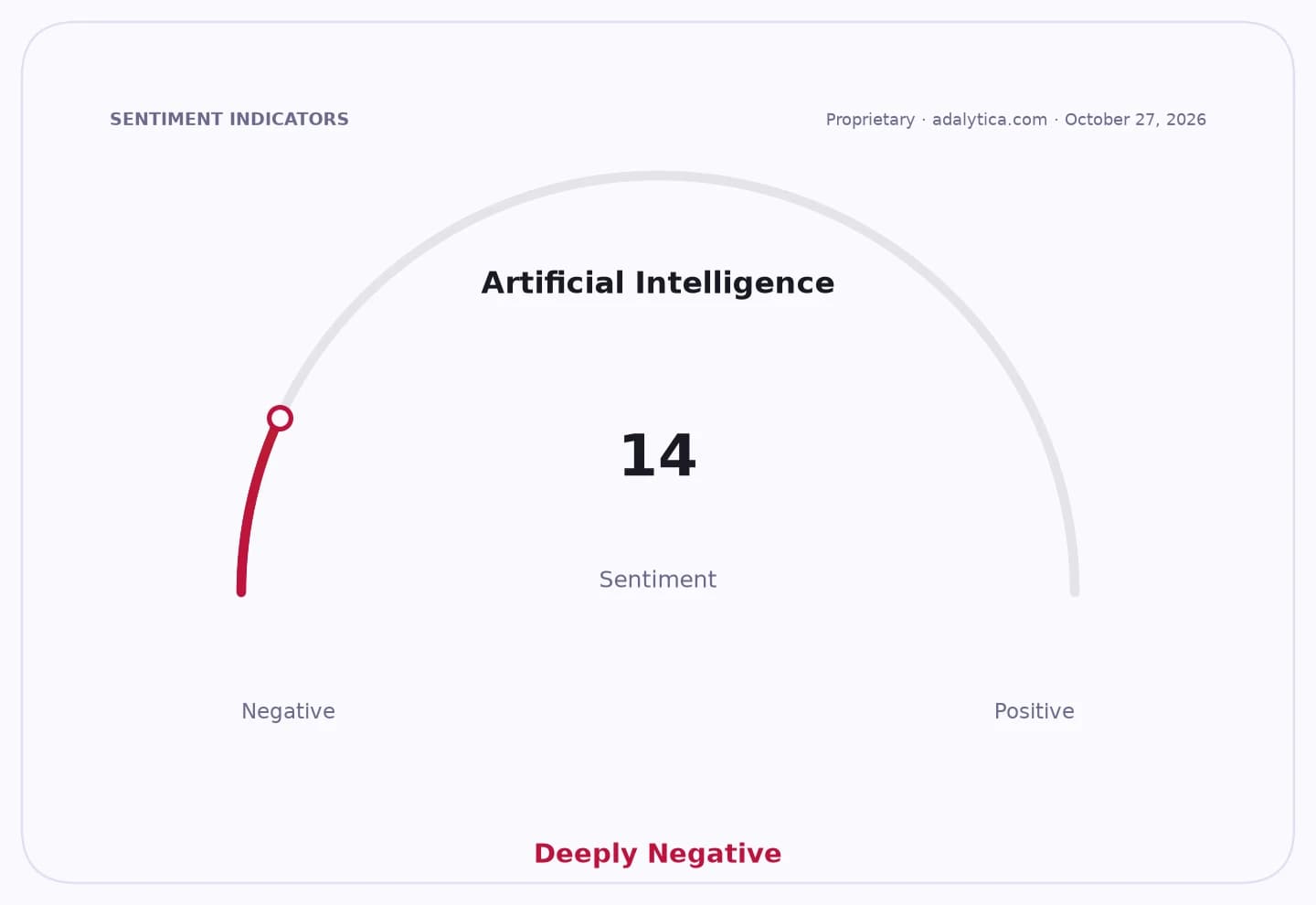
Artificial Intelligence — 30-day sentimentadalytica.com
Explore this data interactively — full history, time series and cross-market comparisons.
Artificial Intelligence
Equities have reacted accordingly. Global AI and chip stocks have come under heavy pressure in October, with the Philadelphia Semiconductor Index down 15.02% month to date. KOSPI has done far worse, falling 19.07% by the close on Oct. 22, compared with a 0.16% rise in the S&P 500 and a 3.17% drop in the Nasdaq Composite over the same stretch.
South Korea’s underperformance reflects both sector concentration and a fragile domestic market structure. Samsung Electronics and SK Hynix account for nearly half of KOSPI weight, so any de-rating in AI semis hits the benchmark hard. Local investors have also been unable to absorb foreign selling, while buyback support from the two chipmakers has faded.
SK Hynix briefly lifted sentiment after it said it would stop considering a Nasdaq IPO for its subsidiary Solidigm. The stock surged 2.86% in Seoul, but the move does little to change the bigger picture: investors are still asking whether the AI buildout is becoming too dependent on expensive funding, even for companies with strong cash generation.
For now, the debate is less about imminent default than about valuation and duration risk. If credit spreads keep widening and yields stay elevated, the market will keep rotating away from the most leveraged parts of the AI ecosystem and toward companies with the cleanest balance sheets and strongest free cash flow.
| Entity | Gains | Losses |
|---|---|---|
| Big Tech with strong cash flow | ▲funding access, market share | ▼higher CDS scrutiny |
| Neocloud lenders/borrowers | ▲short-term AI demand | ▼refinancing costs |
| Samsung Electronics & SK Hynix | ▲brief relief from Solidigm IPO pause | ▼KOSPI-linked valuation pressure |
| AI equity longs | ▲selective rebound in cash-rich names | ▼broader sector de-rating |