China’s best artificial intelligence models are now only months behind the leading U.S. systems, but the bigger problem is that Chinese startups still lack the money to scale.
China AI Startups Face Funding Gap
That matters because in AI, technical parity is only half the battle. The winners will not just build capable models; they will need enough capital to buy chips, train systems, hire talent, and commercialize products fast enough to turn engineering progress into durable profits. For investors, that creates a very familiar split: China can compete on performance and cost, but the U.S. still dominates the funding race.
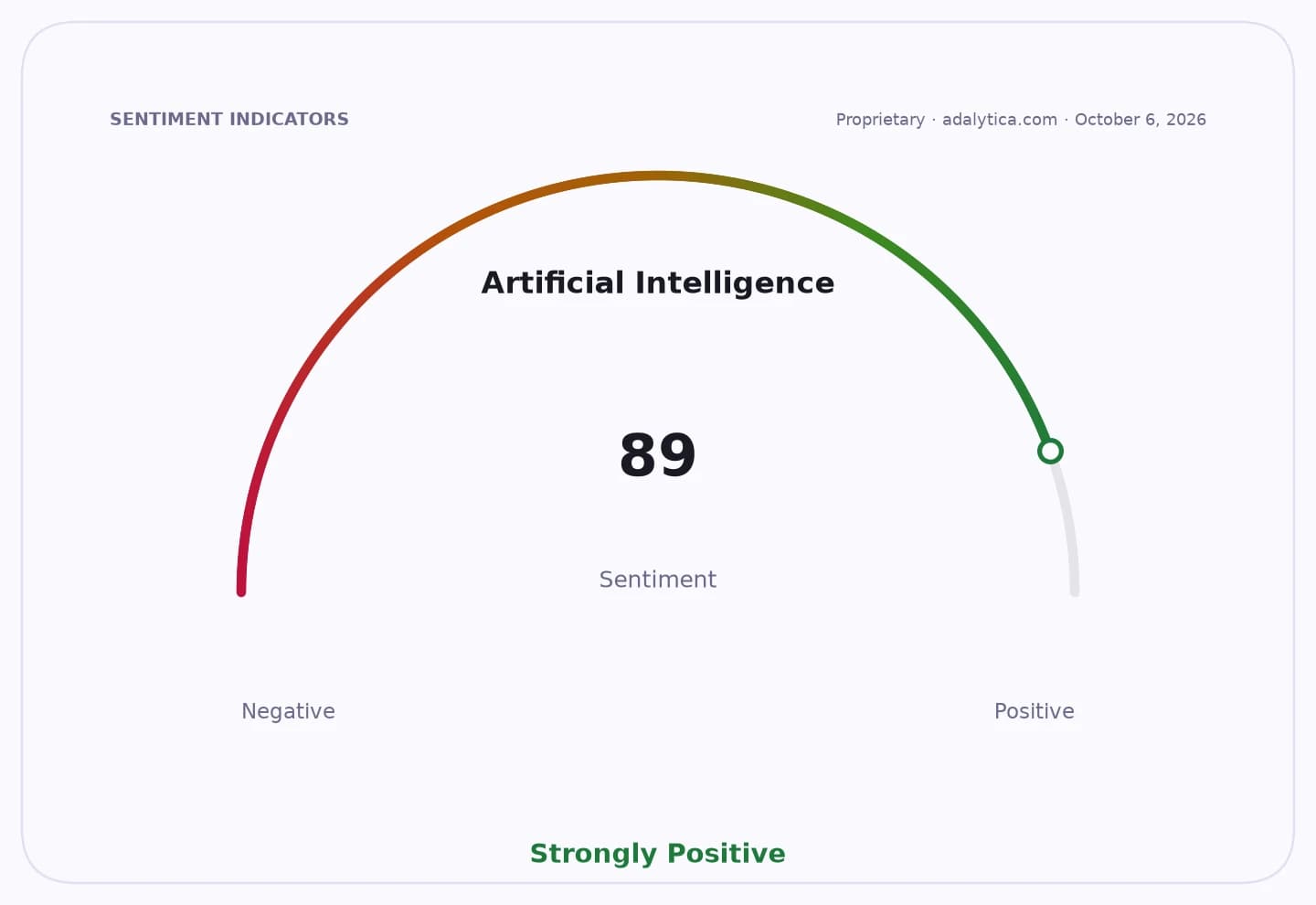
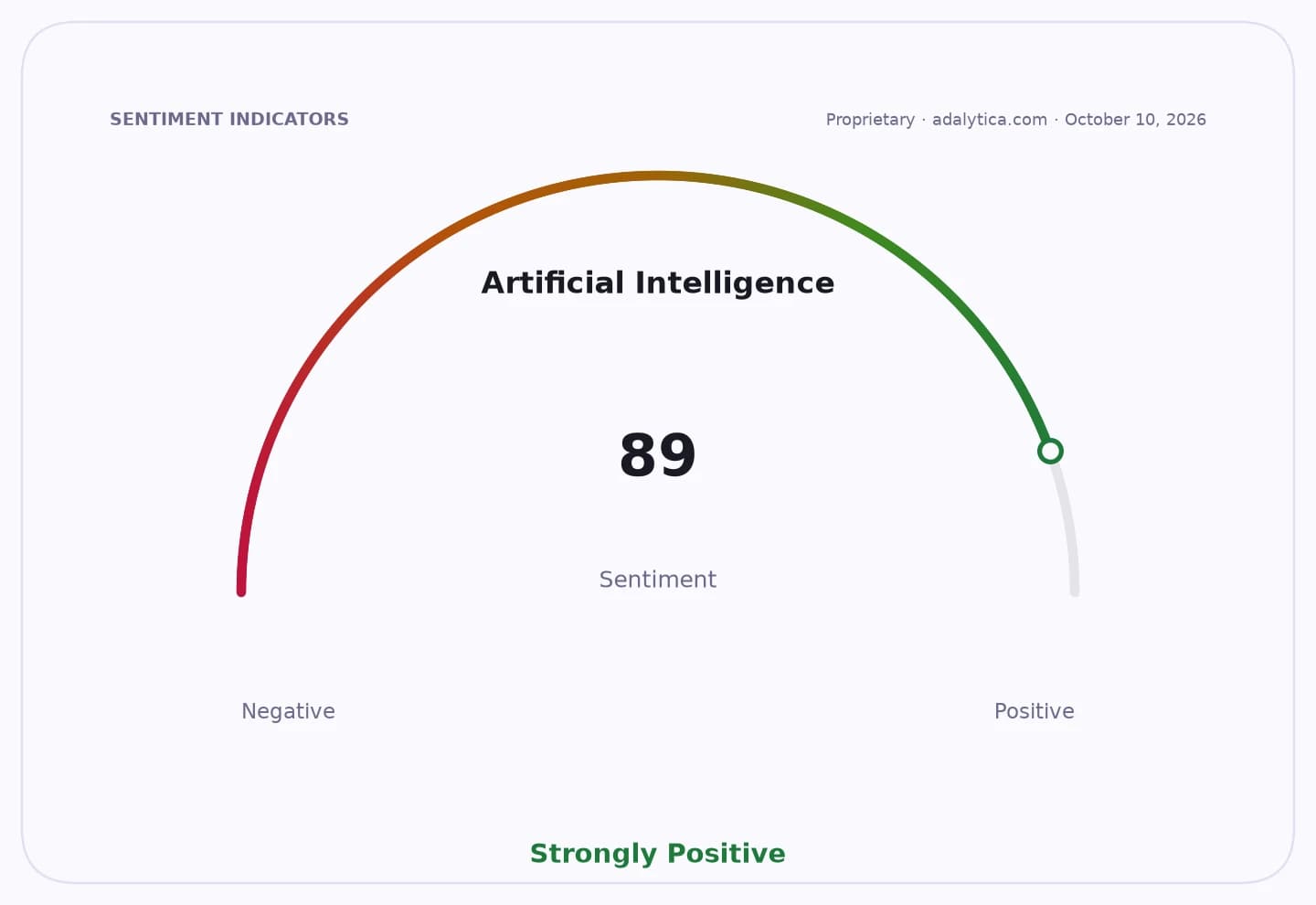
Sentiment IndicatorsⓘProprietary · adalytica.com · October 10, 2026
This is a snapshot — live sentiment, awareness and momentum for 130+ markets update continuously in the dashboard.Open AlphaPulse
Analysts cited in the reports say the best Chinese models are now about four months behind OpenAI and Anthropic’s most advanced releases, down from roughly seven months earlier this year. That is a meaningful narrowing of the gap and a reminder that Chinese developers have found ways to squeeze more out of limited resources, using smarter architecture and greater domestic chip production to reduce computing costs.
The economic irony is that scarcity is forcing innovation. Chinese AI firms are building systems designed to handle huge data sets without the astronomical energy bills associated with some Western models. That cost discipline gives smaller companies a fighting chance on performance and pricing, especially in code generation and agent-style tasks where lower-priced offerings can attract customers quickly.
But the financing backdrop is far less supportive. Fortune, citing Boston Consulting Group, said venture funding for U.S. AI companies from 2023 to 2026 topped $380 billion, while Chinese startups received less than a tenth of that amount. That is not just a headline number. It is the difference between a sector that can scale aggressively and one that may have to improvise its way through IPOs, private credit, customer revenue sharing or pledging assets as collateral.
For investors, that funding gap is the key narrative. It suggests China’s AI industry may produce technically impressive models and still struggle to convert them into the kind of platform businesses that compound for years. In other words, the market may reward the best product less than the best-funded ecosystem.
That helps explain why the big Chinese internet names remain central to any long-term AI thesis. Baidu, Alibaba and Tencent sit closer to the capital markets and have the balance sheets and customer bases to keep pushing AI products even as startup funding stays tight. Their shares, like many China tech names, have been volatile, but the underlying strategic advantage is simple: if smaller rivals cannot raise enough money, the incumbents are more likely to control distribution, data and monetization.
The broader geopolitical backdrop also matters. Washington is worried enough about China’s AI progress that policymakers are discussing ways to reduce the risk of escalation, including a proposed crisis hotline between the two countries. That tells you this is no longer just a venture-capital story. It is now part of the wider U.S.-China technology rivalry, with chip controls, model competition and national security all pulling in the same direction.
For long-term investors, the lesson is to separate innovation from investability. Chinese AI is improving quickly, and cheaper models could win real business in software, automation and enterprise tools. But without a deeper financing pool, the sector may be forced to optimize for survival instead of scale. That makes the winners harder to predict and strengthens the case for diversified exposure over stock-picking heroics. Worth watching, but patience will matter.
| Entity | Gains | Losses |
|---|---|---|
| Chinese AI startups | ▲Lower-cost model innovation | ▼Scaling capital |
| Baidu, Alibaba, Tencent | ▲Strategic AI distribution | ▼Pressure to self-fund growth |
| U.S. AI giants | ▲Capital advantage | ▼Relative cost efficiency edge |
| Investors | ▲Cheaper AI use cases | ▼Easy path to China AI dominance |