China and Southeast Asian nations are moving to put a higher-level free trade area into force, a step that could deepen the region’s already vast supply chains and give exporters, investors and policymakers a clearer framework for trade in digital services, green industries and advanced manufacturing.
China ASEAN CAFTA 3.0 Trade Upgrade Advances
Chinese Vice Premier Ding Xuexiang said China and ASEAN have signed the CAFTA 3.0 upgrade protocol and are now working through domestic legal procedures before implementation, according to remarks at the China-ASEAN Expo in Nanning. The new framework is designed to be more inclusive and modern, with added rules meant to ease trade and broaden cooperation in areas such as the digital economy and the green economy.
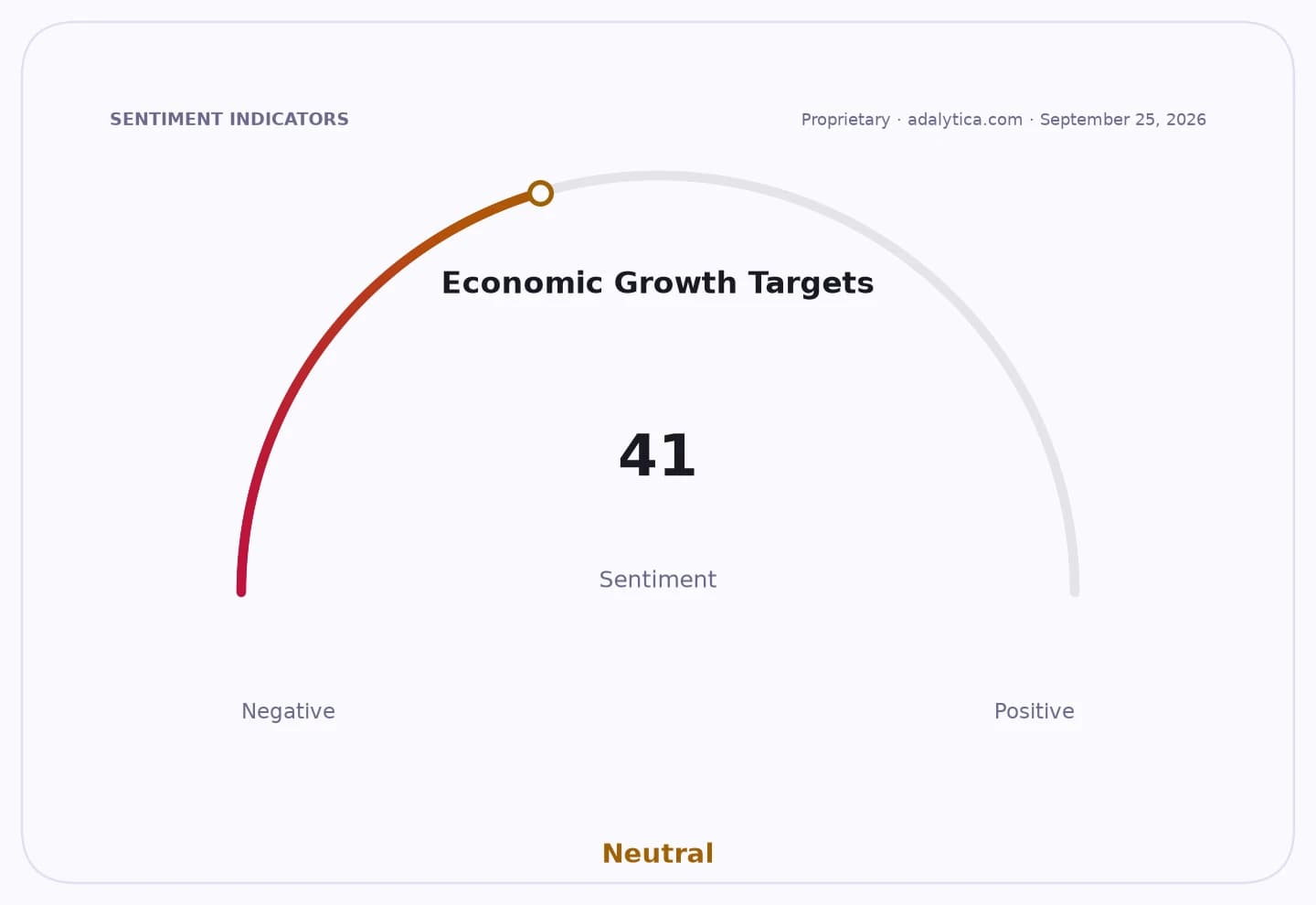
Sentiment IndicatorsⓘProprietary · adalytica.com · September 22, 2026
This is a snapshot — live sentiment, awareness and momentum for 130+ markets update continuously in the dashboard.Open AlphaPulse
For the region, the timing matters. China is ASEAN’s biggest trading partner, and the upgrade comes as governments across Asia try to lock in alternative growth engines while global trade faces tariff risks, supply-chain rewiring and slower demand from the West. A more comprehensive China-ASEAN pact could support regional commerce by lowering frictions in sectors that are increasingly important to industrial policy, including data-enabled services, clean technology and advanced manufacturing.
Investors are likely to watch the deal for its second-order effects on exporters, logistics firms, infrastructure groups and Asian equities tied to cross-border trade. The iShares MSCI China ETF, FXI, has recently traded below its 200-day moving average but rebounded to 34.91, while the iShares MSCI AC Asia ex Japan ETF, AAXJ, closed at 119.77, near the upper end of its recent Bollinger Band range, suggesting markets are already sensitive to Asia trade headlines. The FTSE ASEAN 40-focused fund ASEA closed at 21.21, little changed, underscoring that the immediate market move remains selective rather than broad-based.
The announcement also fits a wider diplomatic push. Indonesian officials separately said they want to deepen cooperation with China in artificial intelligence, biotech, healthcare, advanced manufacturing and digital finance, signaling that the next phase of regional integration is shifting from basic goods trade toward higher-value industries. Beijing, meanwhile, is trying to present itself as a steady champion of free trade at a time when Asia’s economies are also courting the US, Japan and Europe.
The main question now is execution: how quickly CAFTA 3.0 is ratified and put into practice, and whether member states translate the broader framework into measurable gains in market access, investment flows and industrial cooperation. The next catalyst for investors will be any timetable for implementation and any details on how the new rules apply to digital, green and strategic sectors.
| Entity | Gains | Losses |
|---|---|---|
| China-ASEAN exporters | ▲Easier market access | ▼Higher trade frictions |
| Digital and green industries | ▲New cross-border rules | ▼Slower policy rollout |
| Regional equity funds | ▲Trade-tailwind upside | ▼Policy disappointment |
| Non-ASEAN competitors | ▲— | ▼Relative tariff advantage loss |