China’s banks extended 1.08 trillion yuan of new loans in September, a bigger-than-expected pickup that points to firmer credit demand and renewed policy support for an economy still battling weak private-sector confidence and pressure in property and consumer lending.
China Banks Extend 1.08 Trillion Yuan in New Loans

The September reading matters because bank lending remains one of Beijing’s main transmission channels for stabilizing growth. A stronger-than-forecast flow of new credit suggests policymakers’ easing measures are finding some traction, even as businesses and households remain cautious. For China, where bank loans fund most investment and working capital, a credit rebound can help cushion slowing activity, but it also raises questions about whether demand is recovering on its own or still leaning heavily on official support.
Sentiment IndicatorsⓘProprietary · adalytica.com · October 15, 2026
This is a snapshot — live sentiment, awareness and momentum for 130+ markets update continuously in the dashboard.Open AlphaPulse
The 1.08 trillion yuan total came in above forecasts of about 1.04 trillion yuan, according to the Reuters poll embedded in the data. While that is far from a boom, it is enough to signal that lending conditions did not deteriorate further at a time when markets have been watching for signs of whether the government’s efforts to support growth are gaining momentum.
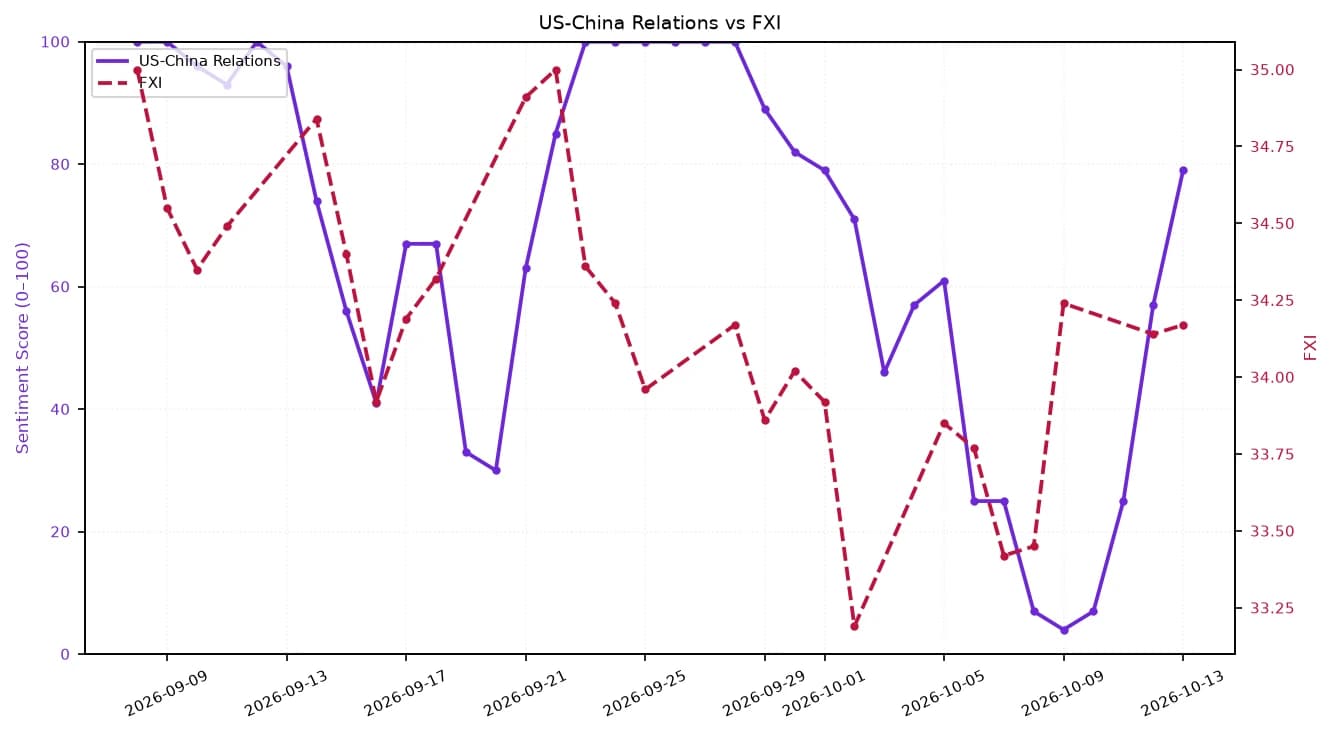
For investors, the implications run across Chinese equities, the yuan and broader Asia risk sentiment. China-focused exchange-traded funds such as FXI and ASHR have been under pressure in recent sessions, with both trading below key longer-term moving averages and showing weak momentum by conventional technical indicators such as the 50-day and 200-day averages and RSI readings. The latest loan data may offer some relief to bulls betting that easier credit can stabilize earnings and sentiment, but it is unlikely on its own to change the underlying debate about the durability of China’s recovery.
That tension is also visible in China-linked market sentiment gauges. Adalytica’s China growth target sentiment index sits in “extreme fear,” underscoring how fragile confidence remains even after bursts of policy support. The yuan’s trade snapshot, meanwhile, shows a neutral sentiment reading but elevated awareness, reflecting how closely traders are watching credit, growth and policy signals for clues on the next move in the currency.
The broader narrative is that Beijing is still trying to engineer a floor under growth through the banking system rather than rely on a spontaneous pickup in domestic demand. That can buy time, and in the short run it can support cyclical assets and reduce tail risks around the economy. But it also highlights the limits of stimulus: if loan growth improves while consumption, private investment and property activity stay soft, markets may keep treating each credit beat as a temporary stabilizer rather than a clean turning point.
For investors, the next question is whether October and the fourth quarter show follow-through in credit demand and broader activity data, or whether September’s loan surprise proves to be another policy-driven bounce in a still-fragile cycle.
| Entity | Gains | Losses |
|---|---|---|
| Chinese policymakers | ▲Growth support, policy credibility | ▼Less room to ease further |
| Banks/lenders | ▲Loan volumes, interest income | ▼Credit risk exposure |
| China equities | ▲Short-term sentiment lift | ▼Bulls if demand stays weak |
| Yuan bears | ▲Potential stabilization risk | ▼Momentum if credit improves |