China has temporarily suspended approvals for new battery storage factories, a move that could slow one of the fastest-growing parts of the country’s clean-energy manufacturing base just as price pressure and overcapacity concerns intensify.
China pauses new battery storage factory approvals

The pause matters because China sits at the center of the global battery storage supply chain, and any delay in new factory permits could reshape capacity growth, margins and investment plans across the sector. Reuters, citing Cailianshe, reported that authorities are reviewing existing and planned production, with battery cells the main focus, and that projects not yet broken ground will be put on hold for now.
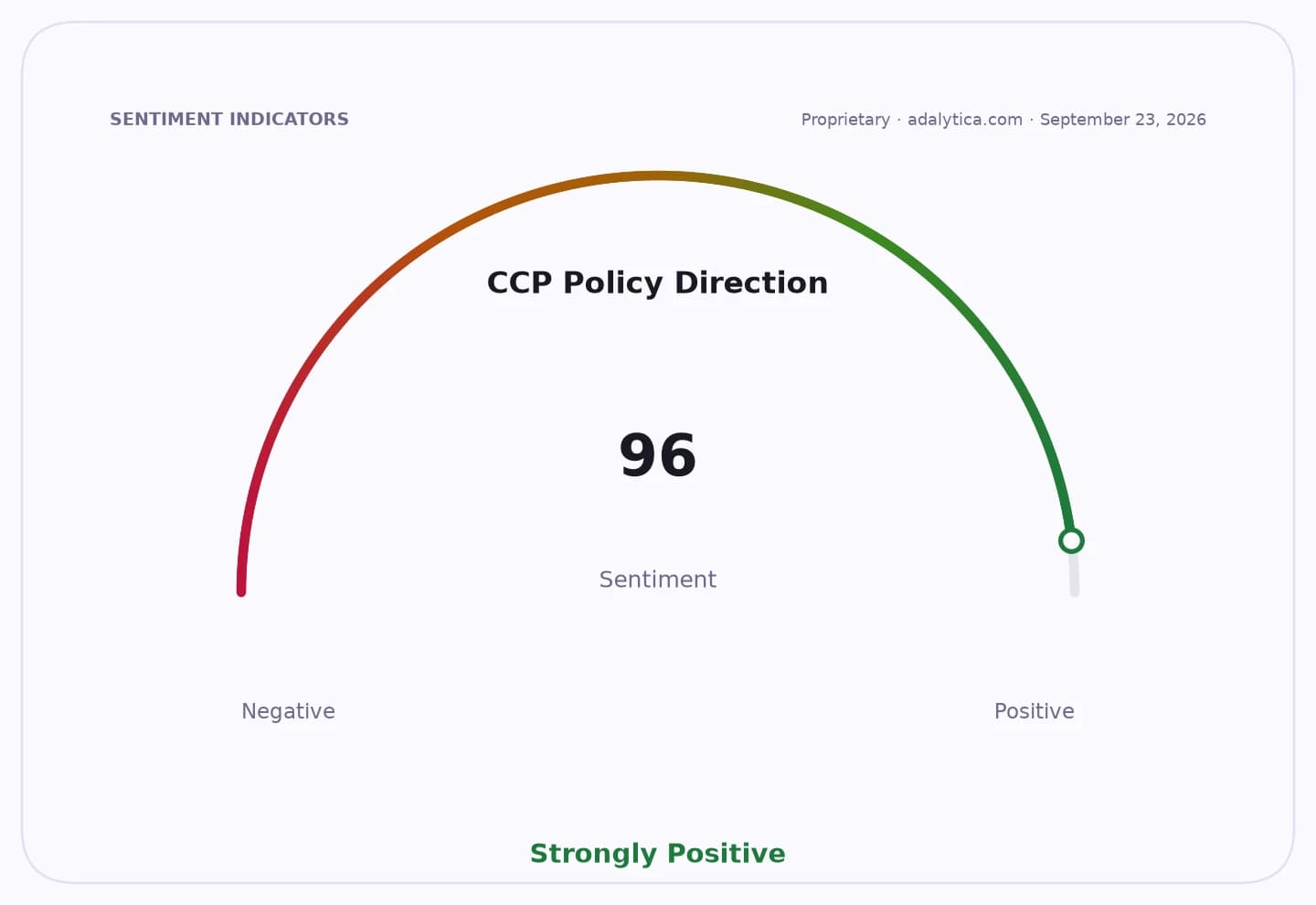
Sentiment IndicatorsⓘProprietary · adalytica.com · September 8, 2026
This is a snapshot — live sentiment, awareness and momentum for 130+ markets update continuously in the dashboard.Open AlphaPulse
The policy reflects a familiar pattern in China’s industrial playbook: after a rapid build-out driven by renewable-energy demand, Beijing is moving to restrain supply growth before price wars and excess capacity deepen. That is the same pressure that has already hit solar panel makers and electric-vehicle suppliers, where fierce competition has squeezed margins and forced firms to seek new growth areas.
For investors, the timing is important. Battery storage has been one of the few bright spots in China’s industrial complex, helped by demand for grid balancing and backup power as renewables expand. But a pause in new approvals suggests regulators are increasingly focused on preventing a repeat of the boom-bust cycle that has plagued other green industries.
The move also lands as Chinese solar manufacturers push deeper into storage to offset weak profitability elsewhere, while established battery groups such as CATL have said energy storage could account for half of global sales by 2030, up from about 25% now. CATL has already highlighted how storage has grown from just 2% of battery sales five years ago, underscoring how quickly the sector has scaled.
China has already taken steps to rationalize the market, including a consumption tax on lithium-ion batteries and solar cells. A temporary freeze on new factory approvals would add another layer of discipline, even if the policy could be adjusted later and projects already under construction are not affected.
Shares tied to the broader battery theme have been mixed. The lithium-focused LIT ETF has traded around $74, while battery names such as BATT and miner Albemarle have also moved lower from earlier highs, reflecting a market that is still sorting winners from losers in the energy-storage build-out. Technical readings on several of those stocks show momentum has cooled after earlier spikes, with prices hovering near their 50-day and 200-day moving averages in some cases.
The next catalyst will be whether Beijing turns this temporary pause into a longer campaign to cap capacity, or whether approvals resume once the review is complete. If the freeze lasts, it could support pricing power for incumbent manufacturers and raw-material suppliers, while pressuring developers and smaller entrants relying on fresh capacity growth.
| Entity | Gains | Losses |
|---|---|---|
| Existing battery makers | ▲Less capacity competition | ▼Faster price erosion |
| Chinese regulators | ▲More industrial discipline | ▼Short-term growth pace |
| Incumbent suppliers | ▲Better pricing leverage | ▼New entrants |
| Project developers awaiting permits | ▲— | ▼Delayed approvals |