China is moving to deepen state support for its small and medium-sized enterprises over the next five years, a policy push that matters because SMEs remain a key source of jobs, industrial resilience and private-sector innovation as growth slows and external demand stays uncertain.
China SME Plan Boosts Support Through 2030

Beijing said it will roll out a 2026-2030 development plan for SMEs aimed at improving quality, scale and innovation, with 10 ministries including the Ministry of Industry and Information Technology coordinating the effort. By 2030, the government wants annual average R&D spending by small industrial firms to rise by more than 8% and the number of SMEs nationwide to reach 22,000, according to the plan disclosed by state media.
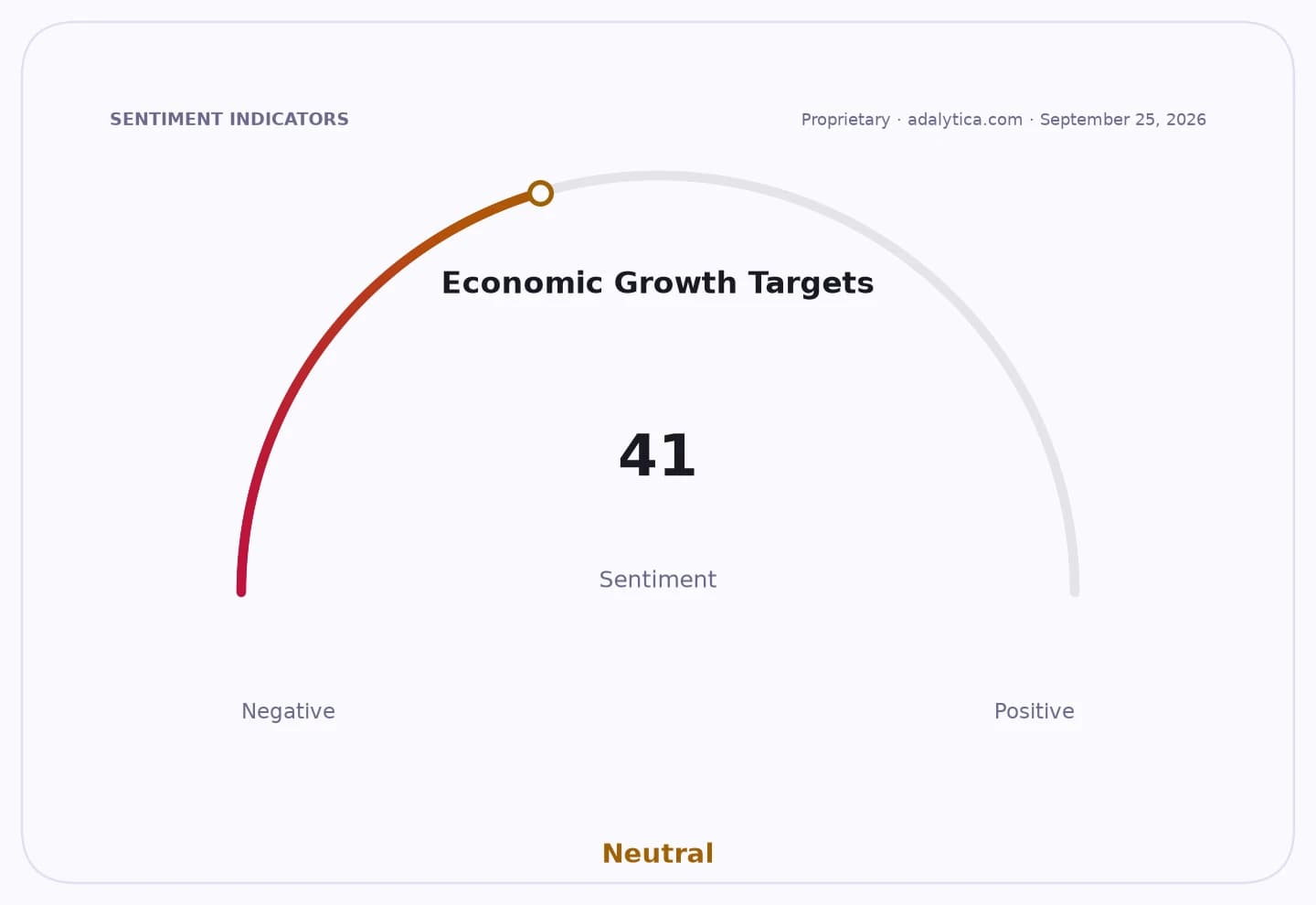
Sentiment IndicatorsⓘProprietary · adalytica.com · September 4, 2026
This is a snapshot — live sentiment, awareness and momentum for 130+ markets update continuously in the dashboard.Open AlphaPulse
The initiative is economically significant because China is leaning on its fragmented private business base to support industrial upgrading without relying solely on large state-owned firms or broad-based stimulus. SMEs account for a large share of employment and a growing share of output in manufacturing and services, so stronger funding, service systems and cross-border cooperation could help stabilize hiring, lift productivity and support supply-chain depth at a time when domestic demand remains uneven.
The policy also reinforces Beijing’s longer-running shift toward “high-quality development,” with innovation now framed as a growth tool rather than a discretionary expense. If the plan succeeds in lifting R&D intensity and service access, smaller firms could move further up the value chain in sectors such as electronics, industrial equipment and software, improving margins and competitiveness. For the government, that would support a more resilient private sector and help offset pressure from property weakness and trade frictions.
Investors will read the announcement as another signal that China is trying to re-energize its domestic growth engine through targeted industrial policy rather than a large consumption-led rescue package. That helps sentiment toward mainland cyclicals, manufacturers and technology suppliers tied to SME capex, though the bear case is that policy targets do not always translate into profit growth if financing conditions stay tight or local governments struggle to implement support measures.
The plan may also support foreign participation. Beijing said it wants to lift the number of cooperation zones for Chinese and overseas SMEs to 50 by 2030, a move that could encourage technology transfer, market access and joint ventures even as broader US-China tensions remain elevated. Adalytica’s US-China relations sentiment gauge showed extreme greed at 96, suggesting markets are sensitive to any policy that could improve the growth outlook or ease bilateral business concerns.
China-focused exchange-traded funds have shown the market’s cautious reaction to that backdrop. FXI, the iShares China Large-Cap ETF, was at 35.81 on Sept. 4, above its 50-day moving average of 34.75 but still below its 200-day average of 36.47. The broader China internet ETF, KWEB, was more fragile at 26.03, just above its 50-day average of 26.71 but well below its 200-day average of 30.11, indicating investors are still skeptical that policy support will quickly translate into stronger earnings.
For now, the main test is implementation. If the ministries can widen financing, improve service platforms and accelerate innovation among smaller firms, the plan could help China's industrial base remain competitive into the next decade. If not, it risks joining a long list of industrial policy pledges that improved sentiment more than profits.
| Entity | Gains | Losses |
|---|---|---|
| China SMEs | ▲More policy support | ▼Higher compliance burden |
| Industrial tech suppliers | ▲More capex demand | ▼Slower financing flow if execution lags |
| Foreign joint-venture partners | ▲More cooperation zones | ▼Less certainty amid US-China tensions |
| Large incumbents | ▲Stronger supply chains | ▼Greater competition from upgraded SMEs |