China is leaning on local coal miners to keep production stable after thermal coal spot prices surged to a three-year high, a move aimed at cooling an energy market that still powers nearly half the country’s electricity.
China Coal Production Push After Spot Prices Hit High

Beijing’s push underscores how exposed the world’s biggest coal consumer remains to price spikes even as it accelerates wind and solar buildout. Coal accounted for 49.7% of China’s power generation in the first half of the year, the first time the fuel has slipped below half of the mix, but it remains the system’s main backstop when renewable output is not available on demand.
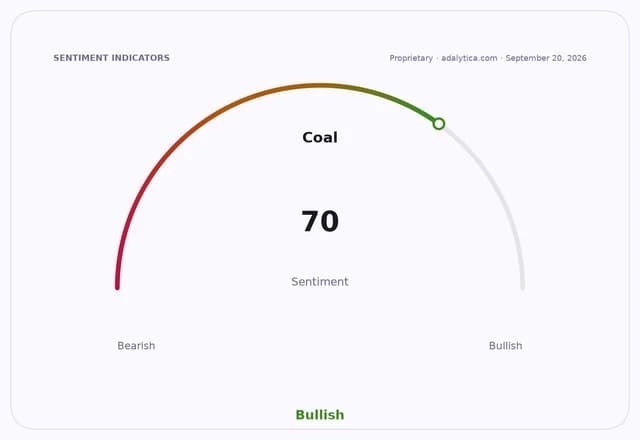
Sentiment IndicatorsⓘProprietary · adalytica.com · September 20, 2026
This is a snapshot — live sentiment, awareness and momentum for 130+ markets update continuously in the dashboard.Open AlphaPulse
The intervention also signals that energy security still outweighs the political appeal of faster decarbonization when prices jump. China wants clean energy to supply 30% of generation by 2030, from about 22% now, but analysts say coal will continue to play a flexible balancing role as new wind and solar capacity cannot fully replace dispatchable generation.
The price spike is already filtering through trade flows. China’s coal imports fell 1.5% in August after double-digit growth in the prior two months, according to the Centre for Research on Energy and Clean Air, suggesting higher domestic prices and policy pressure can quickly alter buying patterns at the margin.

For investors, the message is that coal pricing and Chinese policy remain tightly linked, and that short-term supply directives can support miners even in a long-term transition away from the fuel. The move matters for Chinese coal producers, global exporters and steelmakers, while keeping import demand volatile for seaborne coal sellers from Australia, Indonesia and elsewhere.
Coal-related assets have been under renewed scrutiny as sentiment around the fuel improves alongside supply tightening. Adalytica’s Coal Fear & Greed Index shows awareness of the sector has risen sharply, while standard technical indicators on coal-linked ETFs such as YANG point to firmer trading momentum in recent sessions.
The next key catalyst is whether Beijing’s production push is enough to cool spot prices without triggering sharper curbs on imports or broader controls on coal-heavy industries.
| Entity | Gains | Losses |
|---|---|---|
| China coal miners | ▲Higher output volumes | ▼Pressure to cap prices |
| Chinese power generators | ▲Better fuel availability | ▼Less room for margin relief |
| Coal exporters | ▲Near-term demand support | ▼Volatile import orders |
| Renewable developers | ▲Longer-term policy backing | ▼Coal remains system backstop |