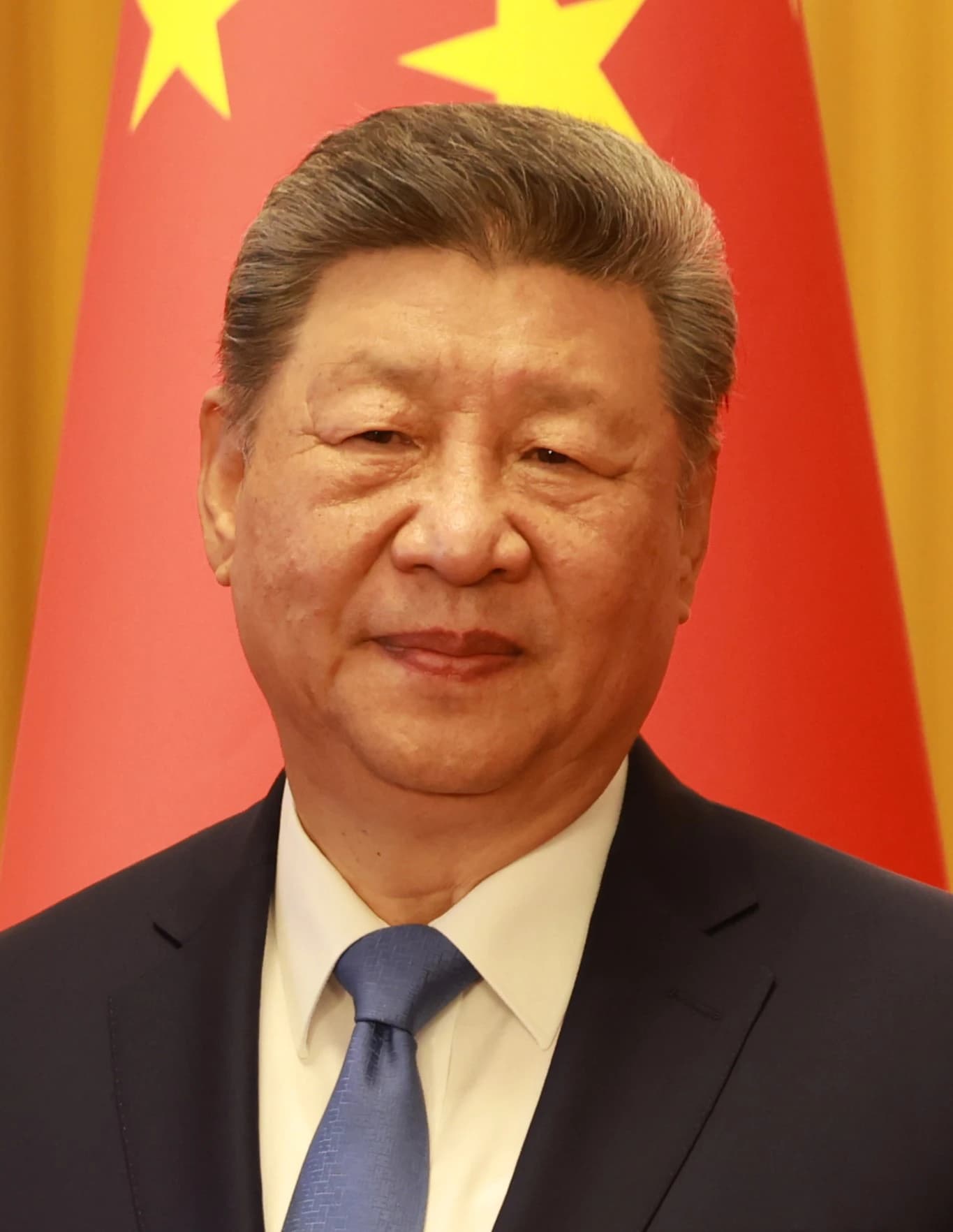
China’s sentencing of a ministerial-level official to death for leaking state secrets to a foreign country raises the stakes in Beijing’s widening national security campaign and underscores how aggressively the government is willing to punish perceived espionage.
China death sentence raises security risk for firms
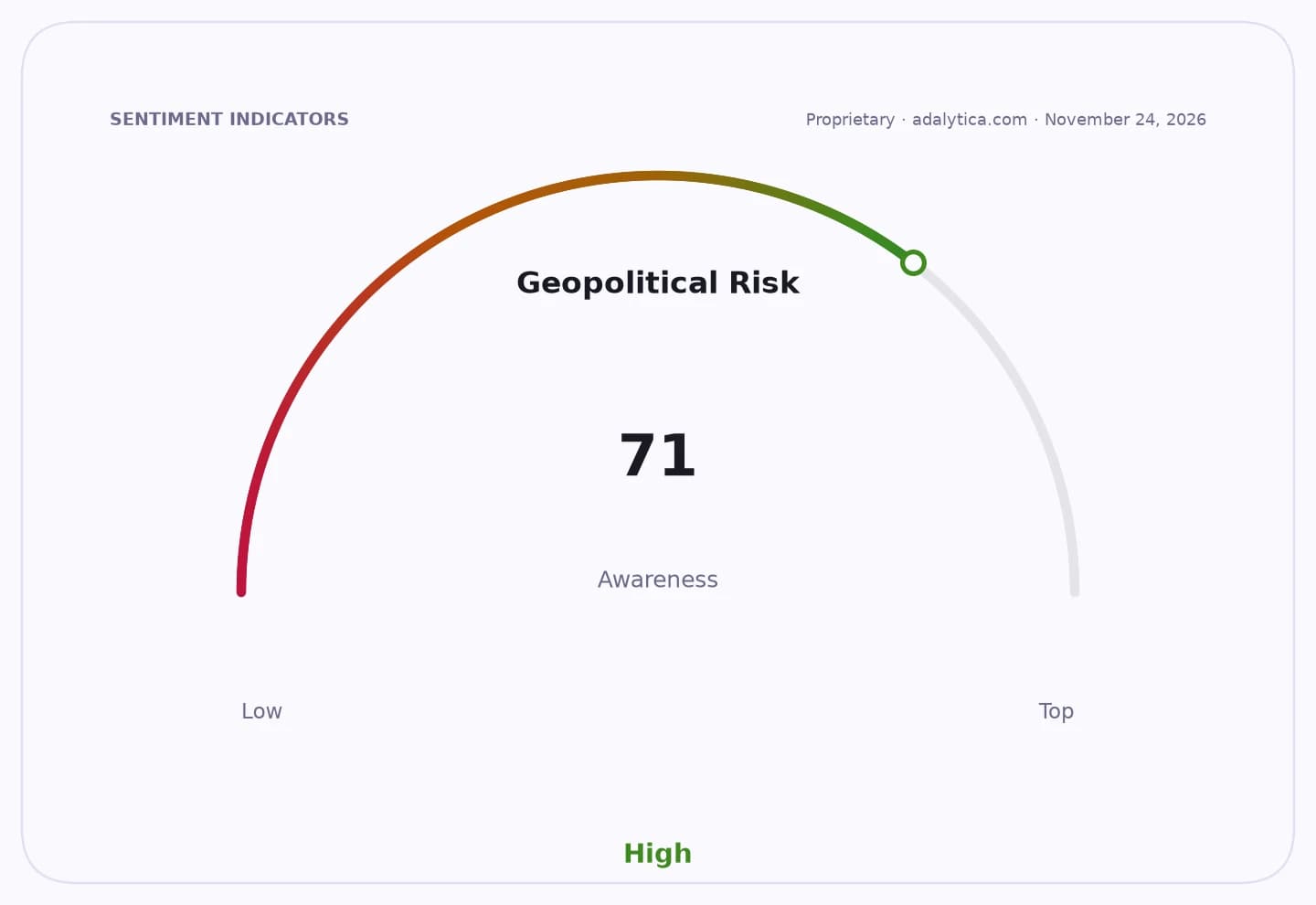
Geopolitical Risk
The case matters far beyond one official’s fate. A death sentence in a politically sensitive espionage case signals that China is treating information leaks not as routine corruption or discipline failures, but as a direct challenge to state security. That raises the cost of doing business, talking politics or moving sensitive data inside the world’s second-largest economy, especially for multinationals, consultants, lawyers and technology firms that operate near the line between commerce and national-security scrutiny.
Sentiment Indicators
Geopolitical Risk
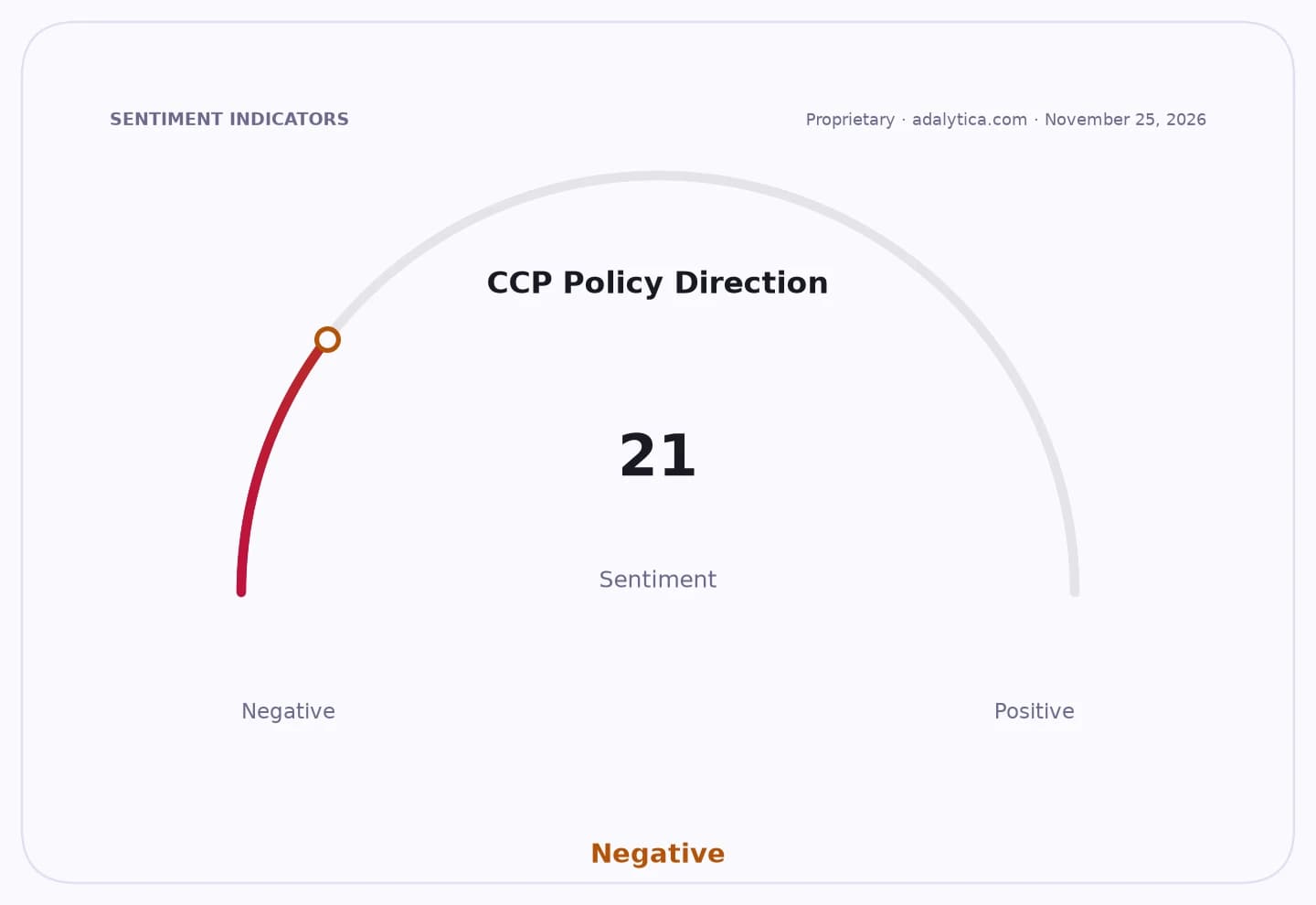
Beijing has spent years tightening controls over data, foreign ties and cross-border information flows. This latest case fits that pattern and reinforces the view that the country’s internal security apparatus is becoming more intrusive, more punitive and less predictable. For investors, that means a higher risk premium on China exposure at the margin, not because one death sentence moves markets directly, but because it confirms a policy regime in which political control outranks operational flexibility.
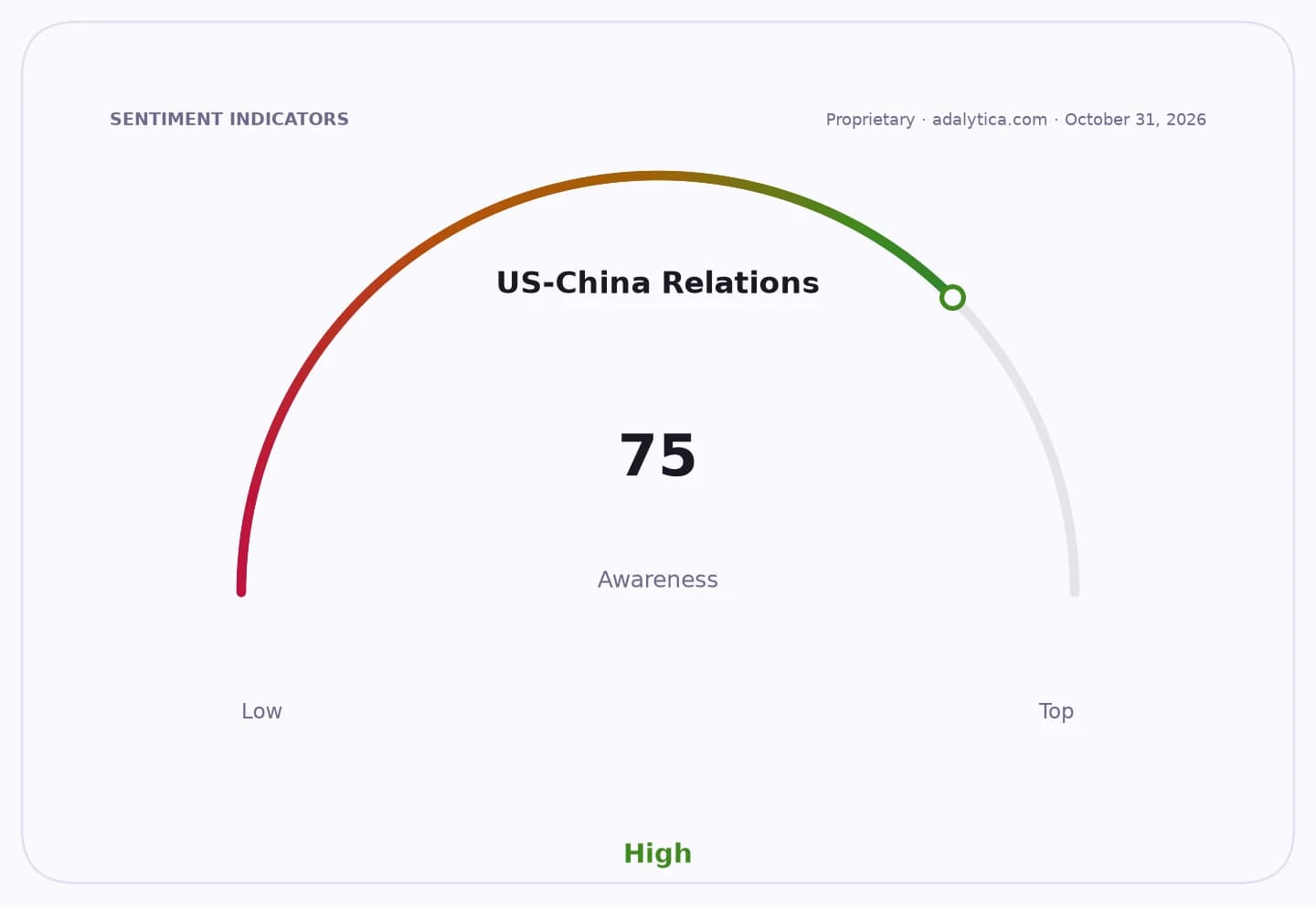
That matters for capital in two ways. First, it keeps foreign firms on notice that routine information gathering, local hiring and relationship-building can be recast as security risks if the political climate turns. Second, it adds another layer of friction to already fragile US-China ties at a moment when global stability indicators are flashing stress. Adalytica’s Global Stability Sentiment is at 4, or “Extreme Fear,” while its US-China Relations Sentiment sits at 57, still neutral but swinging sharply day to day, a reminder that geopolitical volatility is now part of the market backdrop.
US-China Relations — 30-day sentimentadalytica.com
Explore this data interactively — full history, time series and cross-market comparisons.
US-China Relations
Chinese equities have already been under pressure. The FXI China large-cap ETF closed at 31.30 on Nov. 25, down from 35.07 on the 200-day moving average and well below its 50-day average of 33.48, with RSI readings sinking to 9.2, a level that shows the move has been severe. The broader MCHI China ETF has fared even worse, falling to 46.43 versus a 54.39 200-day average, while FXP, the inverse China ETF, has rallied to 25.70 and is now trading well above both its 50-day and 200-day moving averages. In other words, markets are already pricing caution on China — and security repression only strengthens that caution.
The deeper investment takeaway is that the trade is shifting from broad China beta to selective exposure. Companies with minimal regulatory and data risk, stronger offshore revenue mix or direct benefit from policy-driven domestic substitution should continue to outperform more exposed names. For now, the message from Beijing is clear: national security is not a side issue, it is the operating system. Investors should position accordingly.
| Entity | Gains | Losses |
|---|---|---|
| Chinese security apparatus | ▲More authority | ▼Greater scrutiny |
| Foreign firms in China | ▲Risk controls | ▼Operational flexibility |
| China bulls / FXI longs | ▲Selective upside | ▼Broader risk premium |
| FXP and China short sellers | ▲Higher conviction | ▼Short-term volatility |