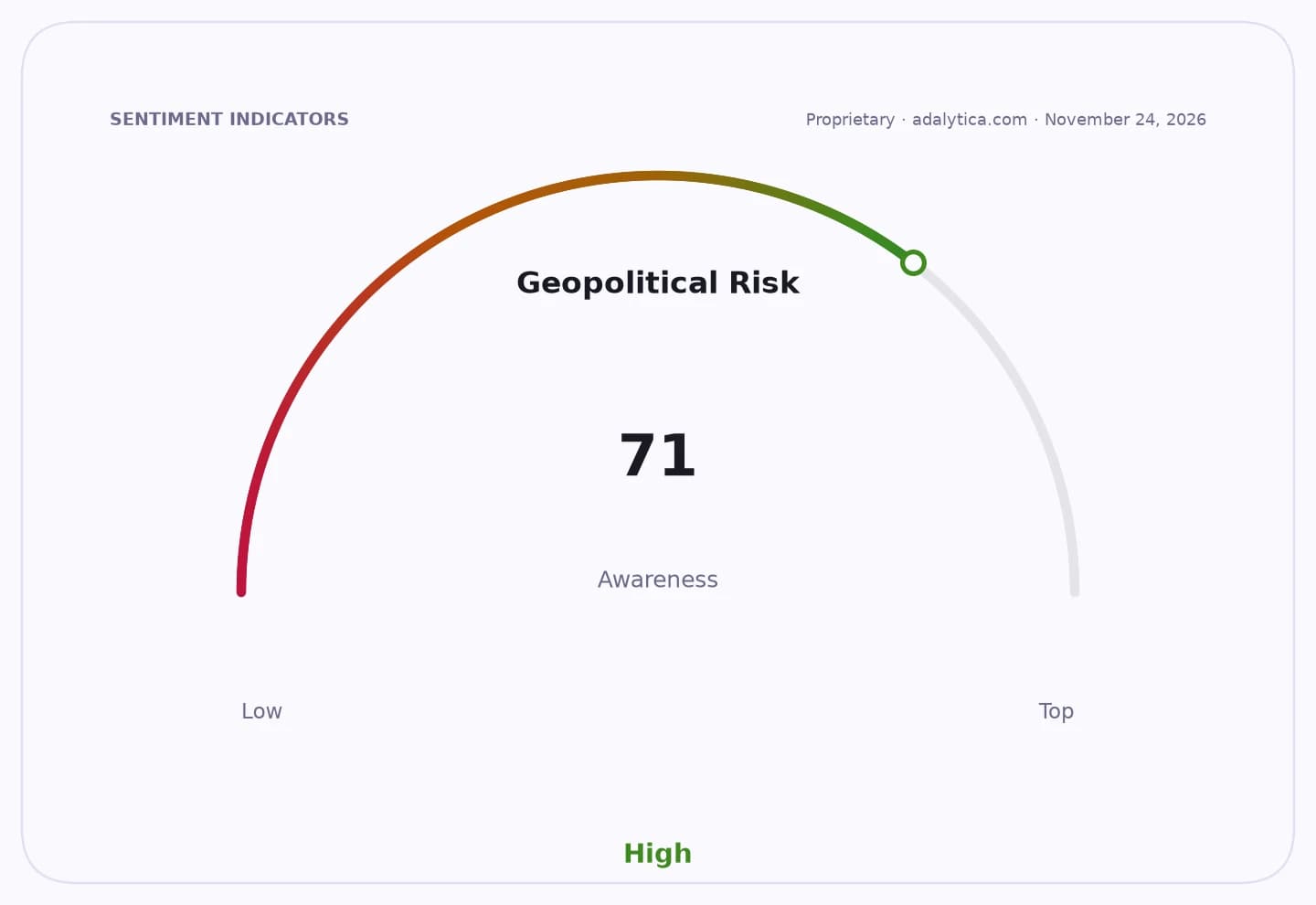
Switzerland’s foreign minister is heading to China for a strategic dialogue at a delicate moment for investors who see the world’s stable trading corridors getting harder to rely on. The visit matters because Switzerland’s economy, and Swiss companies, depend heavily on frictionless access to China and the broader Asian supply chain, even as diplomatic tensions and policy uncertainty keep geopolitical risk elevated.
Switzerland Holds China Strategic Dialogue Nov. 23-24
Foreign Minister Ignazio Cassis is due in China on Nov. 23 and 24 for the fifth round of the bilateral strategic dialogue with Chinese counterpart Wang Yi, according to China’s Foreign Ministry. The trip underscores how seriously Bern treats its relationship with Beijing: for a small, export-driven economy, keeping channels open with the world’s second-largest economy is not optional, it is a competitive necessity.
Sentiment Indicators
That matters economically because Switzerland has long used trade, finance and industrial precision to punch above its weight. When Swiss officials sit down with Chinese leaders, they are not just exchanging talking points on diplomacy. They are trying to preserve market access, reduce policy frictions and protect the kind of cross-border stability that supports pharmaceuticals, machinery, luxury goods and financial services. In a world where tariff shocks, sanctions and supply-chain realignment can hit margins quickly, every high-level channel counts.
Investors should care because Switzerland is often a bellwether for the kind of globally integrated, high-value economy that is most vulnerable to geopolitical fragmentation. Swiss equities, represented by the EWL exchange-traded fund, have held up better than Chinese shares in recent sessions, with EWL recently trading around $63.55, above both its 50-day and 200-day moving averages. By contrast, the FXI China ETF has been under pressure, closing near $31.43 and remaining below both its 50-day and 200-day averages. That gap reflects more than chart action; it reflects very different investor perceptions of policy risk, growth visibility and exposure to the U.S.-China rivalry.
CCP Policy Direction — 30-day sentimentadalytica.com
Explore this data interactively — full history, time series and cross-market comparisons.
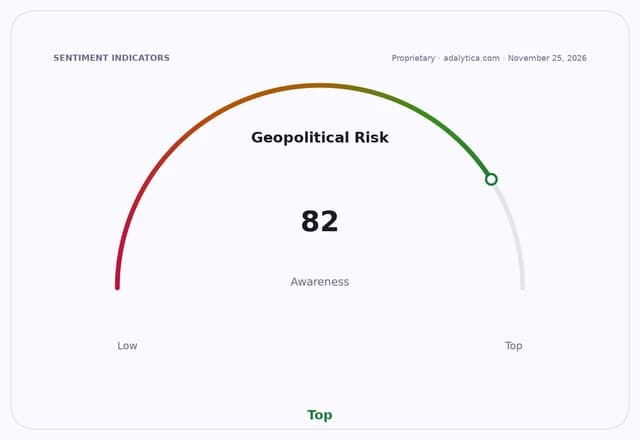
The backdrop is not exactly calm. Adalytica’s China CCP Policy Direction Sentiment gauge is sitting at 21, labeled “Fear,” with awareness at just 4 and also in “Extreme Fear.” That doesn’t predict headlines, but it does capture how nervy markets remain about Beijing’s policy direction and the external environment around it. A diplomatic dialogue between Switzerland and China will not remove those concerns, but it can help prevent a further deterioration in one of Europe’s more important commercial relationships with Asia.
The broader narrative is straightforward: Switzerland is trying to keep commerce insulated from geopolitics, even as that insulation gets thinner. For long-term investors, the takeaway is not to chase every diplomatic headline, but to understand which businesses can keep selling, sourcing and investing across borders when relations get tense. Companies with diversified supply chains, strong pricing power and exposure to secular demand rather than politics are still the ones best positioned to compound over years, not quarters. This is a story worth watching, especially for investors who own global industrials, pharma and internationally exposed financials.
| Entity | Gains | Losses |
|---|---|---|
| Switzerland | ▲Better trade access | ▼Higher policy risk |
| China | ▲Diplomatic channel to Europe | ▼Less leverage if ties cool |
| Exporters | ▲Smoother market access | ▼Tariff or sanctions exposure |
| Geopolitical risk | ▲More attention from investors | ▼Fewer assumptions of stability |