China’s embodied intelligence market reached about 915 billion yuan in 2025, a size that shows the country’s artificial intelligence buildout is moving from chatbots and cloud software into machines that can sense, move and act in the physical world.
China embodied intelligence market reaches 915 billion yuan
That matters because embodied intelligence — the combination of AI with robots, industrial systems and human-machine collaboration — is where China can turn model training and chip spending into productivity gains on factory floors, in logistics and across services. In a slowing economy, that is exactly the kind of technology shift policymakers want: one that can raise output without relying solely on more debt or more stimulus.
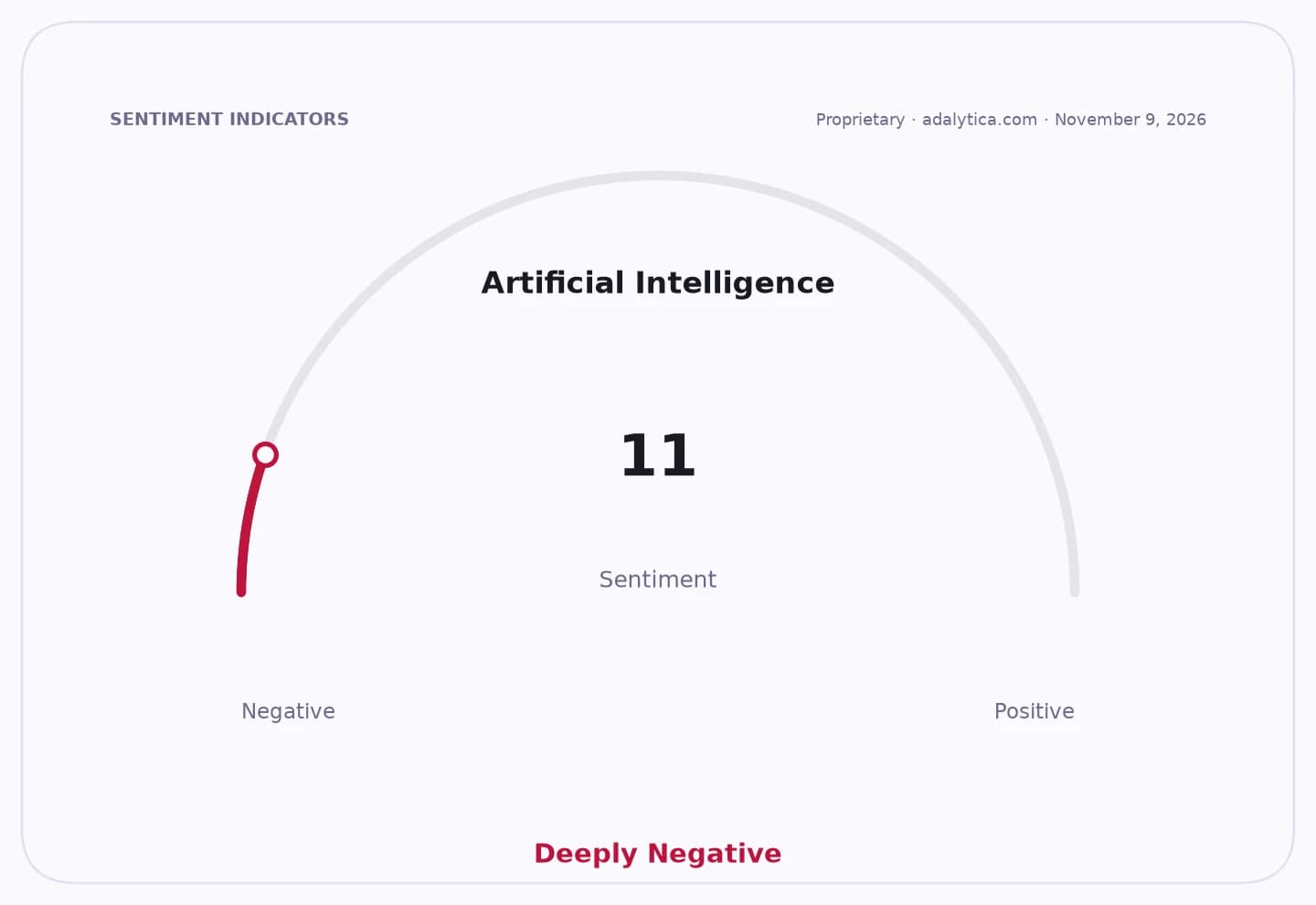
Sentiment Indicators
The report, released at the World Internet Conference in Wuzhen, said the market rose 20.4% from a year earlier, underscoring how quickly China is commercializing AI applications. It also said the enterprise AI agent market reached 21.2 billion yuan in 2025, a reminder that the next wave of AI spending is no longer just about experimental tools, but about software and systems that are being woven into business operations.
For investors, the big takeaway is that China’s AI opportunity is broadening. Companies tied to cloud infrastructure, enterprise software, industrial automation, robotics and advanced semiconductors all stand to benefit if embodied intelligence becomes a durable capex cycle rather than a short-lived policy theme. That includes names such as Baidu, Alibaba and other domestic AI developers, but also chip suppliers and equipment makers that sit deeper in the supply chain.
The report’s backdrop is important too. Chinese authorities are pushing AI into national strategy, while global governments are racing to secure the technology’s industrial and governance advantages. That makes embodied intelligence more than a buzzword — it is part of a competitive race to embed AI into real economies.
There are risks. China’s technology sector still faces uneven consumer demand, regulatory uncertainty and intense competition. Not every AI project will produce returns, and the capital intensity of robotics and industrial AI can be high. But for long-term investors, the direction is clear: China is trying to convert its AI ambitions into physical productivity, and that is the sort of shift that can compound for years if execution holds. It is worth watching closely as a theme for patient investors.
| Entity | Gains | Losses |
|---|---|---|
| Chinese AI developers | ▲More enterprise demand | ▼Higher execution pressure |
| Robotics and automation firms | ▲New deployment cycle | ▼Slower adopters |
| Chipmakers and suppliers | ▲Stronger AI hardware demand | ▼Customers with tight budgets |
| Traditional labor-heavy industries | ▲Productivity gains | ▼Jobs and margins at risk |