AI is not yet replacing human labor so much as stretching it, with fresh evidence that workers using the technology are spending up to 90 minutes longer on the job each day even as governments and educators rush to figure out which skills machines still cannot copy.
Microsoft, NVIDIA, and AI Workforce Tools
That is the real market story behind the hype: the first phase of the AI revolution is not just a productivity boom, but a reallocation of effort. Companies are asking employees to do more with the same headcount, while schools and training programs are being forced back toward oral exams, critical thinking, verification and judgment — the parts of work that remain expensive, scarce and human. For investors, that matters because the beneficiaries are not only the obvious chipmakers and cloud platforms, but also the providers of AI infrastructure, corporate software, education technology, assessment tools and compliance systems that make human-AI workflows usable at scale.
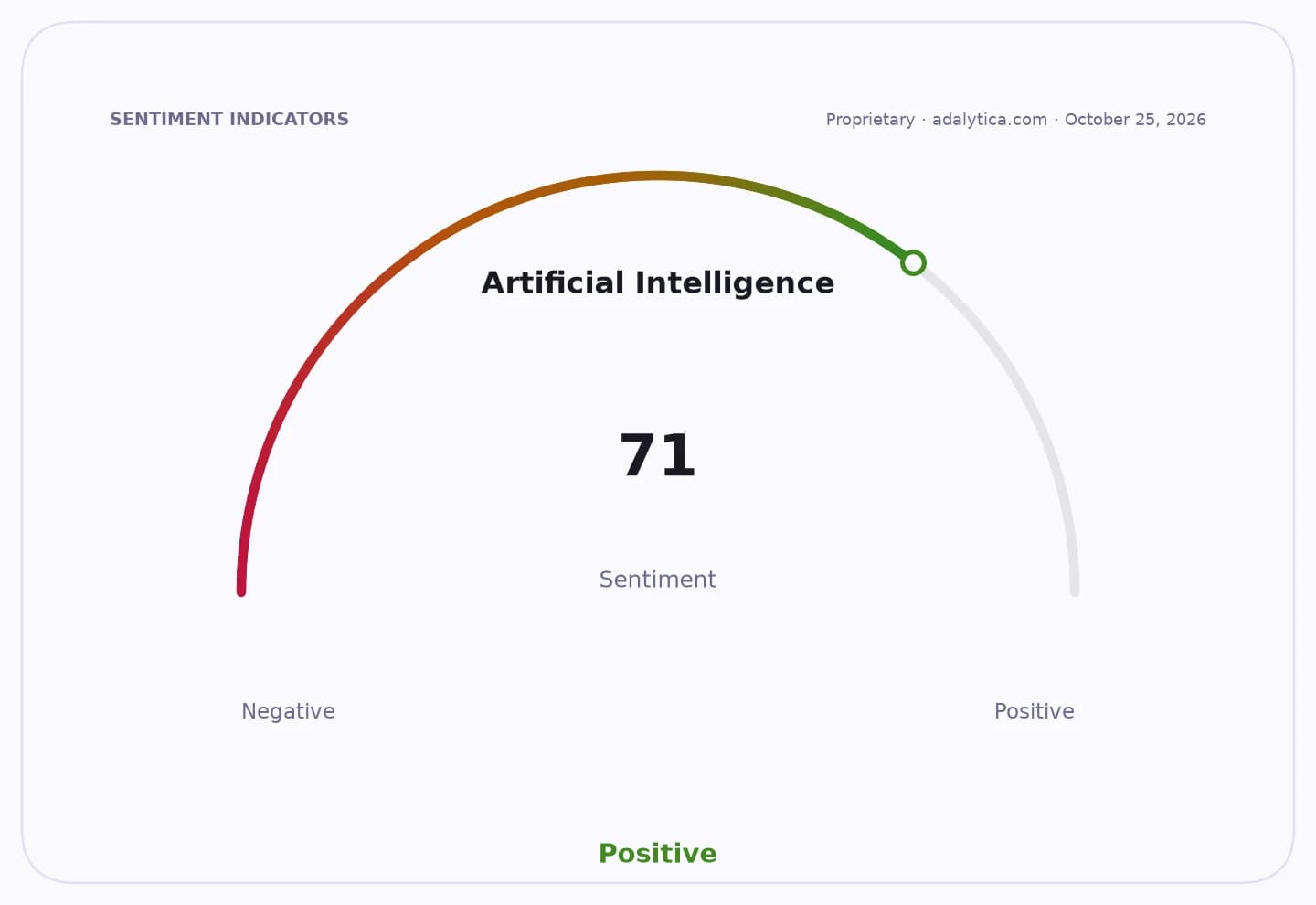
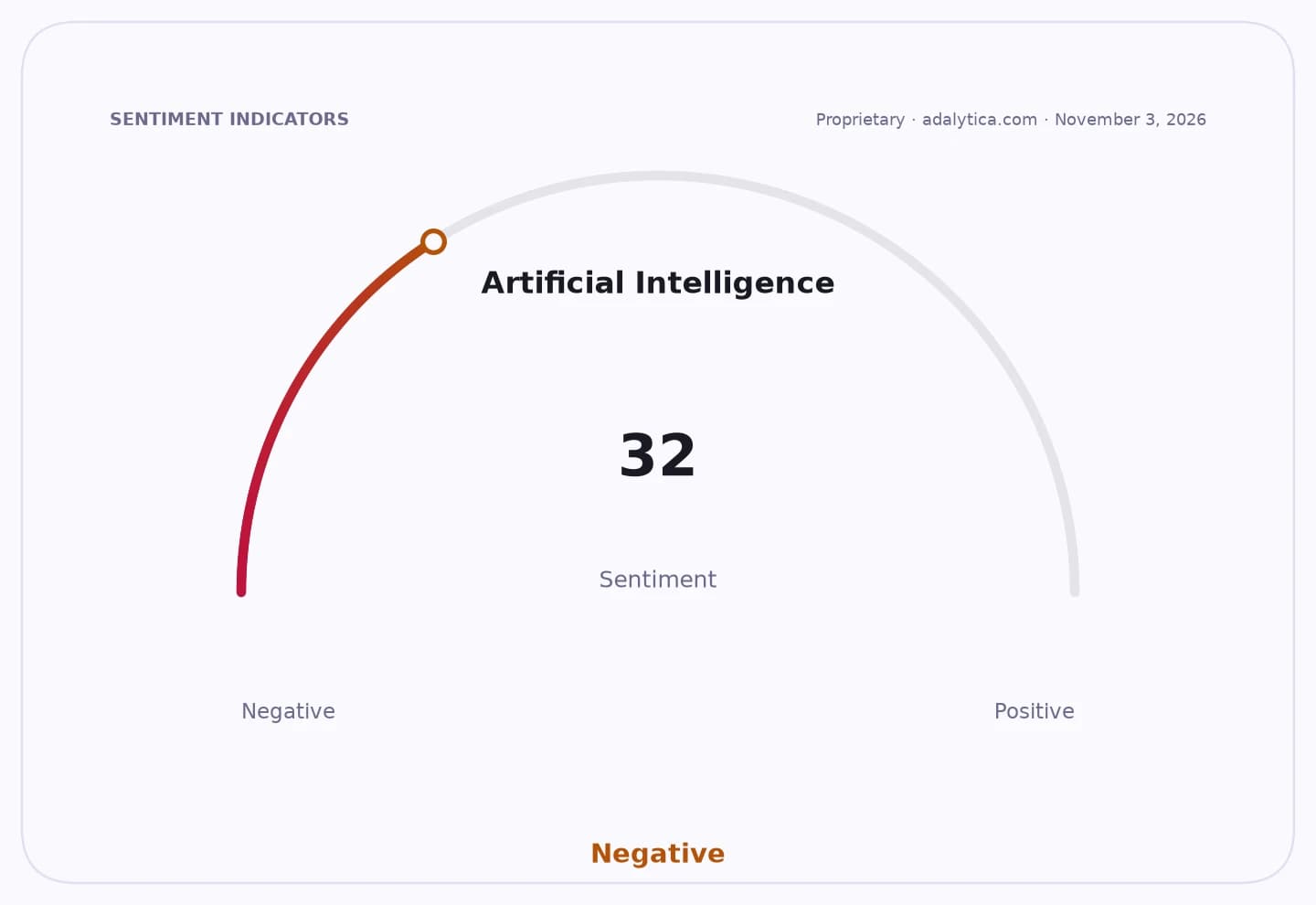
Sentiment Indicators
The tension is visible across the market. Microsoft-linked sentiment in the data is at an “Extreme Greed” reading, reflecting the view that AI adoption is still driving outsized demand for cloud and software services. NVIDIA, meanwhile, shows “Extreme Fear” in earnings sentiment even as awareness remains at “Extreme Greed,” a split that captures a familiar pattern in disruptive cycles: the market is fully awake to the theme, but less certain about who captures the profits next. In our view, that uncertainty is where opportunity lies. The next leg of value creation is likely to shift from pure compute to the ecosystem around it — model deployment, workflow integration, auditing, education, and human-in-the-loop decision-making.
The education angle is especially important because it reveals where AI will fail first, and therefore where demand will persist. If universities are moving back to oral exams, the scarce skill is no longer information retrieval, but reasoning under pressure, synthesis, persuasion and live problem-solving. Those are precisely the capabilities companies will pay for as routine production gets automated. The implication is that labor markets will bifurcate: entry-level tasks will be compressed, but higher-order judgment, client-facing communication and cross-disciplinary management should command a premium. That creates a tailwind for firms that can train, certify and measure those capabilities — and for employers that can convert AI output into real productivity without degrading quality.
Artificial Intelligence — 30-day sentimentadalytica.com
Explore this data interactively — full history, time series and cross-market comparisons.
The policy response is also beginning to matter. Governments developing skilled human resources to manage AI integration are not doing this out of abstract concern; they are responding to the risk that automation raises stress, widens inequality and produces more output without better outcomes. That points to a multi-year demand cycle for reskilling programs, independent evaluators, AI governance tools and enterprise controls. In other words, AI adoption is not just a software story anymore — it is a workforce infrastructure story.
For investors, the takeaway is straightforward: don’t overpay for the fantasy that AI simply eliminates work. The more durable trade is on the companies that help humans work alongside AI, verify its output and train the next generation to use it well. Microsoft remains a core proxy for enterprise adoption, while NVIDIA still anchors the compute layer, but the asymmetric upside may increasingly sit with the picks-and-shovels of AI enablement — from cloud platforms to testing, education and workflow software. The market is still underestimating how much human skill will remain essential in an AI-heavy economy.
| Entity | Gains | Losses |
|---|---|---|
| Microsoft | ▲Enterprise AI demand | ▼Labor-cost efficiency concerns |
| NVIDIA | ▲Compute demand | ▼Sentiment volatility |
| Educators and schools | ▲Demand for assessment tools | ▼Reliance on rote testing |
| Workers in routine roles | ▲AI-assisted output | ▼Time pressure, task compression |