July 3, 2026 — The China ETF selloff has pushed offshore Chinese equities into bear-market territory, signaling that rising South China Sea tensions are starting to outweigh improving sentiment on the yuan and Beijing’s growth outlook.
China ETFs Slide as Sea Tensions Lift Risk Premium

The iShares China Large-Cap ETF, or FXI, closed at $31.91 on July 2, down about 21% from its January high and 16% below its level at the end of 2025, according to market data. The fund is trading well below its 50- and 200-day moving averages, while its 14-day relative strength index near 22 points to deeply oversold conditions.
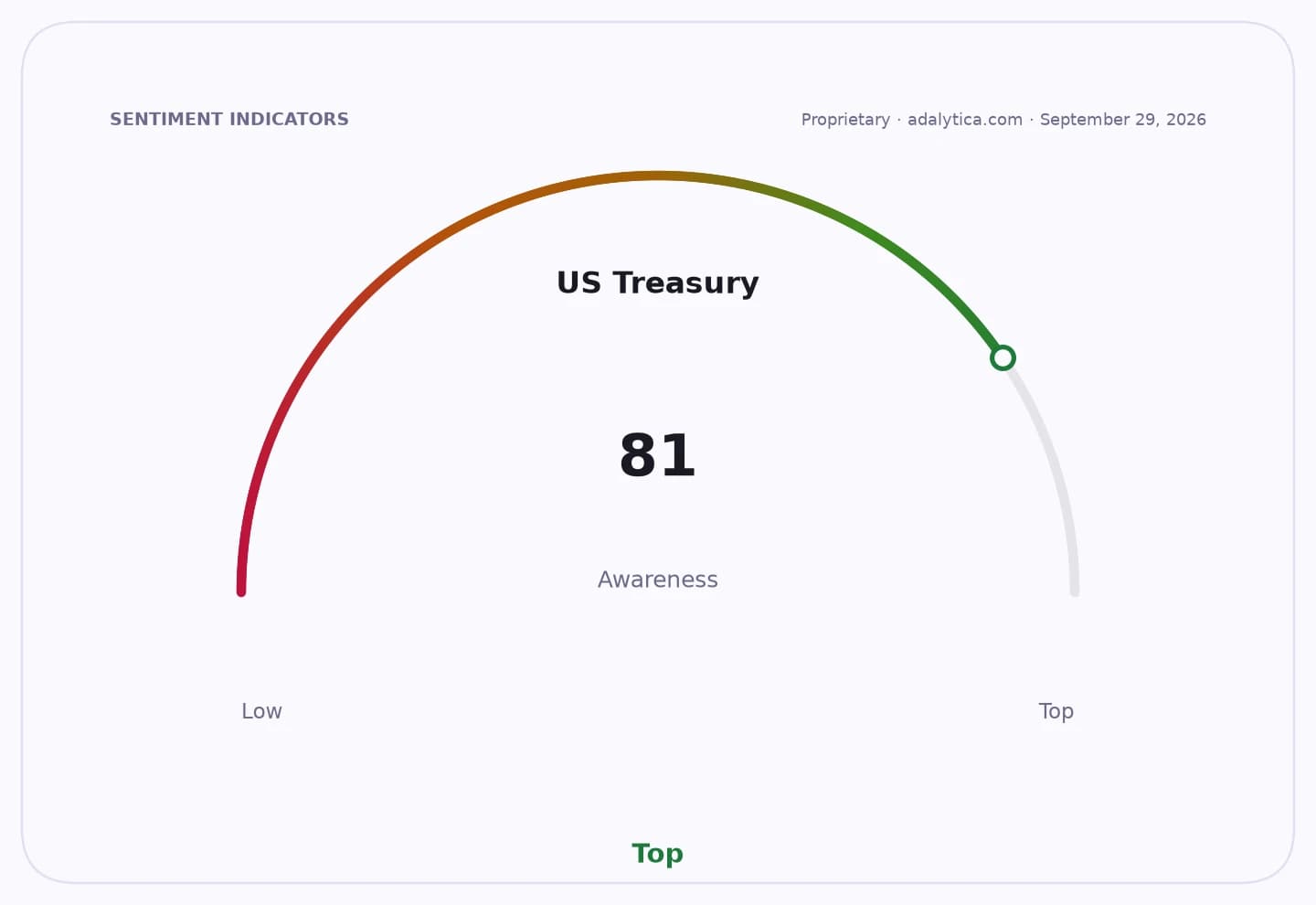
Sentiment IndicatorsⓘProprietary · adalytica.com · July 3, 2026
This is a snapshot — live sentiment, awareness and momentum for 130+ markets update continuously in the dashboard.Open AlphaPulse

The move matters because offshore Chinese equities are often the first place global investors reprice China risk. A sustained discount in Hong Kong-listed shares can raise the cost of capital for Chinese companies, tighten foreign portfolio flows and complicate Beijing’s effort to stabilize confidence while supporting growth.
The pressure comes as China increases naval activity around disputed waters. The PLA Navy recently conducted a fleet visit to Hong Kong to mark the anniversary of the territory’s return to China while also shadowing US-Philippine military drills near Scarborough Shoal. Beijing condemned the patrols as destabilizing and reiterated its sovereignty claims in the South China Sea.
Geopolitical Risk — 30-day sentimentadalytica.com
Explore this data interactively — full history, time series and cross-market comparisons.Open AlphaPulse

That has turned a regional security dispute into a market story. Investors are weighing whether greater military activity near a key shipping corridor could add a fresh risk premium to Chinese assets, particularly companies listed offshore and more exposed to international capital flows.
Mainland shares have held up better, though they are no longer immune. The Xtrackers Harvest CSI 300 China A-Shares ETF, or ASHR, fell 3.2% on July 2 to $35.16 on its heaviest volume since mid-May. The fund remains above its 200-day moving average, but slipped below its 50-day average, suggesting domestic Chinese equities are losing some momentum even as they continue to outperform offshore peers.
The split is striking because sentiment indicators are not uniformly negative. Proprietary indicators from Adalytica.com show Chinese yuan trade sentiment at 100, labeled “Extreme Greed,” after a 98-point increase over seven days. China growth-target sentiment rose to 85, also in bullish territory. At the same time, Adalytica.com’s Global Stability Sentiment fell 33 points over the week to 37, with awareness labeled “Fear.”
That combination points to a market pricing two Chinas: one supported by currency confidence and expectations for policy-backed growth, and another penalized for geopolitical exposure. For investors, the question is whether oversold offshore shares offer a rebound opportunity or are flashing a warning that geopolitical risks are becoming harder to diversify away.
The next test will be whether Beijing’s policy signals and yuan stability can keep domestic equity support intact if South China Sea tensions persist. Without a calming of regional friction, foreign investors may continue to demand a wider discount for Chinese assets, leaving offshore ETFs vulnerable even if macro sentiment improves.
| Entity | Gains | Losses |
|---|---|---|
| Mainland A-share holders | ▲Relative policy cushion | ▼Weaker momentum |
| Hong Kong China equity longs | ▲Oversold rebound optionality | ▼Wider risk discount |
| Yuan bulls | ▲Strong sentiment signal | ▼Geopolitical safe-haven flows |
| US-Philippine security hawks | ▲Strategic leverage | ▼Regional trade stability |