The Bank for International Settlements is warning that high sovereign debt, central bank balance-sheet runoff and heavily leveraged hedge fund trades are making government bond markets more fragile and more likely to transmit shocks across stocks, credit and funding markets.
BIS warns on Treasury market fragility
That matters because sovereign bonds remain the pricing anchor for the global financial system. When that market is strained, borrowing costs, equity valuations and collateral values can all move at once, amplifying stress far beyond Treasuries.
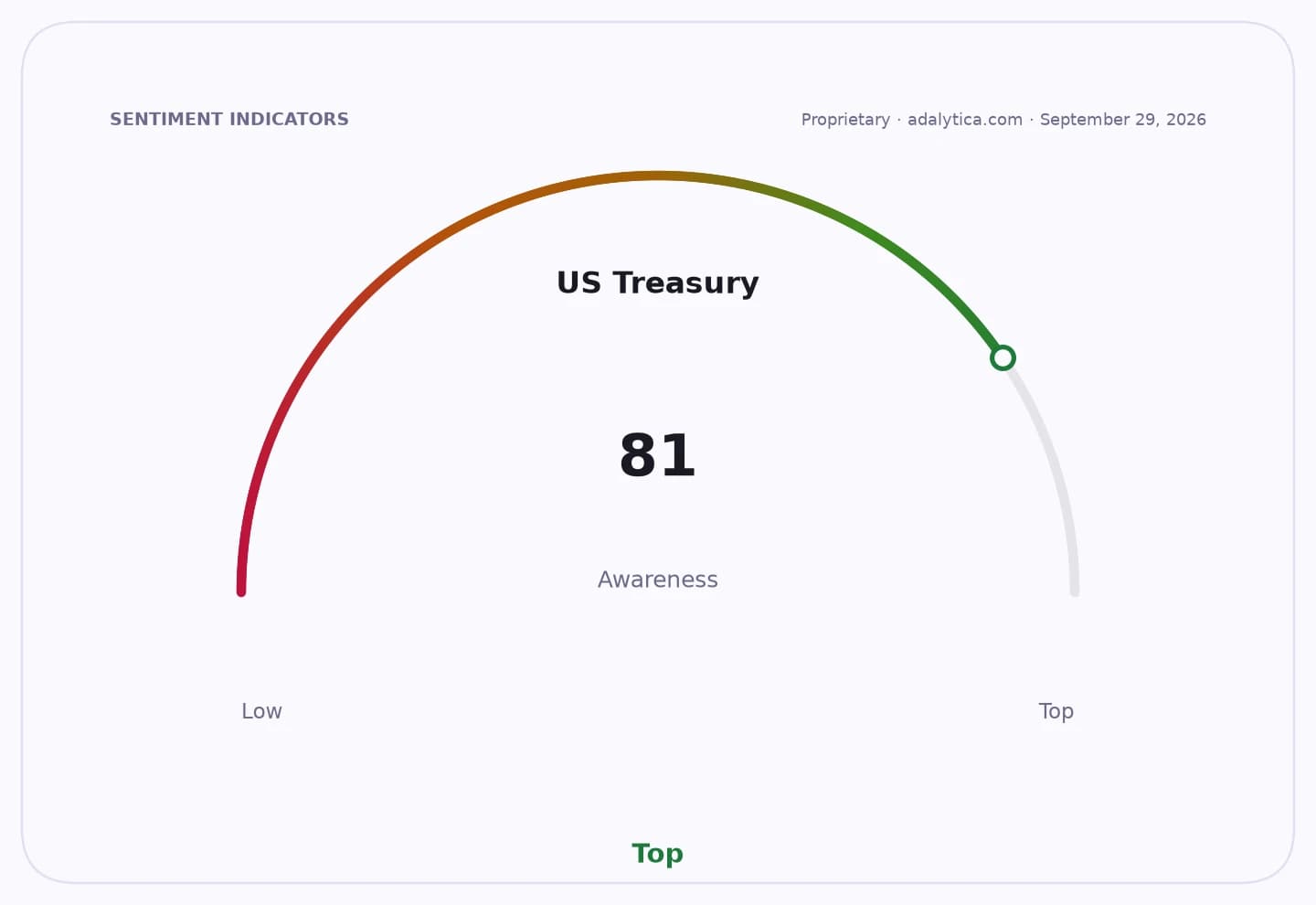
Sentiment IndicatorsⓘProprietary · adalytica.com · September 29, 2026
This is a snapshot — live sentiment, awareness and momentum for 130+ markets update continuously in the dashboard.Open AlphaPulse
The BIS says the risk has risen as public debt in advanced economies keeps climbing while central banks withdraw from the market through quantitative tightening. That leaves more of the job of absorbing new government issuance to private investors, especially non-bank financial intermediaries that now play a much larger role in bond trading than before the financial crisis.
Hedge funds have become the most visible part of that shift. Federal Reserve data show their gross Treasury positions doubled to $4 trillion between September 2023 and September 2025, with $2.4 trillion in long positions and $1.6 trillion in shorts. Their share of outstanding Treasuries rose to 8.5% from 4.5%, underscoring how dependent the market has become on leveraged, fast-moving capital.
DGS10 vs FEDFUNDS — macro contextadalytica.com
Explore this data interactively — full history, time series and cross-market comparisons.Open AlphaPulse
A large share of that exposure sits in the cash-futures basis trade, where funds borrow in repo to buy cash bonds and short Treasury futures. The Fed said that trade reached about $830 billion in September 2025, almost double its previous peak in early 2020, while swap-spread arbitrage was estimated at roughly $305 billion. The 50 largest funds accounted for about 90% of total Treasury exposure, showing how concentrated the risk has become.
For investors, that concentration matters because the strategy works only while repo financing stays cheap and bond-futures spreads remain stable. If repo rates jump, brokers pull back balance-sheet support or margin requirements rise, funds may be forced to unwind at the same time, pushing yields higher and draining liquidity when markets are already under pressure.
That is the kind of feedback loop regulators are trying to head off. The BIS said supervisors are already discussing tighter rules for non-bank financial intermediaries in bond markets, reflecting concern that stress in Treasuries can spill into corporate credit and equities through higher discount rates, wider spreads and more expensive collateral.
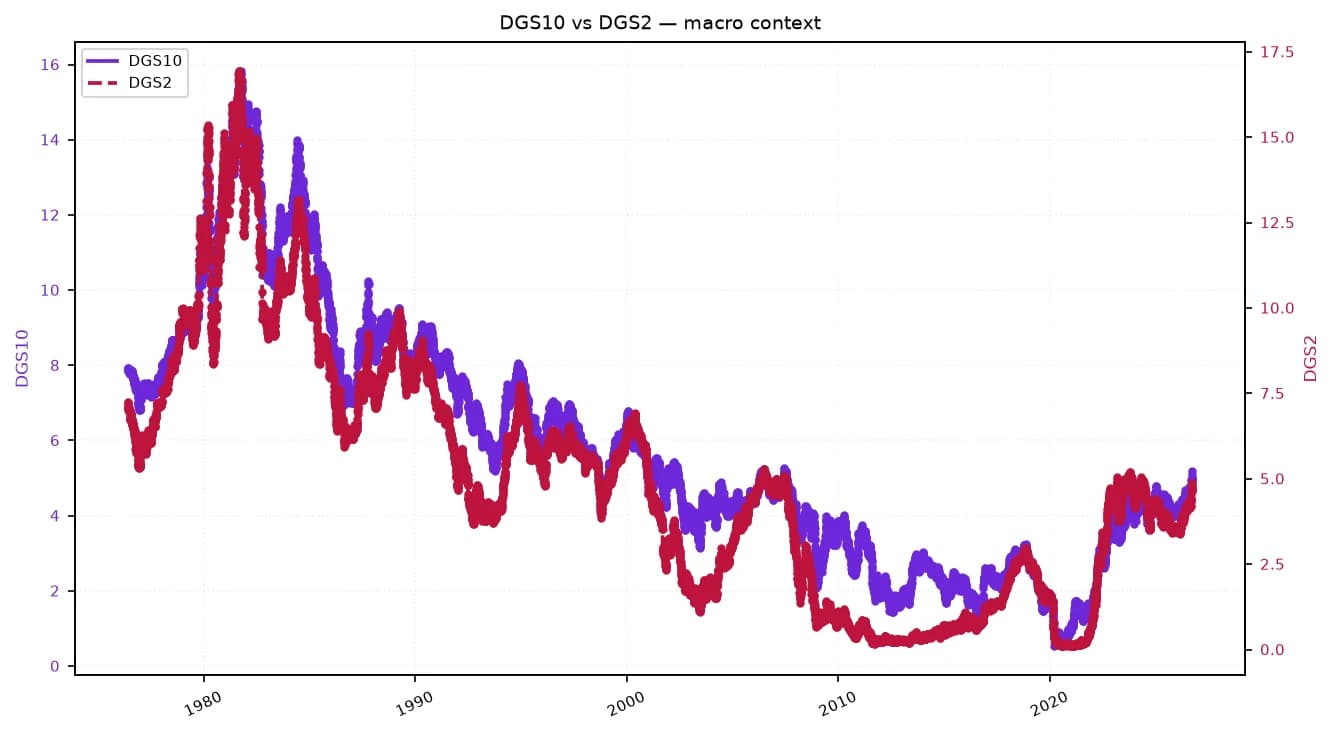
The market backdrop shows why the warning lands now. The 10-year Treasury yield has recently been above 5%, while the iShares 20+ Year Treasury Bond ETF, TLT, fell to $79.32 on Sept. 25, below its 50-day moving average of $81.97 and with RSI readings in oversold territory at 27.5. The S&P 500 ETF, SPY, closed at $771.35, but its gains sit alongside the possibility that a bond-market shock could quickly reprice risk assets.
The broader message from the BIS is that the financial system is becoming more interdependent just as leverage in key markets rises. That mix leaves both policymakers and investors more exposed to a disorderly selloff in government debt, with the next stress event likely to be transmitted less by banks alone and more by hedge funds, repo funding and derivatives.
| Entity | Gains | Losses |
|---|---|---|
| Hedge funds | ▲Higher trading opportunities | ▼Greater forced-unwind risk |
| Central banks | ▲Smaller balance sheets | ▼Less market backstop |
| Government bond buyers | ▲Higher yields | ▼Lower prices and liquidity |
| Equity and credit investors | ▲None | ▼Faster repricing from bond stress |