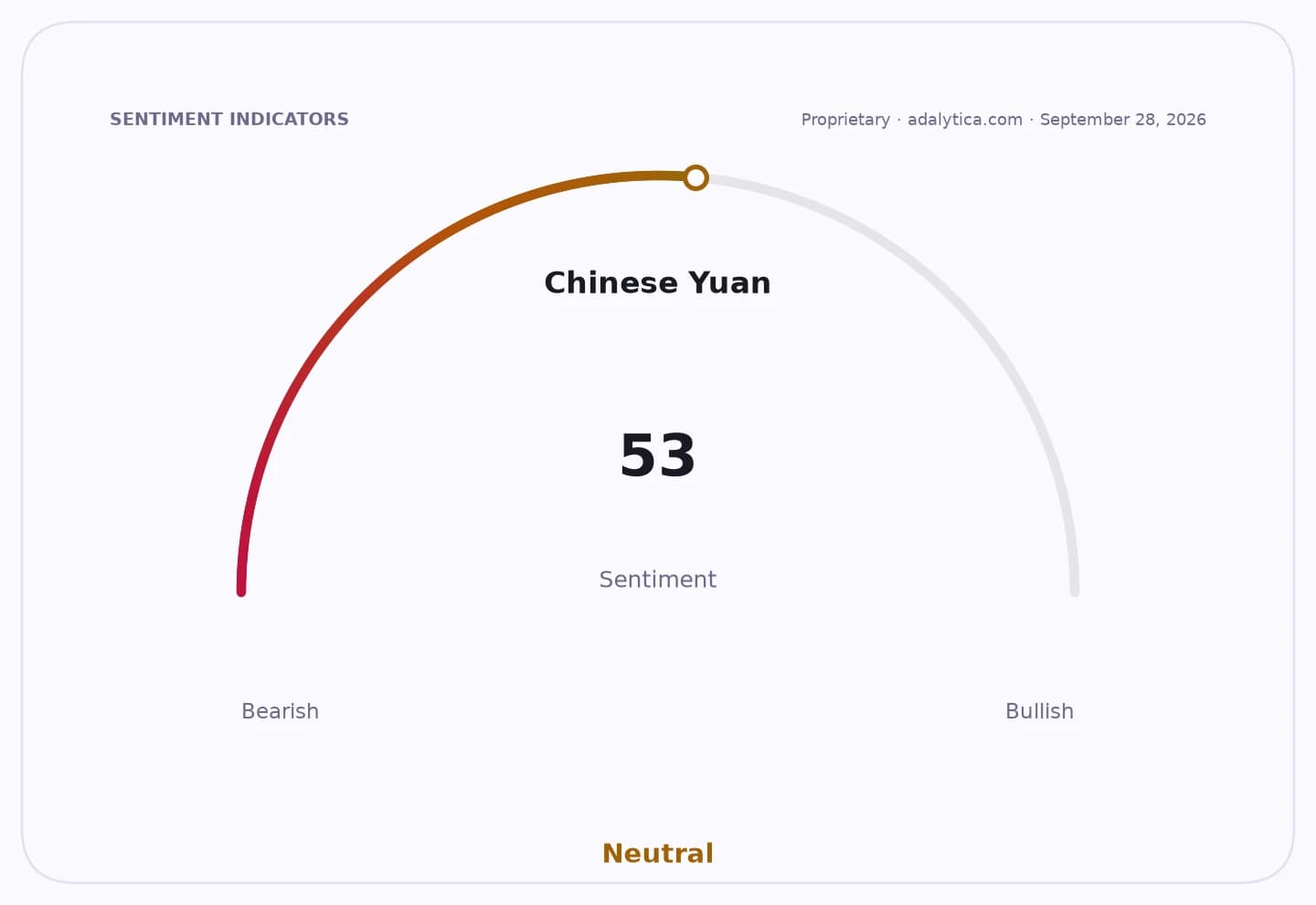
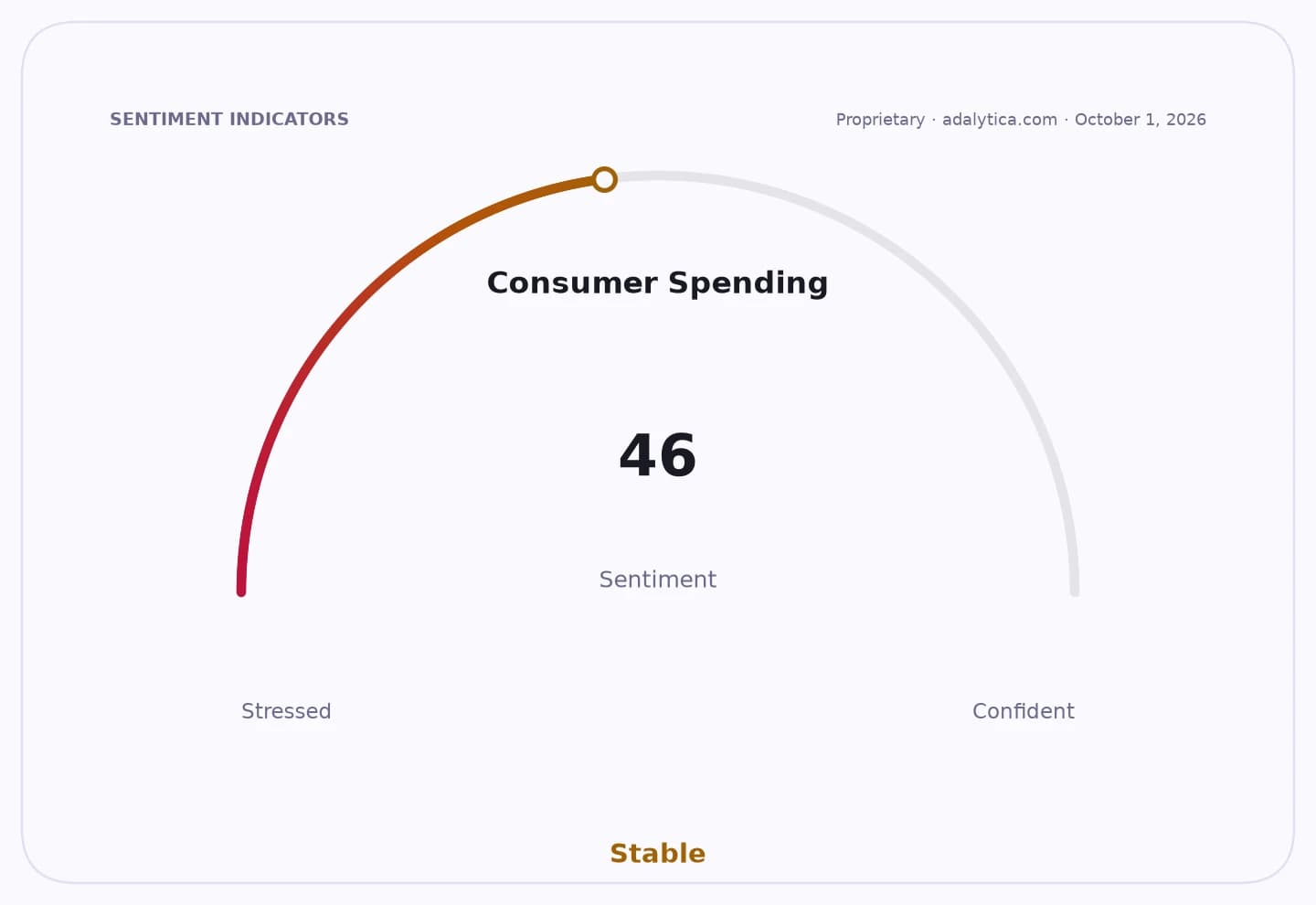
China is pushing 625 billion yuan of fresh spending support into the economy before the National Day holiday, using consumer trade-in subsidies, local vouchers and themed retail events to boost household demand and keep growth steady.
China Boosts Holiday Spending With 625B Yuan Support
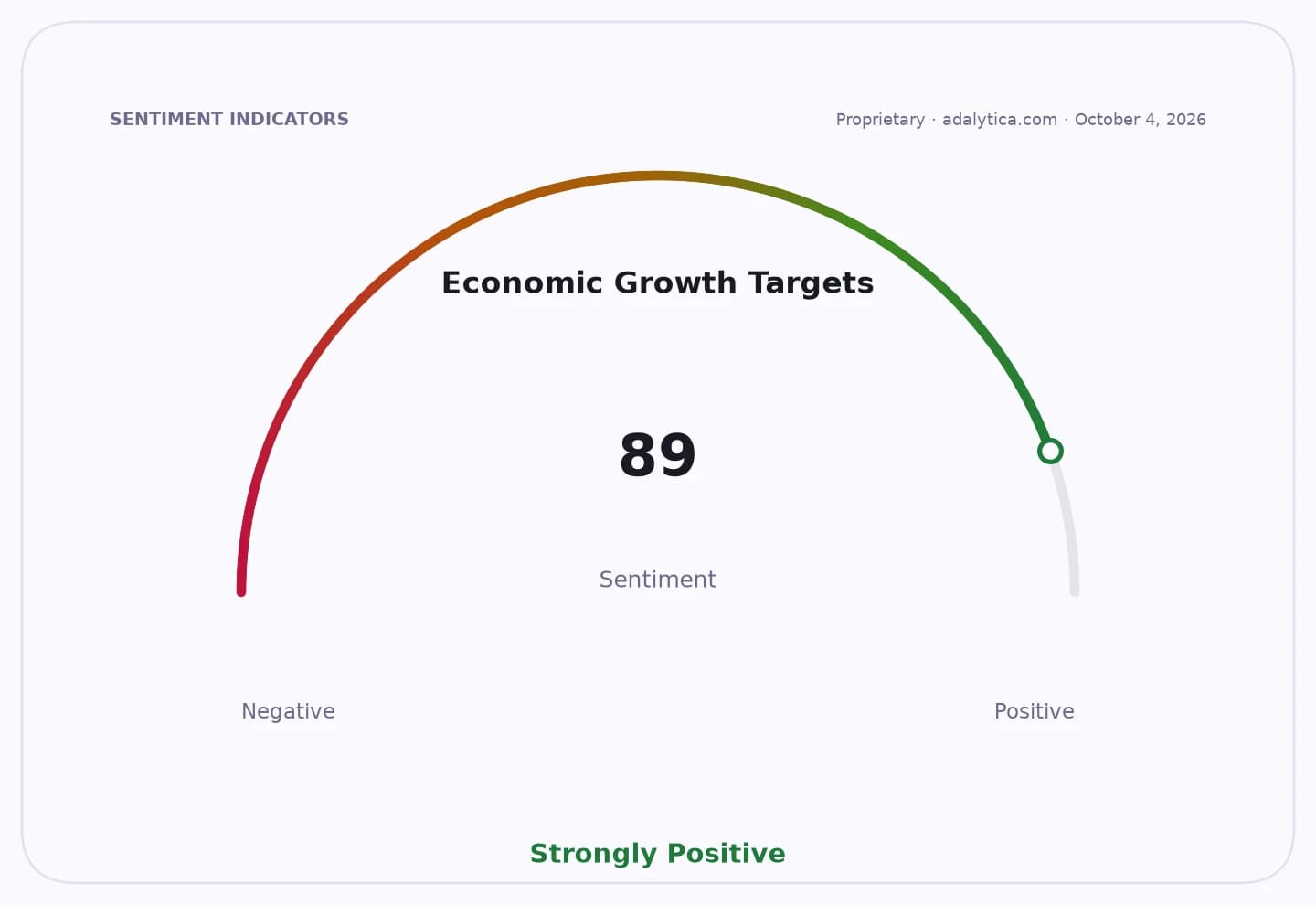
The fourth batch of ultra-long special treasury bond funding for “trade-in of consumer goods” landed ahead of the Oct. 1 holiday, giving Beijing and local governments a coordinated demand push at one of the year’s biggest shopping periods. Officials are pairing central cash with local subsidies, platform discounts and company promotions to make purchases cheaper for households while supporting retailers, appliance makers and service providers.
Sentiment IndicatorsⓘProprietary · adalytica.com · October 4, 2026
This is a snapshot — live sentiment, awareness and momentum for 130+ markets update continuously in the dashboard.Open AlphaPulse
In Tianjin, subsidies reach as high as 500 yuan for phones and tablets and 1,500 yuan for home appliances, while the city has also expanded coverage to include some aging-friendly products. Authorities there said more than 80 million yuan of government consumption vouchers were issued during the holiday, creating a three-way effect with platform and corporate discounts.
The policy matters because China is trying to shore up consumption at a time when domestic demand has been uneven and factory activity has shown only modest momentum. Monthly industrial output has continued to expand, but the bigger policy urgency is household spending, which has remained a weak link in the recovery and kept pressure on officials to lean more heavily on consumer-focused stimulus.
For investors, the immediate beneficiaries are retailers, appliance sellers, consumer-electronics makers, travel and leisure operators, and platforms that can convert voucher flows into higher traffic and sales. Hong Kong-listed China ETFs such as FXI and MCHI remain sensitive to any sign that stimulus is translating into better earnings for consumer-facing companies, even as their recent technical readings show both funds trading below their 50-day and 200-day moving averages.
The broader narrative is that Beijing is now using a combination of central fiscal firepower and local implementation to turn policy support into visible holiday spending, from ice rinks in Jinan to cinema-linked discounts in Liuzhou and tourism vouchers in Huangshan. If the campaign lifts Golden Week sales, it could strengthen the case for more targeted consumption support later this quarter; if it disappoints, pressure will build for larger measures to revive demand.
| Entity | Gains | Losses |
|---|---|---|
| Chinese consumers | ▲Lower holiday prices | ▼Less direct benefit if subsidies expire |
| Retailers and appliance makers | ▲Higher foot traffic and sales | ▼Margin pressure from discounting |
| Local governments | ▲Faster consumption activity | ▼Budget strain from voucher programs |
| FXI and MCHI investors | ▲Better stimulus-driven sentiment | ▼Weak follow-through if spending stalls |