China’s central bank is preparing to inject as much as 1 trillion yuan a day into the banking system through overnight reverse repos during the Golden Week holiday, a large-scale liquidity backstop designed to prevent cash-market strains as trading activity thins and payments surge.
PBOC to Inject Up to 1 Trillion Yuan Daily
The move matters because China’s financial system tends to face a seasonal squeeze around long holidays, when firms, households and banks all need cash at the same time while interbank trading liquidity dries up. By flooding the market with short-term funds, the People’s Bank of China is signaling that it wants to keep money-market rates anchored and avoid disruptions that could spill into bond trading, bank funding costs and broader credit conditions.
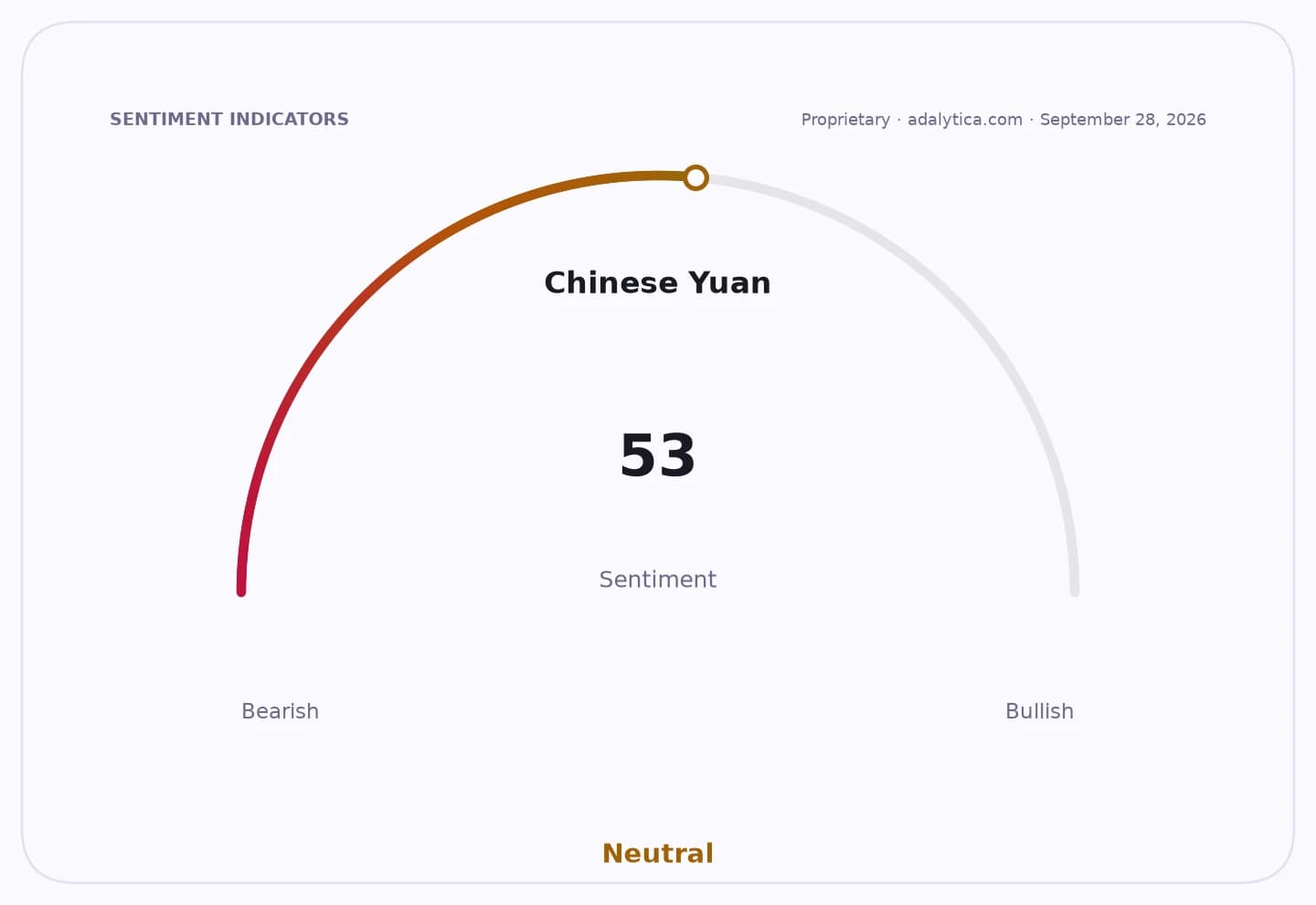
Sentiment IndicatorsⓘProprietary · adalytica.com · September 28, 2026
This is a snapshot — live sentiment, awareness and momentum for 130+ markets update continuously in the dashboard.Open AlphaPulse
For investors, the announcement is less about the headline size than the policy message. A daily injection of up to 1 trillion yuan is a strong reminder that Beijing remains focused on stability first, even as growth remains fragile and confidence in Chinese assets is uneven. It supports the short end of the funding curve, eases pressure on leveraged players and can help cushion risk assets if holiday-related cash demand or capital flows tighten domestic liquidity.
The timing also fits a broader policy backdrop in which authorities have been leaning on targeted easing and liquidity tools rather than large-scale stimulus. China is still trying to balance support for growth with the need to avoid reigniting leverage concerns, particularly with property weakness still weighing on activity and private investment. In that context, overnight reverse repos are a clean, reversible tool: they add cash now without committing the central bank to a more durable expansion of the balance sheet.
Markets have already been sensitive to China policy signals. Offshore yuan sentiment has improved at times on expectations of official support, while Chinese equities and China-tracking funds have remained vulnerable to swings in growth confidence and U.S.-China geopolitical headlines. The latest move should help reduce funding volatility during the holiday, but it is unlikely by itself to change the underlying debate over whether Beijing needs a more forceful growth response.
For bond investors, the operation should support front-end liquidity and keep repo rates in check. For equity investors, it offers some near-term reassurance, though not a fundamental fix for weak earnings momentum or cautious domestic demand. The key question after Golden Week will be whether the PBOC simply smooths seasonal cash pressures, or whether it is laying the groundwork for more sustained easing if growth data fails to stabilize.
| Entity | Gains | Losses |
|---|---|---|
| Chinese banks | ▲Easier funding conditions | ▼Less room to price liquidity scarcity |
| Short-term borrowers | ▲Lower overnight funding stress | ▼Tighter spreads fade |
| Chinese equities and FX bulls | ▲Policy backstop support | ▼Less urgency for broader stimulus |
| Savers and cash holders | ▲Stability in money markets | ▼Higher cash returns unlikely |