China’s main stock index edged higher at the open after the central bank left its benchmark loan prime rates unchanged, a sign policymakers are still prioritizing stability over a broader easing move even as growth concerns linger.
China Stocks Rise After Loan Prime Rates Held Steady

The Shanghai Composite rose modestly in early trade after the Bank of China held the one-year and five-year loan prime rates steady at 8:50 a.m. local time. The move removes an immediate policy surprise for markets, but it also underscores Beijing’s reluctance to deploy fresh rate cuts while it weighs the effects of earlier support measures, a soft property backdrop and still-fragile credit demand.
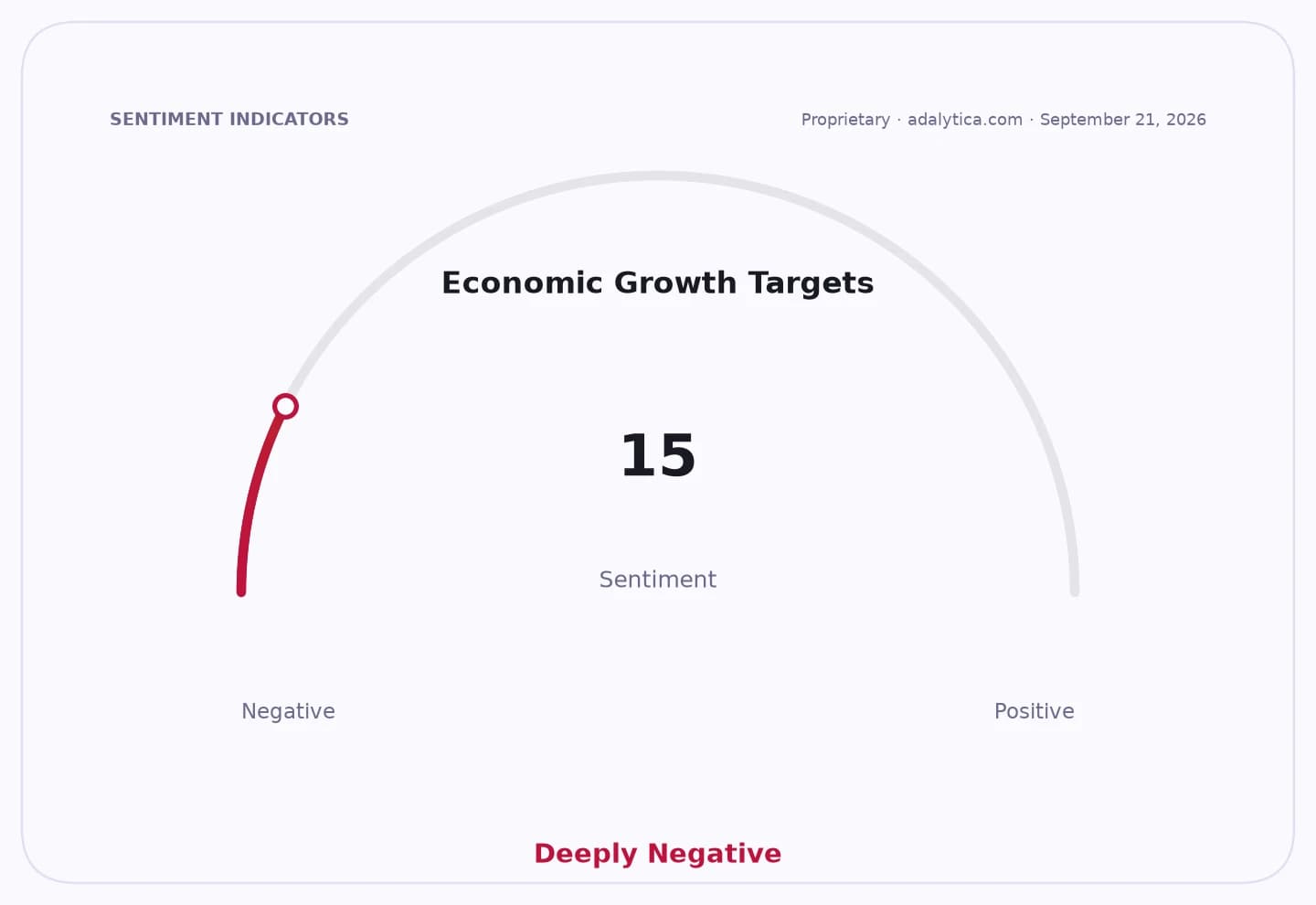
Sentiment IndicatorsⓘProprietary · adalytica.com · September 24, 2026
This is a snapshot — live sentiment, awareness and momentum for 130+ markets update continuously in the dashboard.Open AlphaPulse
For investors, the decision matters because China’s policy rate path remains one of the few direct levers for sentiment in domestic equities and in China-linked assets offshore. Easing would typically help banks, property developers and highly leveraged sectors by lowering funding costs and supporting borrowing, while an unchanged setting keeps pressure on policymakers to rely on targeted liquidity tools or fiscal measures instead. It also leaves the burden of reviving activity on measures that may take longer to filter through to corporate earnings.
The market reaction was restrained, which fits the broader tone in Chinese assets. The Shanghai Composite was recently trading near 3,949, above its 50-day moving average but still below its 200-day average, a technical setup that suggests a recovery attempt rather than a confirmed trend change. The index’s relative strength reading has improved from oversold levels but remains short of a decisive breakout. U.S.-listed China shares have shown a similar pattern: the FXI China ETF was around $34.91, below both its 50-day and 200-day averages, while the leveraged YINN fund has also been under pressure, reflecting how cautious positioning remains despite intermittent policy support.
That caution helps explain why the rate decision landed as a holding action rather than a catalyst. A stable lending benchmark can reassure investors that authorities are not responding to acute stress, but it also raises questions about how much room Beijing has to stimulate without worsening financial imbalances or weakening the yuan. The yuan trade signal snapshot was neutral, even as market awareness remained elevated, suggesting traders are watching policy and growth data closely rather than betting on a clean directional move.
The backdrop is a China market still searching for conviction. Bulls argue that steady rates reduce policy uncertainty and leave room for more targeted support later, which could help stabilize earnings expectations and improve sentiment toward domestic cyclical sectors. Bears counter that without a clearer easing cycle, consumption, property and private investment may continue to struggle, limiting any sustained re-rating in equities.
For now, the open higher in Shanghai suggests investors are taking the rate hold as a non-event rather than a setback. The next market test will be whether policymakers supplement the unchanged lending rates with more visible fiscal or credit support — or whether growth data forces them to move more decisively in the weeks ahead.
| Entity | Gains | Losses |
|---|---|---|
| Chinese banks | ▲Margin stability | ▼Loan growth support |
| Property developers | ▲Policy certainty | ▼Lower borrowing costs |
| Shanghai Composite | ▲Relief from no surprise cut | ▼Clear stimulus catalyst |
| FXI / YINN bulls | ▲Less policy risk | ▼Rally conviction |