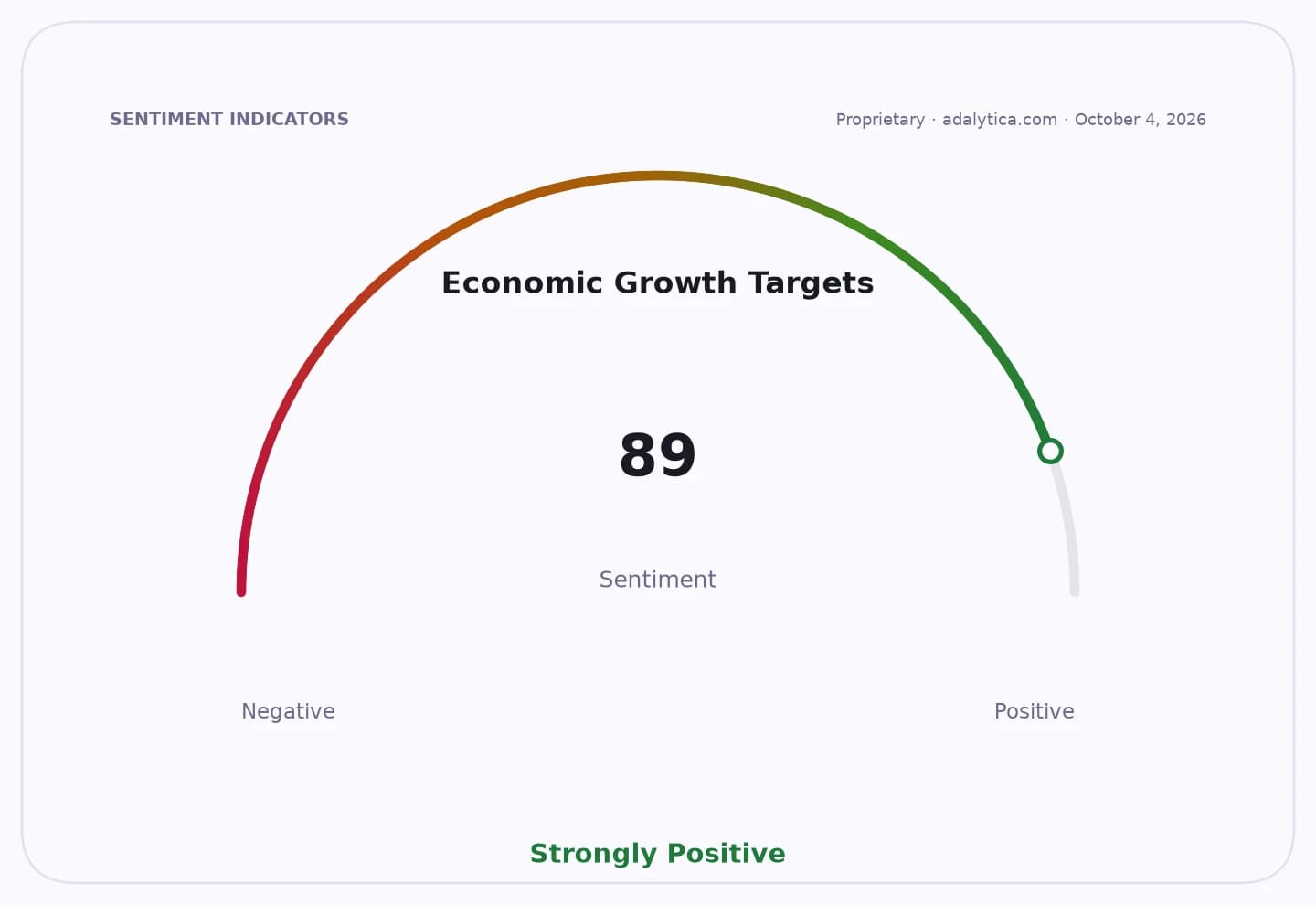
Punjab’s decision to raise dearness allowance by 8 percentage points to 50% is the most economically meaningful development in the package, because it lifts take-home pay for government workers and pensioners at a time when inflation remains a key drag on household budgets.
Punjab raises dearness allowance to 50%
The increase, approved by the state government, takes the total DA to 50% after two prior 4% hikes. It will benefit lakhs of employees and pensioners, with arrears to be included in upcoming salary payments and the revised payout expected to filter through by mid-October. For households that rely on fixed monthly income, the move provides immediate relief and helps preserve purchasing power against higher living costs.
Sentiment IndicatorsⓘProprietary · adalytica.com · October 5, 2026
This is a snapshot — live sentiment, awareness and momentum for 130+ markets update continuously in the dashboard.Open AlphaPulse
Dearness allowance is one of the main mechanisms used by governments to offset inflation, and the timing matters. With consumer prices still elevated, a 50% DA threshold is significant because it reduces the real-income squeeze on a large public-sector workforce and supports near-term consumption in the state economy. The extra cash flow should be especially relevant for lower- and middle-income households, where a larger share of income is spent on essentials.
For the state government, the policy is supportive of employee morale and household demand, but it also raises the wage bill and adds pressure to public finances. The move is broadly consistent with a wider pattern of inflation-linked compensation adjustments across India, where state and central authorities face pressure to protect real incomes without materially worsening fiscal slippage.
Investors will watch the decision less for its direct market impact than for what it says about spending power and policy priorities. Higher DA can support consumer demand in staples, discretionary retail and local services, while also reinforcing expectations that other governments may follow with similar hikes. The main risk is that repeated allowance increases, if not matched by revenue growth, can tighten budget flexibility and leave less room for capex.
The central takeaway is straightforward: Punjab’s DA hike is an inflation shield for public employees and pensioners, but it also underscores how persistent price pressures continue to shape wage policy and public-sector spending across India.
| Entity | Gains | Losses |
|---|---|---|
| Punjab government employees | ▲Higher take-home pay | ▼None immediately |
| Pensioners | ▲Inflation relief | ▼None immediately |
| State government finances | ▲Employee goodwill | ▼Higher wage bill |
| Consumer-facing businesses | ▲More household spending | ▼Fiscal headroom if costs rise |