China’s control of the upper Mekong is emerging as a strategic risk for Southeast Asia, with the river’s water flows increasingly tied to food security, regional stability and investor exposure across economies that depend on it.
China Mekong control raises Southeast Asia risk
That is the real market significance of the report warning that Beijing is using unilateral dam operations and selective cooperation to keep maximum leverage over a river that sustains more than 60 million people in China, Laos, Cambodia, Thailand, Vietnam and Myanmar. The Mekong is not just a diplomatic issue: it is an input into rice output, fisheries, hydropower reliability, transport and drought resilience in one of Asia’s most vulnerable growth corridors.
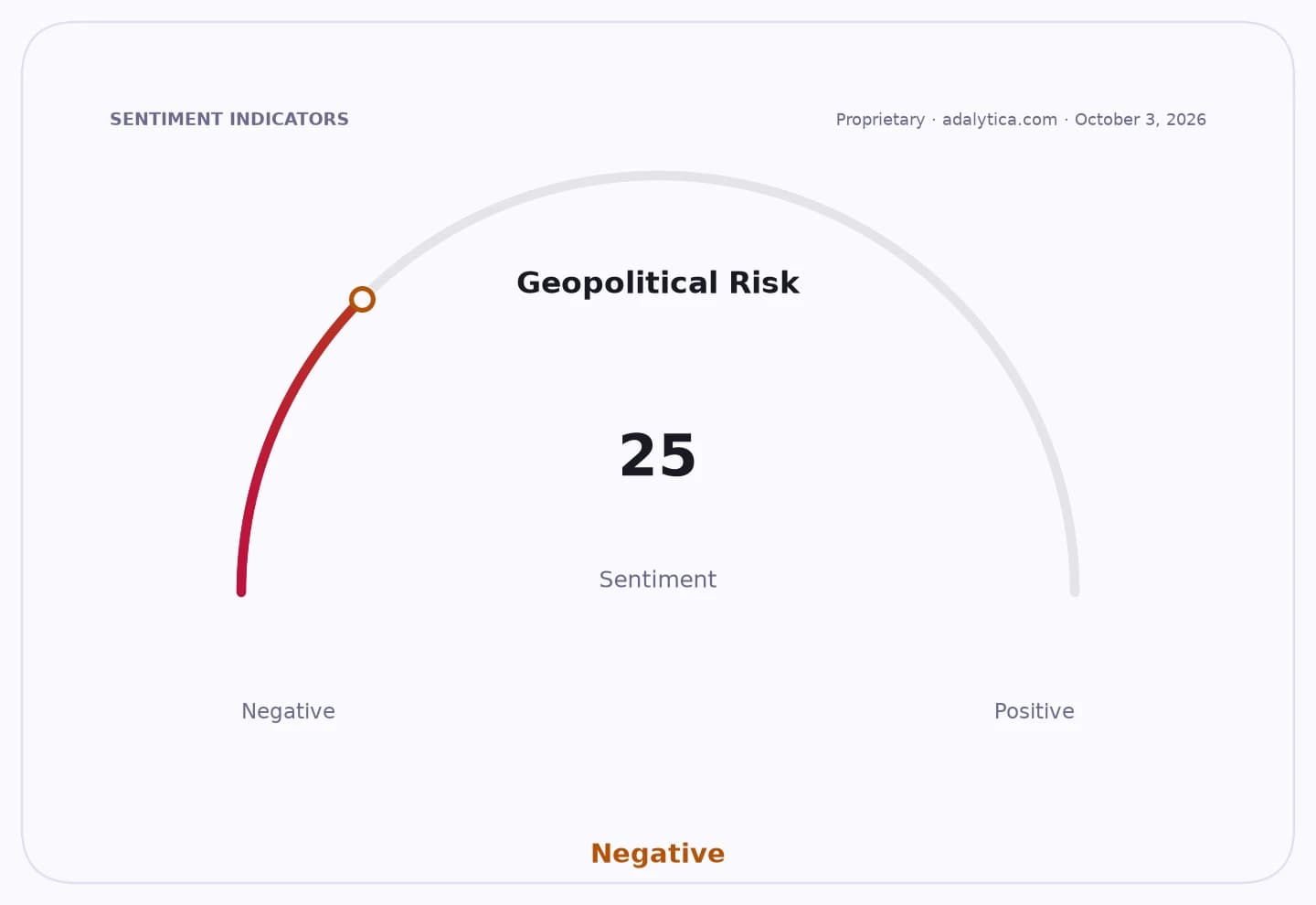
Sentiment IndicatorsⓘProprietary · adalytica.com · October 3, 2026
This is a snapshot — live sentiment, awareness and momentum for 130+ markets update continuously in the dashboard.Open AlphaPulse
The report’s comparison with China’s approach to Kazakhstan and Mongolia is telling. Beijing has been willing to sign binding water-sharing agreements where its own border security, industry and domestic stability are at stake. On the Mekong, where downstream states have far less leverage, the same restraint disappears. That asymmetry matters because it means water management is becoming another instrument of state power, not a neutral environmental issue.
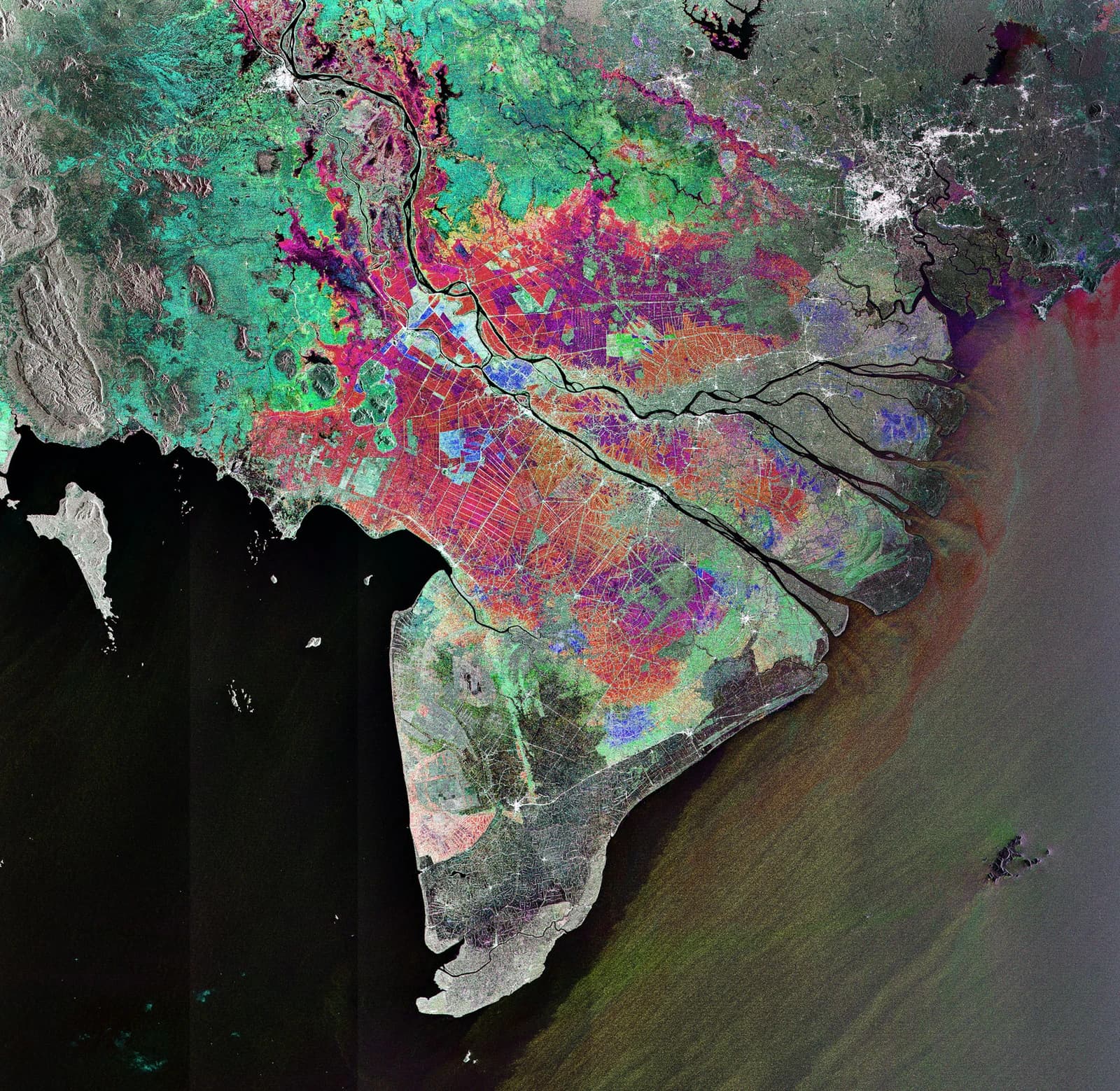
For investors, the obvious near-term implication is that climate and geopolitics are now converging over Southeast Asian supply chains. Vietnam’s rice bowl and Cambodia’s fisheries are directly exposed if flows remain erratic, while sediment loss and erosion threaten agricultural productivity and riverbank infrastructure over time. That raises the odds of higher food import needs, more volatile local prices and greater public spending on water management, all of which can ripple through sovereign risk and consumer demand.
Geopolitical Risk vs FXIadalytica.com
Explore this data interactively — full history, time series and cross-market comparisons.Open AlphaPulse
The news also lands at a moment when confidence in cross-border stability is fragile. Adalytica’s Global Stability Sentiment gauge shows extreme fear, underscoring how quickly geopolitical risk is being repriced. In markets, that usually favors quality, liquidity and assets tied to resilience rather than fragile growth narratives. Southeast Asian exporters, logistics operators and agriculture-linked businesses are more exposed than global names with diversified supply chains.
The ETF tape reflects that caution. China exposure via FXI has weakened, with the fund sliding to $33.19 on Oct. 2, below its 50-day moving average of $35.13 and its 200-day average of $36.07, while RSI readings around 31.9 point to a market that is technically oversold but still under pressure. Hong Kong-linked EWH has also softened to $21.57, below both its 50-day and 200-day averages, signaling that investors are not yet paying up for China-adjacent risk. By contrast, Thailand’s THD has held up better around $71.62, still above its 200-day average of $68.70, suggesting the market is differentiating among Mekong-exposed economies rather than dumping the region wholesale.
The investment lesson is straightforward: this is a structural geopolitical story, not a one-off water dispute. China’s upstream dominance gives it leverage that downstream states cannot easily match, and that means the Mekong should be treated as a long-duration risk factor in Asian agriculture, infrastructure and sovereign exposure. I believe the better trade is to favor beneficiaries of resilience — water infrastructure, food-security plays, logistics re-routing and defensive Asia exposure — while staying cautious on directly exposed river economies until there is evidence of more predictable governance.
| Entity | Gains | Losses |
|---|---|---|
| China | ▲Strategic leverage | ▼Regional trust |
| Downstream Mekong states | ▲Pressure for adaptation spending | ▼Water reliability |
| Water infrastructure firms | ▲Higher demand | ▼None obvious |
| Agriculture/fisheries in Vietnam, Cambodia | ▲Supply-chain urgency | ▼Output and margins |