China’s move to freeze assets tied to chip maker Nexperia marks a sharp escalation in a protracted technology dispute that could ripple through Europe’s semiconductor supply chain and widen investor anxiety around China exposure in critical hardware.
China freezes Nexperia assets amid chip dispute

The immediate economic issue is not just one company’s balance sheet. It is the risk that a bilateral fight over industrial control and trade leverage starts to interfere with chip flows, customer contracts and working capital across the electronics ecosystem. In a market where semiconductors sit at the center of everything from autos to industrial equipment, even a targeted asset freeze can quickly become a broader operational and pricing problem.
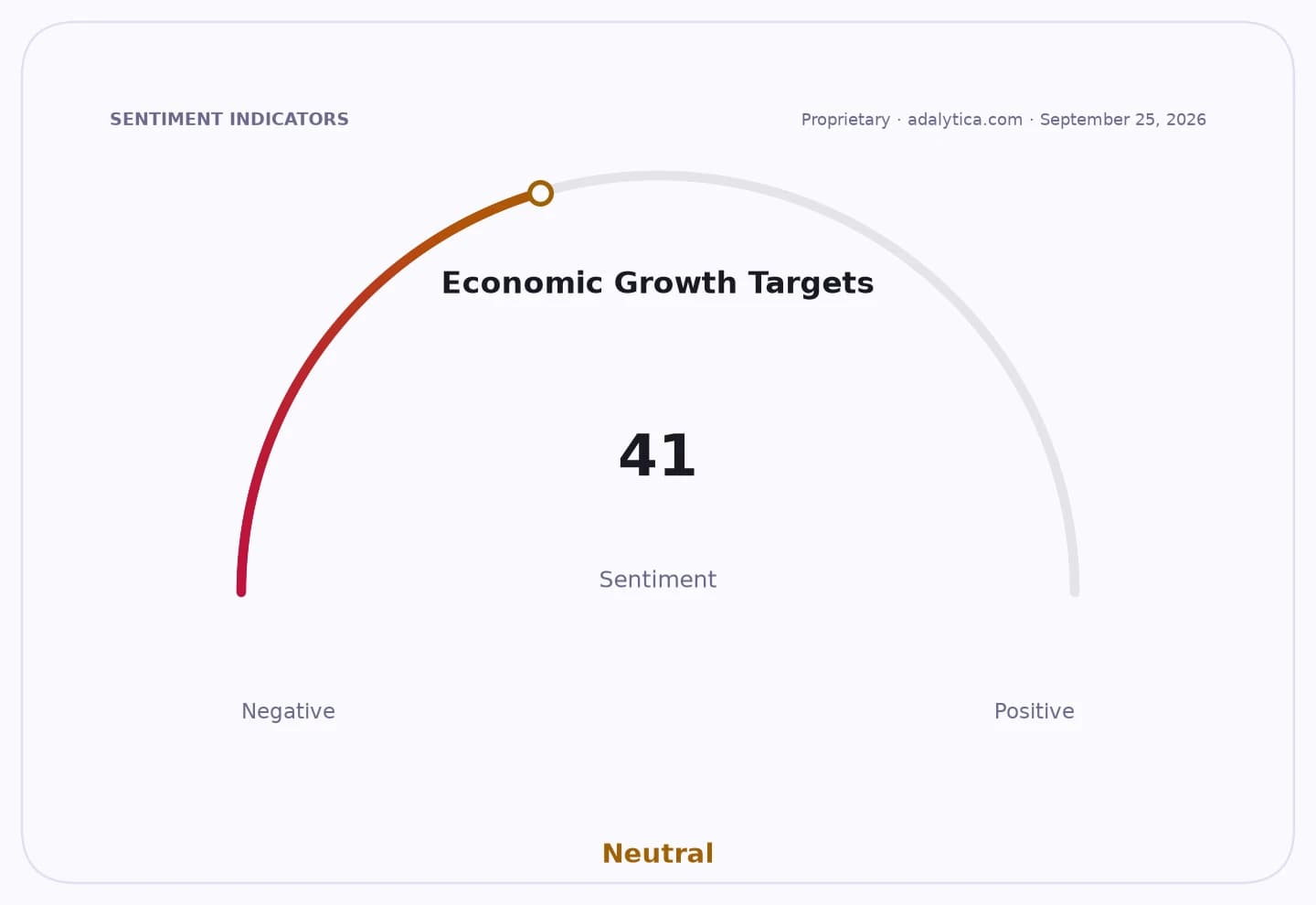
Sentiment IndicatorsⓘProprietary · adalytica.com · September 4, 2026
This is a snapshot — live sentiment, awareness and momentum for 130+ markets update continuously in the dashboard.Open AlphaPulse

That matters for investors because the dispute adds another layer of geopolitical friction to a sector already trading on supply security, China demand and policy risk. Shares of NXP Semiconductors, whose China revenue still accounted for a meaningful slice of sales in the latest quarter, have been under pressure, falling to $224.99 on Sept. 3 from $322.15 on June 22. The stock is also trading below its 50-day moving average, with RSI readings around the high-30s, showing how quickly sentiment has deteriorated as China-related risk returns to the fore.
The wider market backdrop is hardly helping. Adalytica’s Global Stability Sentiment gauge remains neutral at 48, but awareness is at an extreme-greed reading of 100, a sign that investors are focused on geopolitical flashpoints even as they keep chasing the biggest secular winners. The yuan picture is worse: Adalytica’s Chinese currency signals show extreme fear, reflecting how quickly capital can retreat when policy confrontation intensifies.

For Nexperia and its owners, a freeze on assets can constrain flexibility at the worst possible moment, limiting the ability to move cash, support operations or reassure counterparties. For customers, the problem is trust. Once suppliers become entangled in state-to-state conflict, procurement teams begin to diversify sources, hold more inventory and pay up for redundancy. That is inflationary at the margin and usually bullish for the companies that sell the tools, equipment and alternative components that make supply chains more resilient.
That is why this story is bigger than Nexperia. The market should read it as another reminder that strategic semiconductors are no longer just a growth industry; they are a geopolitical asset class. Winners tend to be firms with diversified manufacturing footprints, domestic or allied-country supply chains and exposure to defense, automation and AI infrastructure. Losers are the vendors caught between jurisdictions, especially those with heavy China dependence or weak pricing power.
If this conflict persists, expect more pressure on cross-border semiconductor joint ventures, more caution from multinational buyers and more value placed on supply-chain optionality. Investors looking for the asymmetric trade should favor the picks-and-shovels of chip manufacturing and industrial resilience over the politically exposed names that sit closest to China’s regulatory crossfire.
| Entity | Gains | Losses |
|---|---|---|
| Supply-chain diversified chip firms | ▲More sourcing demand | ▼Less pricing pressure |
| Nexperia | ▲— | ▼Frozen assets, tighter flexibility |
| NXP Semiconductors | ▲Defensive rerating potential | ▼China revenue risk |
| Equipment and redundancy suppliers | ▲More investment demand | ▼— |