China may be building its first nuclear-powered aircraft carrier, a leap that would narrow one of the last major gaps between Beijing’s navy and the U.S. fleet and intensify the regional military balance in the western Pacific.
China Nuclear Aircraft Carrier Report
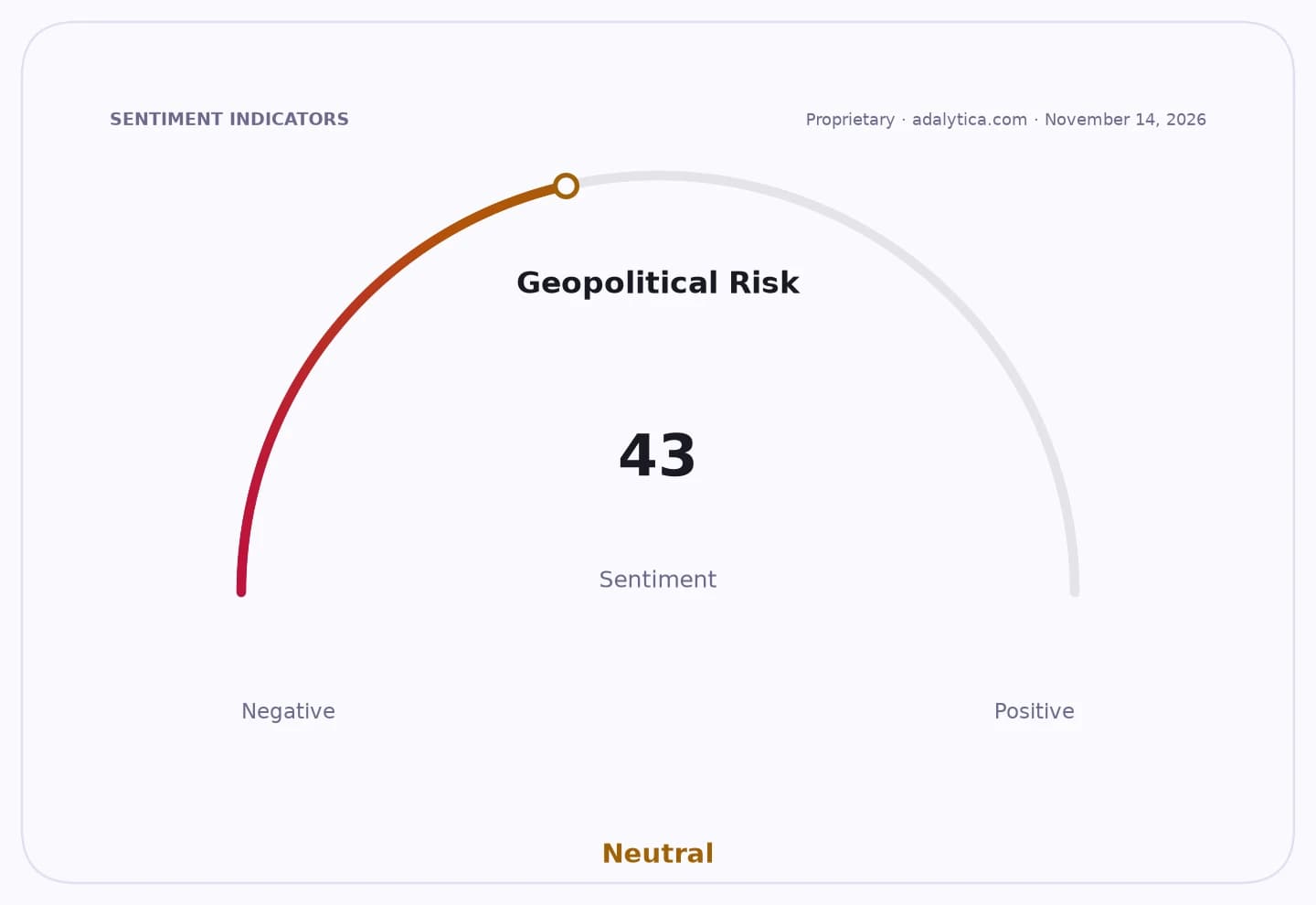
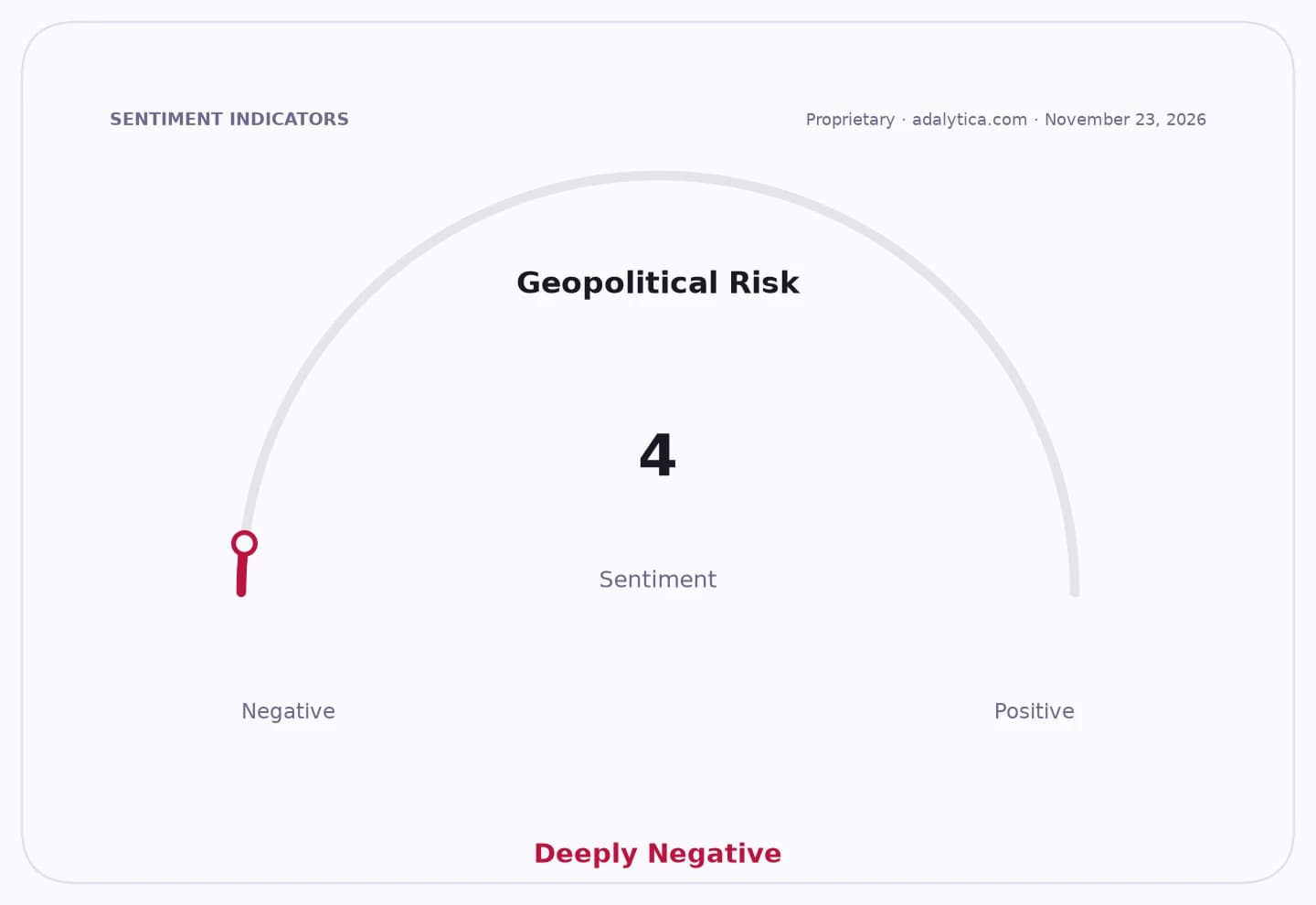
Geopolitical Risk
Commercial satellite images of a vessel under construction at Dalian shipyard in Liaoning province have fueled speculation that the ship is the Type 004, with analysts pointing to design features that could protect a reactor compartment. Beijing has not confirmed any nuclear propulsion plan.
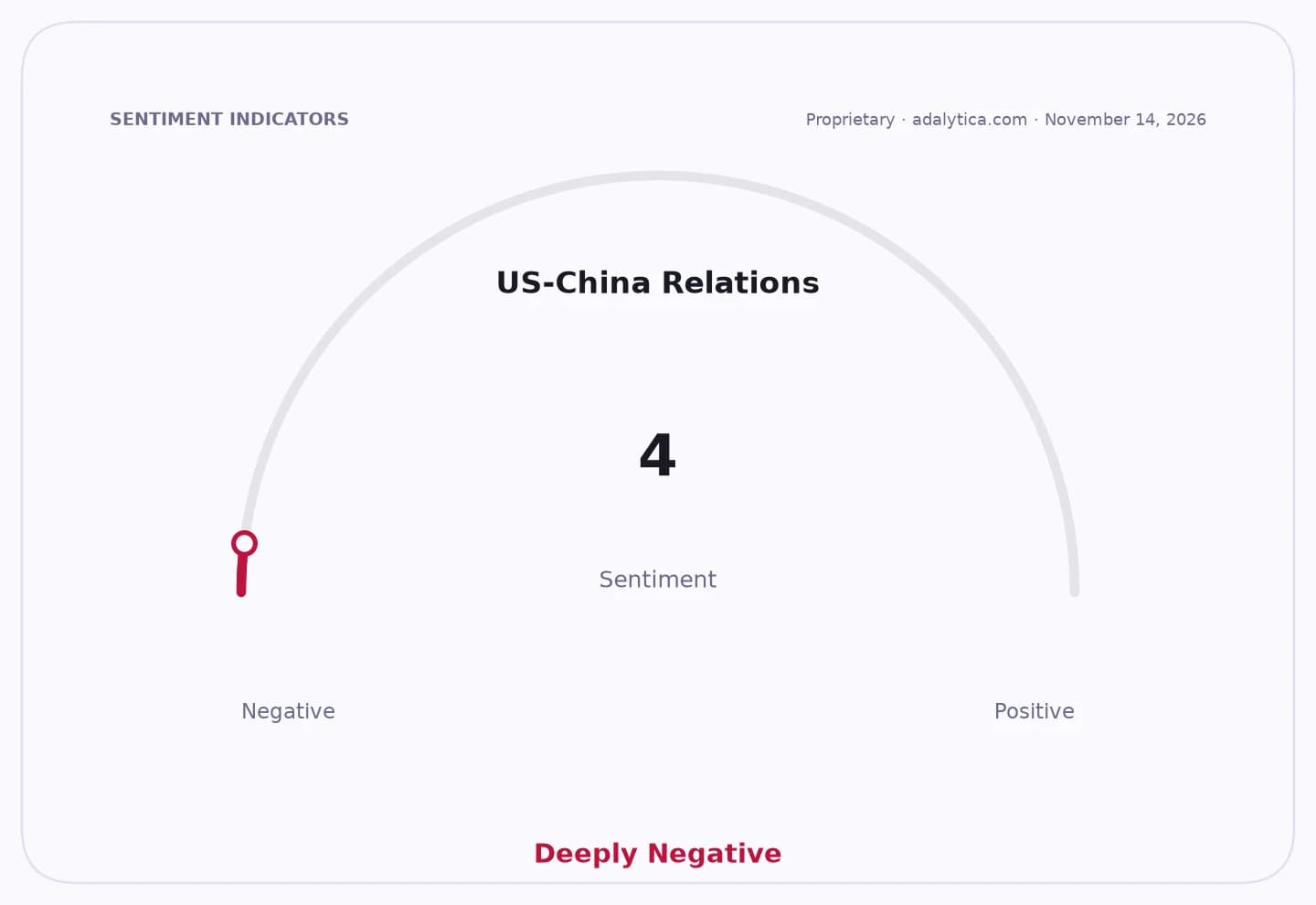
Sentiment Indicators
If the assessment proves correct, China would join a tiny club of states with nuclear carrier capability and gain a platform able to stay at sea far longer than its three conventionally powered carriers. That matters because nuclear propulsion would give the ship the endurance to support sustained deployments, along with the electrical output needed for advanced radar, electronic warfare systems and future weapons.
The development would also underscore how quickly China is closing the technology gap with the U.S. Navy. China already operates the Liaoning, Shandong and Fujian, with Fujian equipped with electromagnetic catapults similar to those on newer U.S. carriers, but all three rely on conventional engines that limit range and on-station time.
For investors, the story points to more durable demand for defense spending, shipbuilding and naval systems as Washington and allies respond to a more capable Chinese fleet. It also reinforces the strategic backdrop already supporting U.S. contractors such as Lockheed Martin, Northrop Grumman and RTX, whose programs are tied to rising security requirements and larger budgets for missile defense, sensors and maritime power projection.
The immediate market impact is likely to be indirect rather than abrupt, but the geopolitical premium around defense names can intensify when military competition escalates. Any confirmation of a nuclear carrier program would also strengthen the case for continued U.S. investment in carrier maintenance, propulsion, anti-ship weapons and Pacific force posture.
The key question now is whether further imagery or official disclosures confirm the propulsion system. Until then, the market is left with a strategic signal rather than a formal announcement — but one that points to a more expensive and more contested naval race.
| Entity | Gains | Losses |
|---|---|---|
| China’s navy | ▲Greater blue-water reach | ▼Higher costs and complexity |
| U.S. Navy | ▲More justification for force upgrades | ▼Relative carrier advantage narrows |
| Defense contractors | ▲Sustained spending tailwind | ▼Less urgency if tensions cool |
| Regional rivals | ▲More attention to deterrence spending | ▼Greater security pressure |