China’s latest push to speed the shift toward completed-home sales is making the property slump harder to ignore, even as developers inch through debt resolution and investors try to judge who survives the cleanup.
China property sales reform pressures developers

That matters because the housing market is still one of the clearest pressure points in the Chinese economy. A move away from the old presale model may help reduce unfinished projects and restore buyer trust over time, but it also squeezes a sector that has long relied on collecting cash before homes are delivered. For developers already struggling with weak sales and heavy leverage, the timing is what unnerved the market.
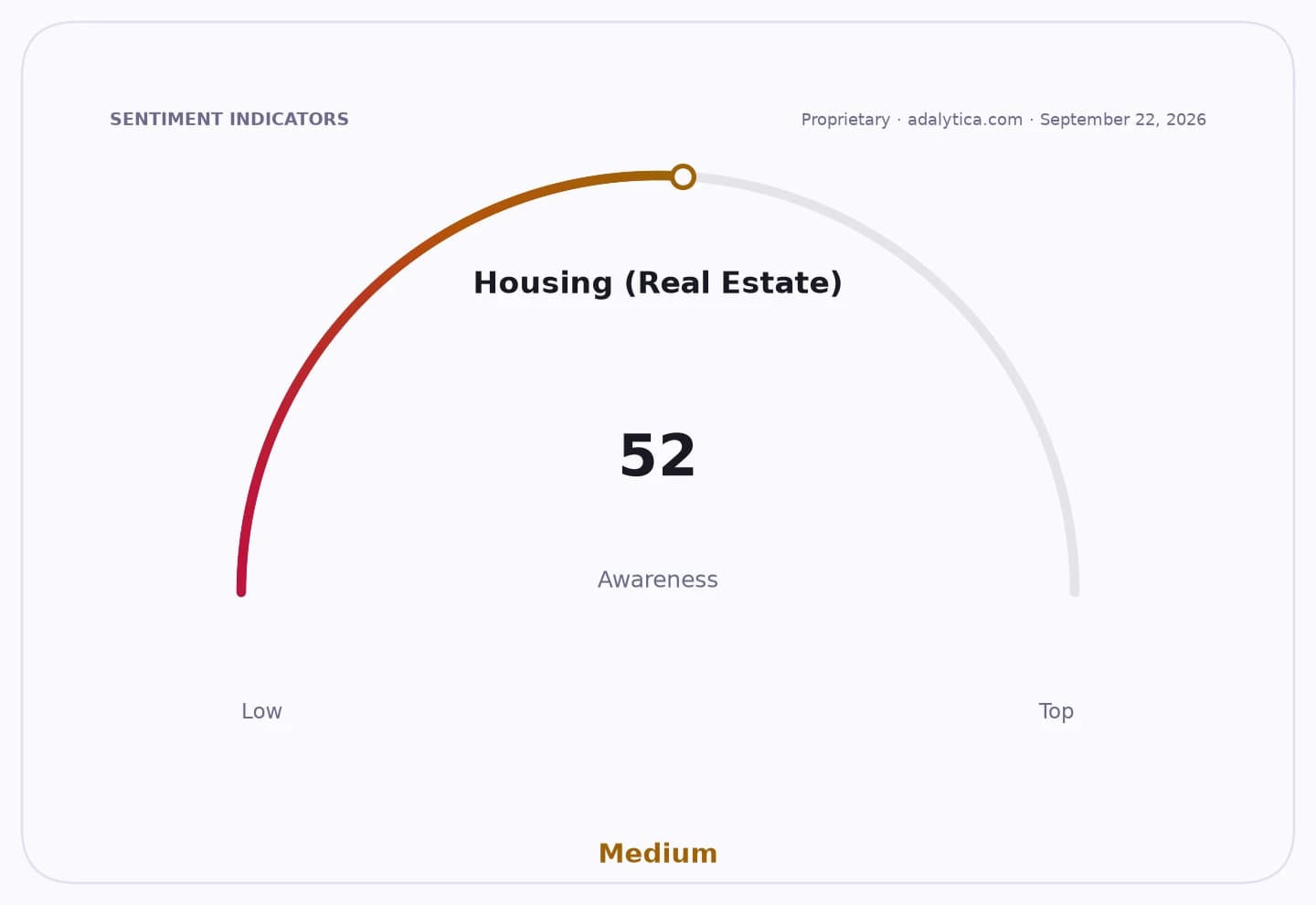
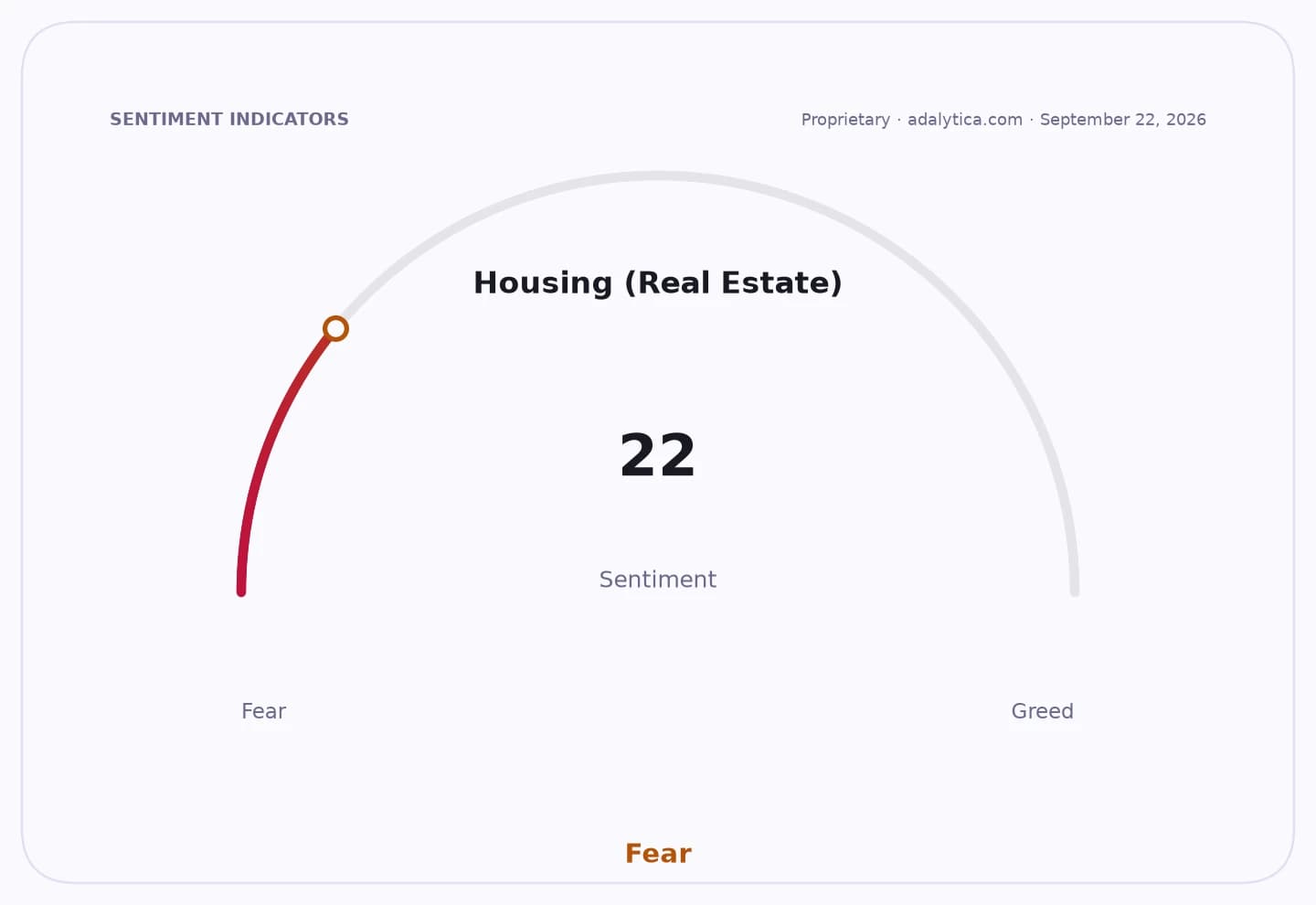
Sentiment IndicatorsⓘProprietary · adalytica.com · September 6, 2026
This is a snapshot — live sentiment, awareness and momentum for 130+ markets update continuously in the dashboard.Open AlphaPulse
Authorities issued a joint notice on Aug. 28 to accelerate reform of the commercial housing sales system, with a clear push toward completed-home sales. The policy direction has been visible for some time, but investors took the renewed urgency as a reminder that Beijing is not stepping back from structural change in the wake of Evergrande’s collapse. In practical terms, that means more pressure on developers to fund construction before they book sales — a tougher model in a downturn.
The market implication is straightforward: capital-rich state-owned developers should be better placed to absorb the transition, while weaker private builders face a longer slog. That is why the reform can widen the gap between winners and losers instead of lifting the whole sector at once. Companies with stronger balance sheets, better access to funding and more state backing are likely to gain share as smaller peers struggle to refinance and finish projects.
For investors, the key question is no longer whether China wants to clean up housing. It is how painful that cleanup will be for earnings, cash flow and asset values across the sector. Property stocks and property-linked ETFs such as EWH, YANG and FXI are still being driven by expectations around policy support, debt workouts and buyer confidence, not just short-term trading swings. The latest rules suggest that the path to stability may be slower and more uneven than bulls had hoped.
Technical signals also hint at a market that is still trying to find its footing. EWH has been holding above its 50-day moving average, while FXI is above both its 50-day and 200-day moving averages, suggesting some underlying resilience. YANG, which rises when Chinese equities fall, has retreated from earlier highs, but its move shows how quickly sentiment can shift when policy headlines hit the tape.
The long-term investment case remains tied to balance-sheet quality, not hope. If you own China property exposure, this is a time to favor developers and funds with stronger financing access, state support and cleaner execution histories. For most investors, patience and diversification still matter more than trying to call the bottom in a sector that is being rebuilt from the ground up.
| Entity | Gains | Losses |
|---|---|---|
| State-owned developers | ▲More market share | ▼— |
| Private developers | ▲— | ▼Higher funding pressure |
| Homebuyers | ▲Fewer unfinished homes over time | ▼Less presale flexibility |
| Property investors | ▲Clearer winners over time | ▼Near-term earnings pain |