China’s refiners added to crude inventories in October for the first time in several months, restoring a buffer that gives the world’s biggest oil importer room to raise refinery runs and export more fuels if Beijing relaxes quotas.
China refiners rebuild crude inventories in October
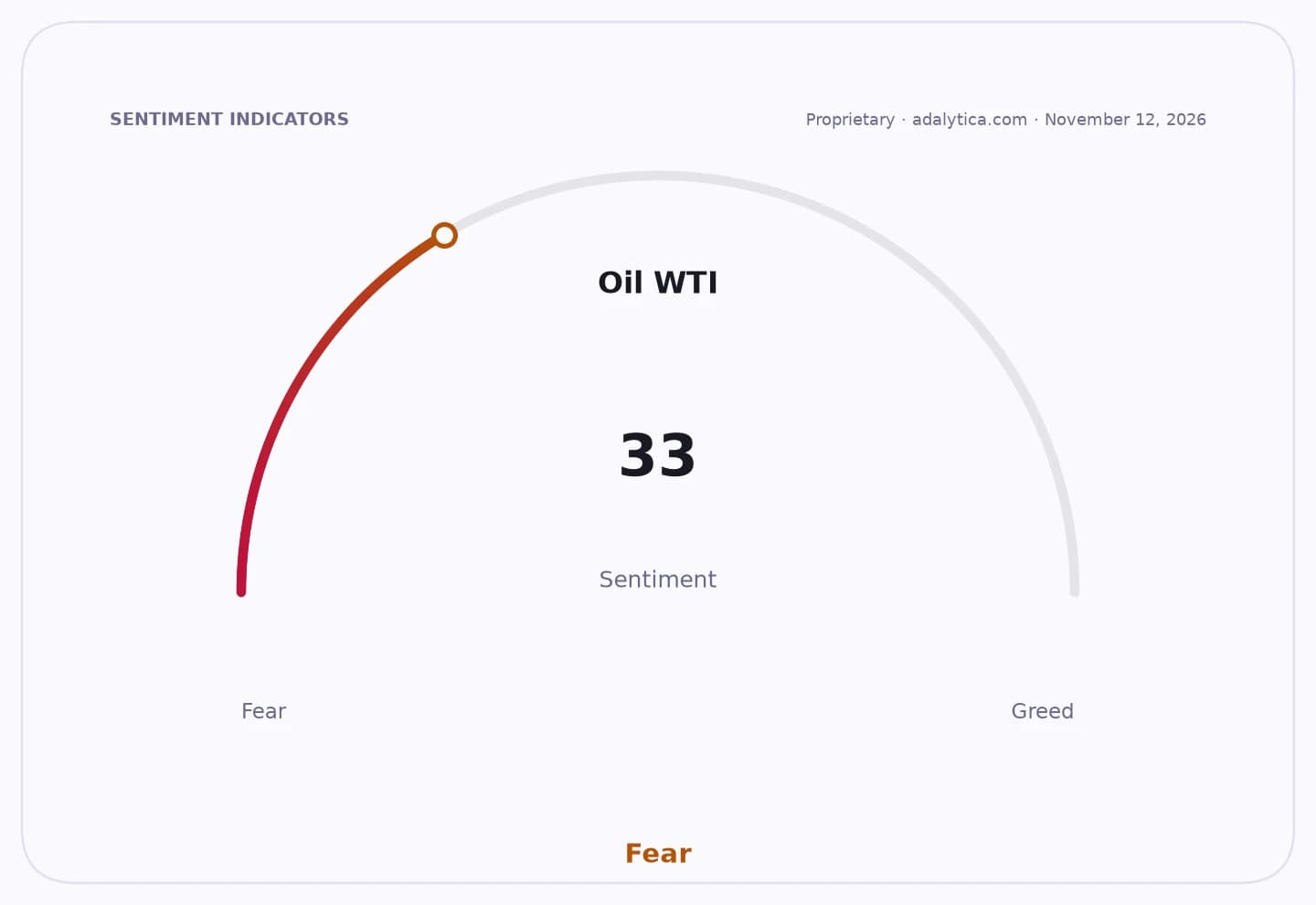
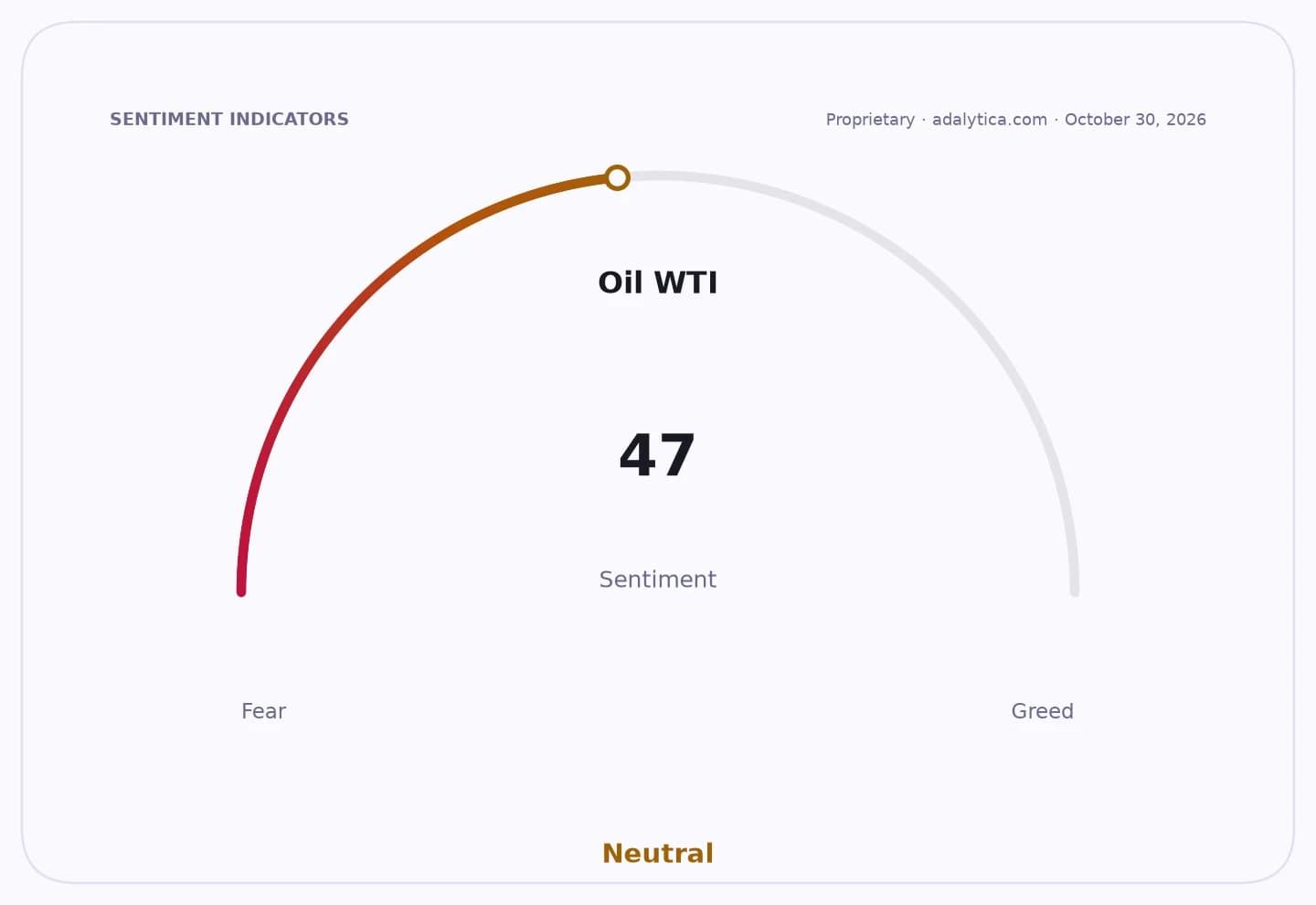
Oil WTI
That matters because China’s buying and processing decisions are now one of the swing factors in the global oil market. A return to stockpiling reduces the risk that refiners will have to keep running below available crude supply, and it gives state-controlled plants optionality to lift output into a market where diesel margins remain unusually strong. For oil traders, it also suggests China can absorb more crude without immediately tightening the physical market, even after months of disruption linked to the Iran conflict.
Sentiment Indicators
Reuters calculations based on official data show Chinese refiners processed about 490,000 barrels a day less crude in October than the volume available from imports and domestic production. That reversed a drawdown of 530,000 bpd in September. Over the first 10 months of the year, China still posted a modest surplus of 270,000 bpd, meaning strong stock builds earlier in the year and a fresh October increase were enough to offset the inventory declines from May through September.
The timing is important. Since the US and Israel attacked Iran on Feb. 28, China has leaned on inventories in several months, including May, June, August and September, without exhausting them. In other words, the country absorbed a major disruption to global crude flows without forcing a sustained liquidation of stocks. That resilience matters economically because it reduces the chance of panic buying, limits upside pressure on benchmark prices and keeps China in a position to smooth domestic supply while still managing exports of refined products.
Those export flows have already responded. China’s fuel exports fell to 5.18 million metric tons in October from 7.16 million in September, customs data showed, after dropping to 3.12 million tons in April, the weakest since 2017. Diesel exports, in particular, were pulled higher when refiners were allowed to take advantage of wide margins. They climbed to 500,000 bpd in September, according to Kpler, but eased to 313,000 bpd in October, with November tracking softer so far.
For investors, that keeps the focus on refining margins rather than crude alone. China is one of the few countries with spare refining capacity, but sales abroad are constrained by quota policy rather than by market economics. If Beijing allows more exports, refiners stand to benefit directly from elevated gasoil margins, which were reported at $58.87 a barrel on Monday, nearly triple the $20.91 level before the Iran war began. That is a clear earnings tailwind for Chinese refiners and a potential headwind for regional product prices if supply rises further.
The broader market backdrop remains constructive for producers but softer for oil-linked equities that depend on crude scarcity. Brent crude has already retreated from recent highs, and the latest Chinese inventory rebuild reinforces the idea that the supply shock narrative is fading into a more balanced market. With China’s refining system still running below 80% of capacity, the key question for the rest of the year is not whether it can export more fuel, but whether policymakers will let it.
| Entity | Gains | Losses |
|---|---|---|
| Chinese refiners | ▲Higher export optionality | ▼Quota restrictions |
| Global oil consumers | ▲More product supply | ▼Higher prices delayed |
| Crude producers | ▲Stable demand base | ▼Less price upside |
| Fuel buyers in Asia | ▲Potentially lower diesel costs | ▼Refining margins stay high |