Vietnam’s gasoline prices dropped sharply on Nov. 5 after a new excise tax rule and a slide in global oil prices forced the energy ministry to cut pump prices again, leaving E10 gasoline at 21,156 dong a liter and diesel at 28,696 dong.
Vietnam fuel prices fall after tax cut and crude drop
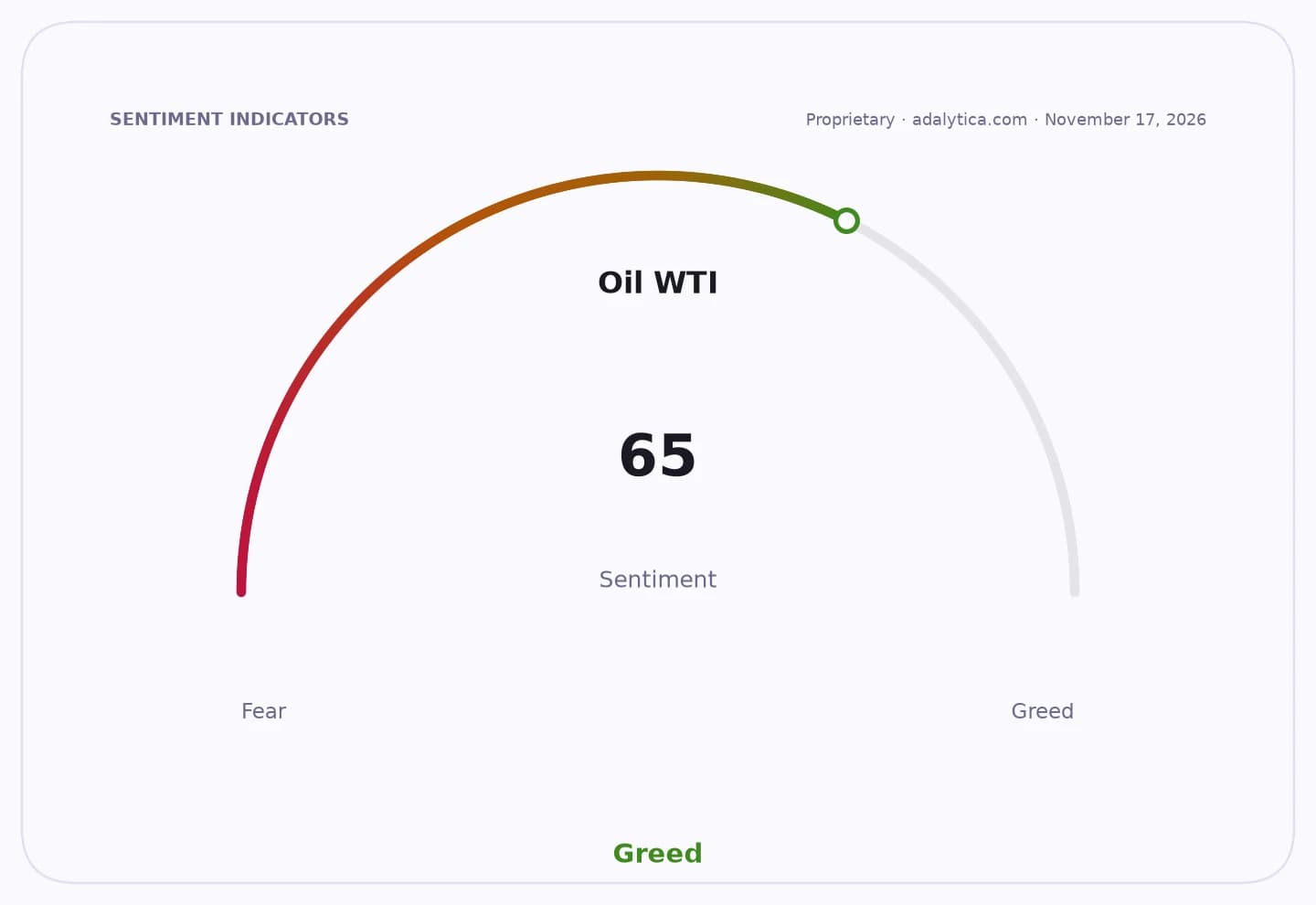
Oil WTI
The move matters because it eases pressure on households, transport operators and manufacturers at a time when fuel costs have been a key driver of inflation and logistics expenses. Lower domestic fuel prices also help soften a broader cost-of-living squeeze, especially after months of volatility in crude markets.
Sentiment Indicators
The latest adjustment came as the Ministry of Industry and Trade and the Ministry of Finance responded to a more than 10% drop in benchmark gasoline costs between operating periods, triggering an earlier-than-scheduled price cut under the rules. From Nov. 1, the special consumption tax on gasoline was reduced to zero, adding an immediate downward push to retail prices.
E5 RON92 fell by 2,305 dong to no more than 20,898 dong a liter, while E10 RON95-III dropped 2,075 dong. Diesel was trimmed only 180 dong, underscoring the uneven impact of the global price move across fuel products.
Internationally, crude has weakened for four straight sessions, with Brent and WTI both under pressure as investors bet on easing geopolitical risk and improving supply. Reuters cited a roughly 9% intraday drop in one recent session, while JPMorgan said the global oil market moved into about a 1.4 million-barrel-a-day surplus in October.
For investors, cheaper fuel is a tailwind for Vietnam’s consumer demand and transport margins, but it also reinforces the broader downtrend in energy prices that can weigh on oil-linked revenues and downstream pricing power. Airlines, shipping firms and other fuel-intensive businesses stand to benefit first if the decline feeds through to logistics and jet fuel costs.
The next focus is whether global crude stabilizes or extends its retreat, and whether domestic regulators continue to pass through lower benchmark prices quickly in upcoming adjustments.
| Entity | Gains | Losses |
|---|---|---|
| Vietnamese consumers | ▲Lower fuel bills | ▼Less immediate inflation relief uncertainty |
| Transport and logistics firms | ▲Lower operating costs | ▼Limited pass-through if demand stays weak |
| Oil producers and refiners | ▲— | ▼Softer crude and product prices |
| Importers and fuel-intensive industries | ▲Cheaper inputs | ▼Volatile planning and margin pressure |