China’s state-backed funds poured $11.5 billion into exchange-traded funds this week in a fresh, deliberate bid to restore confidence in the country’s battered stock market, with the heaviest buying concentrated in technology-heavy benchmarks tied to artificial intelligence and strategic industries.
China state funds buy Star 50 and ChiNext ETFs
That matters because Beijing is no longer just defending the broad market; it is trying to force a rebound in the parts of the equity complex it views as most important to China’s long-term competitiveness. The biggest flows went into funds tracking the Star 50 in Shanghai and ChiNext in Shenzhen, a clear signal that policymakers want capital directed toward chips, advanced manufacturing and AI rather than simply propping up legacy blue chips.
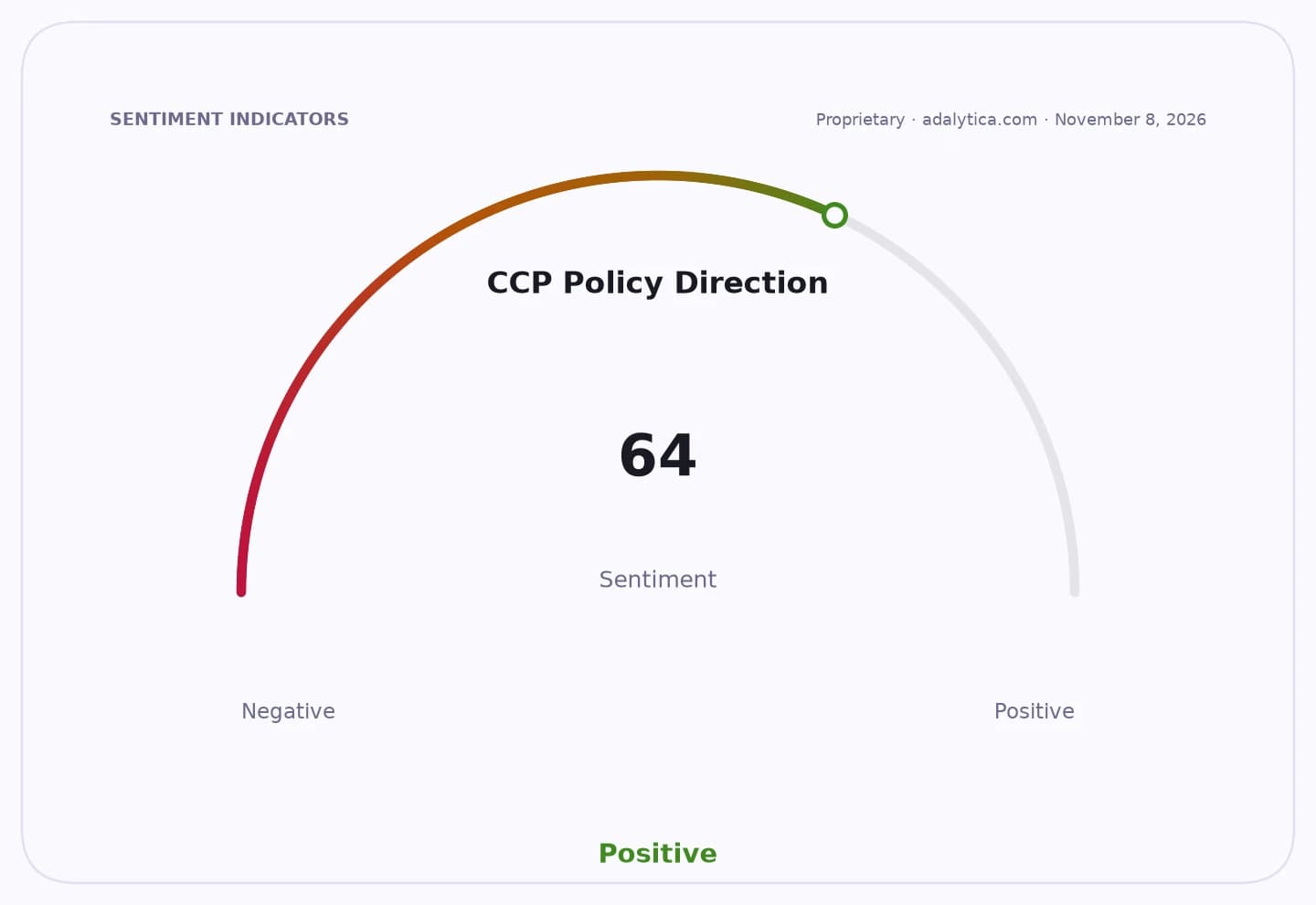
Sentiment Indicators
The impact was immediate. The Star 50 jumped 9.9% and ChiNext rose 6.4% on Wednesday, while the CSI 300 gained 2.3%. In Hong Kong, China’s AI names also caught a bid, with Z.AI up 9.6% and MiniMax adding 7.5%, showing how state support on the mainland can spill across the broader Chinese technology trade.
This is a meaningful policy shift for investors. In prior rescue efforts, Beijing’s support was concentrated in the CSI 300, but this time the “national team” is leaning harder into innovation indices that hold more AI and semiconductors exposure. That suggests authorities see equity markets not just as a financial stability issue, but as a financing tool for the sectors China needs to close the gap with the U.S. in compute, software and chips.
The scale is also hard to ignore. Nine ETFs used by Beijing to support markets drew the second-largest daily net inflow on record on Tuesday, according to Bloomberg data. ChinaAMC’s Star 50 fund alone took in $1.7 billion, while EFund’s ChiNext fund received $1.4 billion. Those are not symbolic purchases; they are the kind of flows that can change market structure, tighten liquidity and overwhelm short-term sellers.
Still, the market’s hesitation tells you everything about investor psychology. The CSI 300 is still down more than 11% this year, the Star 50 has slipped into negative territory after earlier gains of more than 60%, and small investors remain cautious despite the renewed intervention. That gap between official support and private conviction is the real trade to watch.
For investors, the opportunity is not in chasing every China rebound. It is in recognizing that Beijing is engineering a targeted repricing of its AI and technology ecosystem, and that capital will likely continue to flow toward the most strategically favored names and ETFs whenever confidence wobbles. If the support campaign persists, the winners are likely to be the exchange-traded vehicles, mainland tech platforms and semiconductor-linked stocks positioned closest to the state’s industrial priorities.
| Entity | Gains | Losses |
|---|---|---|
| ChinaAMC Star 50 ETF | ▲Heavy state inflows | ▼Short sellers |
| EFund ChiNext ETF | ▲Liquidity and price support | ▼Broad-market bears |
| Chinese AI and tech stocks | ▲Better sentiment, follow-on buying | ▼Cautious retail investors |
| CSI 300-heavy incumbents | ▲Limited spillover support | ▼Relative underperformance |