China’s internet leaders are getting punished by investors as the country’s AI race turns into a costly consumer subsidy fight, with free cups of milk tea, delivery vouchers and deep discounts forcing markets to rethink how quickly artificial intelligence can translate into profit.
China Tech Stocks Fall on AI Subsidy War

The selloff in Baidu, Alibaba and PDD underscores a broader shift in China’s tech narrative: AI is no longer just a story about model quality or chatbot adoption, but about who can spend the most to capture users, traffic and merchant relationships. That matters because the country’s biggest platforms are already fighting for slower consumer demand, tighter margins and a more competitive digital economy.
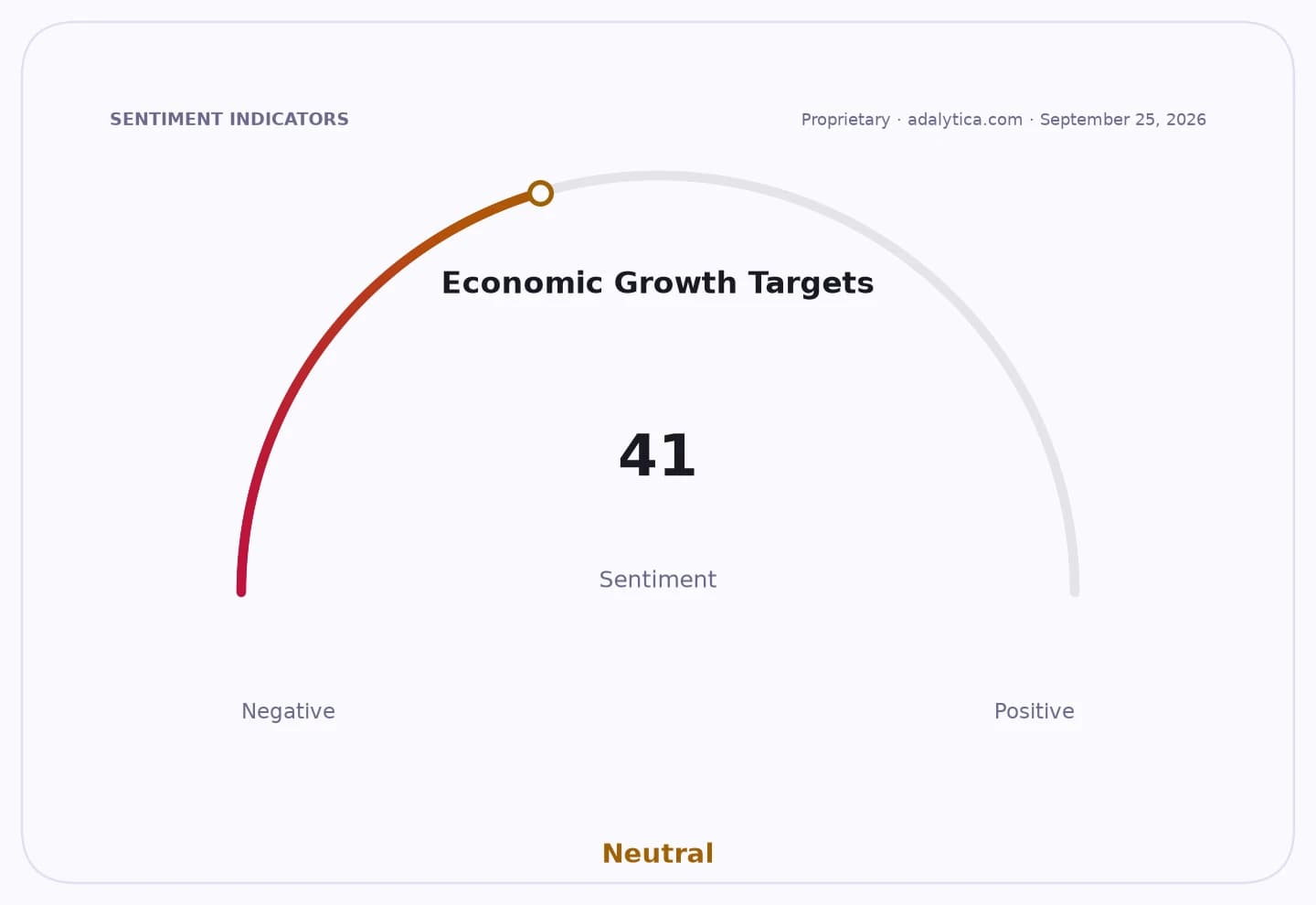
Sentiment IndicatorsⓘProprietary · adalytica.com · September 10, 2026
This is a snapshot — live sentiment, awareness and momentum for 130+ markets update continuously in the dashboard.Open AlphaPulse
Baidu, which has been pitching AI as its next growth engine, closed at 92.03 in the latest trading session, well below its 50-day moving average of 104.92 and its 200-day moving average of 122.48. The stock’s 14-day relative strength index was 48.2, while its MACD remained below the signal line, suggesting the recent rebound has lost momentum.
Alibaba was even weaker. The stock ended at 109.40, under both its 50-day average of 116.80 and its 200-day average of 134.07, with RSI at 20.9, a level that signals deeply stretched selling. PDD finished at 78.61, also below its 50-day average of 85.71 and its 200-day average of 97.65, with RSI at 14.0, a reading that points to heavy downside pressure.
The weakness comes as China’s AI companies increasingly compete not just in algorithms and infrastructure, but in the far messier economics of consumer acquisition. Subsidizing food delivery, entertainment and retail traffic may boost engagement in the near term, but it can also erode operating leverage and delay the margin gains investors want from AI monetization.
That is why the market is treating China’s AI push differently from the U.S. version. In the U.S., investors are still rewarding the owners of cloud and AI infrastructure. In China, the concern is that AI will be layered onto businesses already trapped in a price war, making “growth” look more like coupon spending than durable profit expansion.
Technical indicators reinforce the caution. Baidu’s stock remains below its longer-term trend line, while Alibaba and PDD are both trading far under their 200-day averages, a sign the market still wants proof that AI-driven traffic can convert into earnings rather than just usage.
The next catalyst is whether Beijing’s AI push and any new consumer or platform incentives can revive growth without deepening the discount war. Until investors see that AI can lift margins instead of compressing them, China’s tech giants are likely to stay in a market where cheap milk tea looks less like a perk and more like a warning.
| Entity | Gains | Losses |
|---|---|---|
| Consumers | ▲Cheaper food and app promotions | ▼Less durable pricing discipline |
| Platforms with deep pockets | ▲Faster user acquisition | ▼Lower margins and weaker cash flow |
| Baidu | ▲AI adoption narrative | ▼Profitability credibility |
| Alibaba and PDD | ▲Traffic and engagement | ▼Valuation support from earnings growth |