China is stepping up its diplomatic push in Southeast Asia, with Foreign Minister Wang Yi meeting officials from Thailand, Laos and Myanmar as Beijing works to tighten regional ties that matter for trade, border security and influence.
China meets Thailand, Laos and Myanmar on ties
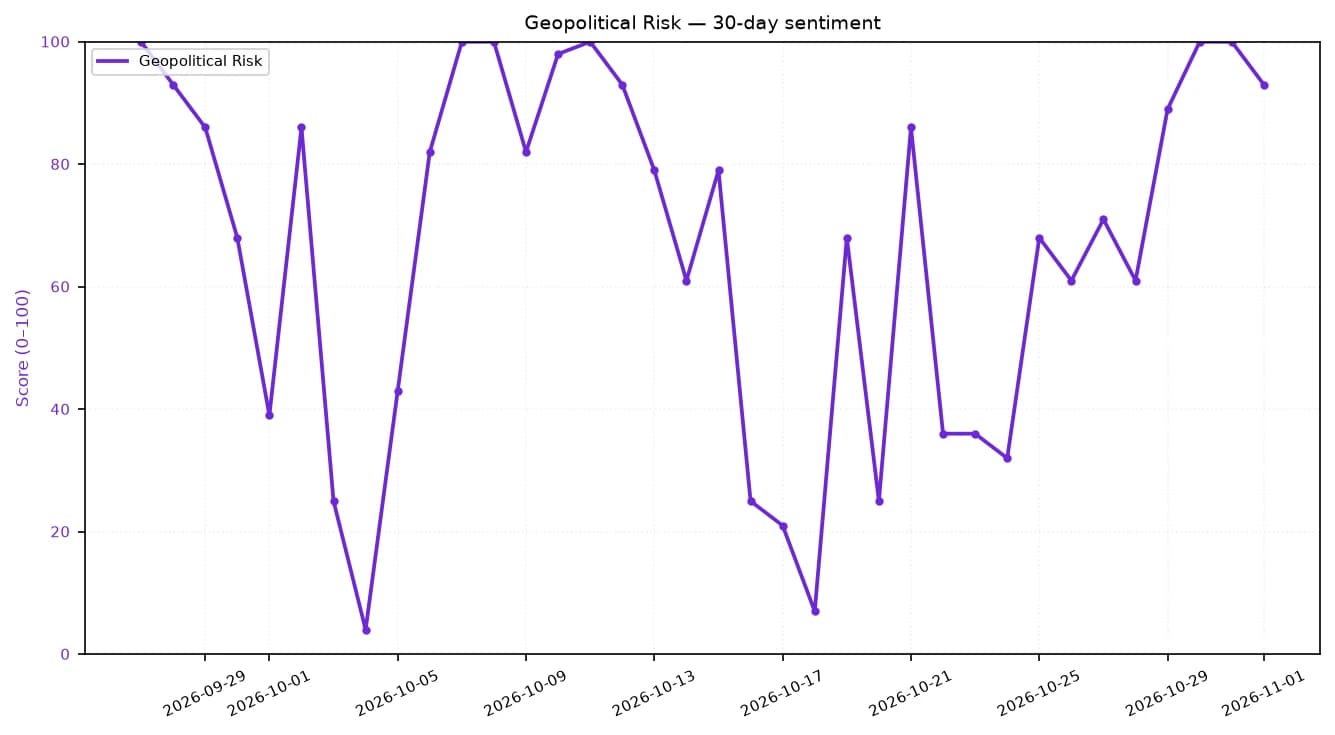
Geopolitical Risk
The meetings underscore China’s effort to reinforce its position in a neighborhood that is central to supply chains and cross-border commerce, while also using diplomacy to shape security cooperation on issues such as online fraud and trafficking networks along the Thai-Myanmar border.
Sentiment Indicators
Geopolitical Risk
Wang said China supports Myanmar’s government in pursuing political reconciliation, according to statements from China’s foreign ministry. That backing is economically and politically significant because Myanmar’s military-backed authorities are managing a civil war that has displaced more than 3.5 million people and disrupted regional stability, making any external support valuable for a government under pressure.
Thailand was also pulled into the discussion as Beijing and Bangkok look to intensify coordination against gambling and telecommunications fraud. The scams, often run from compounds near the border and staffed by trafficked workers, have become a growing cross-border crime problem that threatens consumer trust, law enforcement resources and regional mobility.
For investors, the immediate market read is less about a direct trade shock than about the risk premium on Southeast Asia’s integration with China. Closer political ties can support commerce and investment flows, but instability in Myanmar and persistent border crime can weigh on logistics, tourism and broader regional sentiment.
The diplomatic outreach also fits Beijing’s wider effort to stabilize relationships across Asia at a time when its trade and geopolitical channels remain sensitive. Any improvement in cooperation with ASEAN neighbors could help China protect regional economic links, even as conflicts and security disputes continue to complicate the outlook.
Adalytica’s US-China Relations Sentiment gauge stood at 75, while its Global Stability Sentiment index was also at 75, suggesting investors are still treating the broader geopolitical backdrop as supportive but fragile. The next catalyst will be whether Beijing can convert the talks into concrete border-security cooperation and deeper engagement with Myanmar and other ASEAN governments.
| Entity | Gains | Losses |
|---|---|---|
| China | ▲Regional influence | ▼Diplomatic friction |
| Thailand and Laos | ▲Security cooperation | ▼Border crime pressure |
| Myanmar junta | ▲External backing | ▼Isolation risk |
| Trafficking networks | ▲— | ▼Enforcement pressure |