China has opened the world’s first industrial plant to process ultra-low-grade iron ore, a move that could soften the country’s reliance on imported ore from Australia and Brazil and keep iron ore prices volatile even as demand in China improves.
China opens ultra-low-grade iron ore plant
The new facility in Anshan matters because it attacks one of the biggest structural vulnerabilities in China’s industrial economy: the country consumes more than half of global iron ore, yet imports more than 80% of its supply. Turning material once viewed as waste into saleable concentrate gives Beijing a new lever on a market that has long been dominated by Rio Tinto, BHP and Vale.
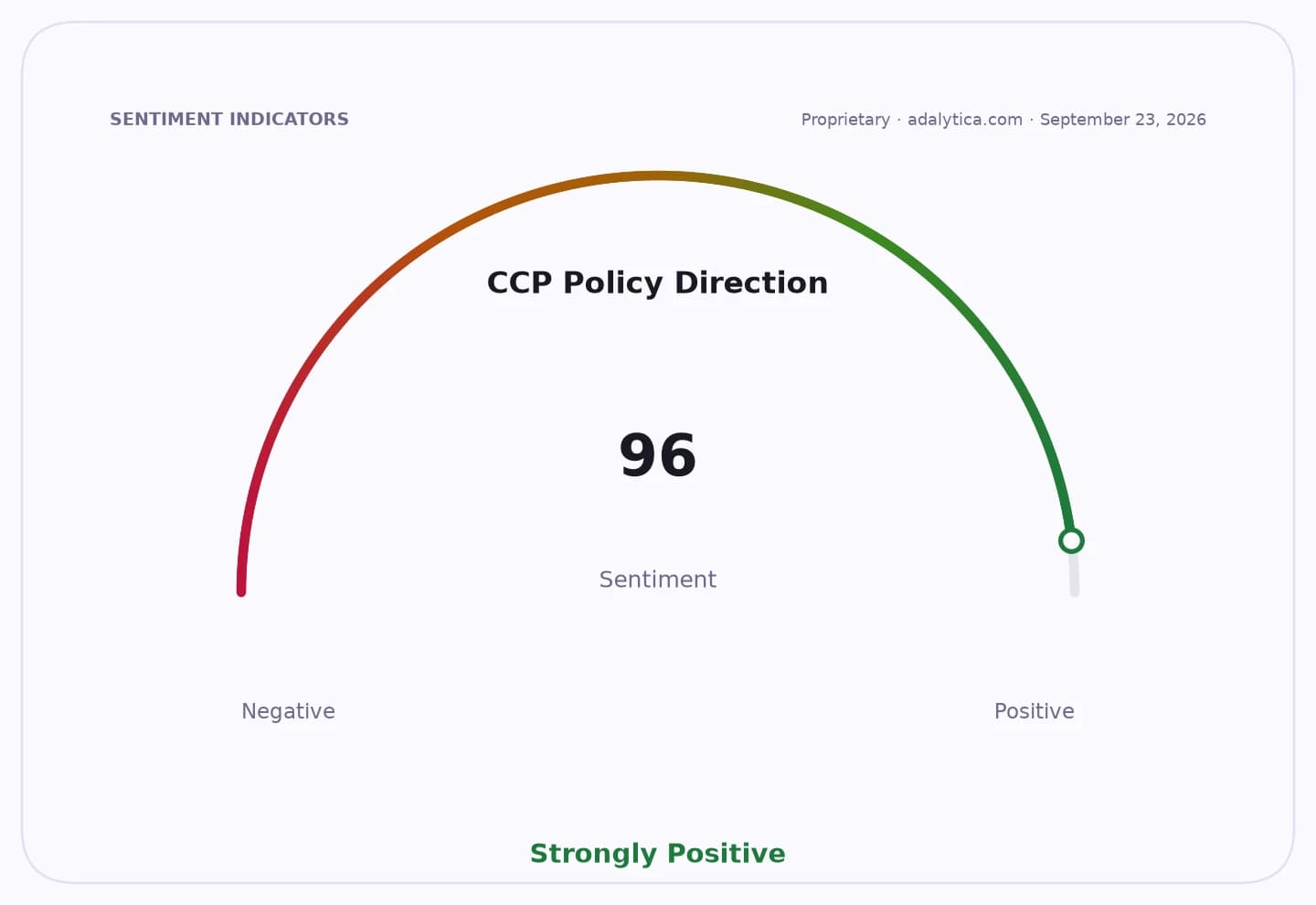
Sentiment IndicatorsⓘProprietary · adalytica.com · September 8, 2026
This is a snapshot — live sentiment, awareness and momentum for 130+ markets update continuously in the dashboard.Open AlphaPulse
That makes this far more than a mining-tech milestone. China is trying to convert domestic tailings and ore with just 11% metal content into a usable feedstock, and it has done so at industrial scale. The plant’s three production lines can process 5.56 million tons of raw material a year, with a reported 98% conversion rate and output purity of 65%. Energy use is also 35% lower than older roasting methods, which matters in a country under constant pressure to improve industrial efficiency and cut emissions intensity.
For investors, the implications run in two directions. On one side are the major seaborne iron ore exporters, especially BHP, Rio Tinto and Vale, which still benefit from China’s enormous import dependence. On the other is the possibility that Beijing’s push to exploit ultra-low-grade ore gradually erodes the pricing power of those suppliers at the margin by expanding an alternative source of feedstock. That does not replace seaborne imports overnight, but it does make China a more formidable buyer over time.
The timing is important. Iron ore has climbed back above $100 a ton as traders bet on steadier Chinese demand, and recent imports were stronger than expected after typhoon-related delays. But the latest plant shows that China is not waiting for the market to solve its supply problem. It is trying to engineer its own answer, one industrial line at a time.
That is why the opportunity is not simply in the miners most exposed to Chinese demand, but in the broader ecosystem that benefits from a longer cycle of heavy industrial investment: equipment makers, processing technology providers, rail and port infrastructure, and select Chinese industrial suppliers tied to resource efficiency. The market may still be underestimating how aggressively China will use technology to reduce its dependence on imported raw materials.
For now, the seaborne giants keep their scale advantage. But Anshan is a warning shot: the next marginal ton in iron ore may increasingly come from China’s own dirt, not from its overseas suppliers.
| Entity | Gains | Losses |
|---|---|---|
| China domestic miners/processors | ▲Higher utilization of local resources | ▼Upfront capex burden |
| BHP / Rio Tinto / Vale | ▲Still benefit from import dependence | ▼Marginal pricing power risk |
| Industrial equipment makers | ▲More demand for processing tech | ▼Limited downside |
| Iron ore import market | ▲Near-term demand remains strong | ▼Long-term supply share risk |