Chinese researchers are testing an autonomous robot in the Taklamakan Desert that can pull iron directly from sand, a low-cost resource hunt that could eventually reshape how miners think about hard-to-access deposits.
Chinese researchers test desert robot to pull iron from sand
The machine’s appeal is not just the science-fiction look. It ran for 12.5 hours on a 20,000 mAh battery, moved steadily at about 1.5 centimeters per second and stayed stable on slopes of up to 20 degrees, according to the research team at Tarim University.
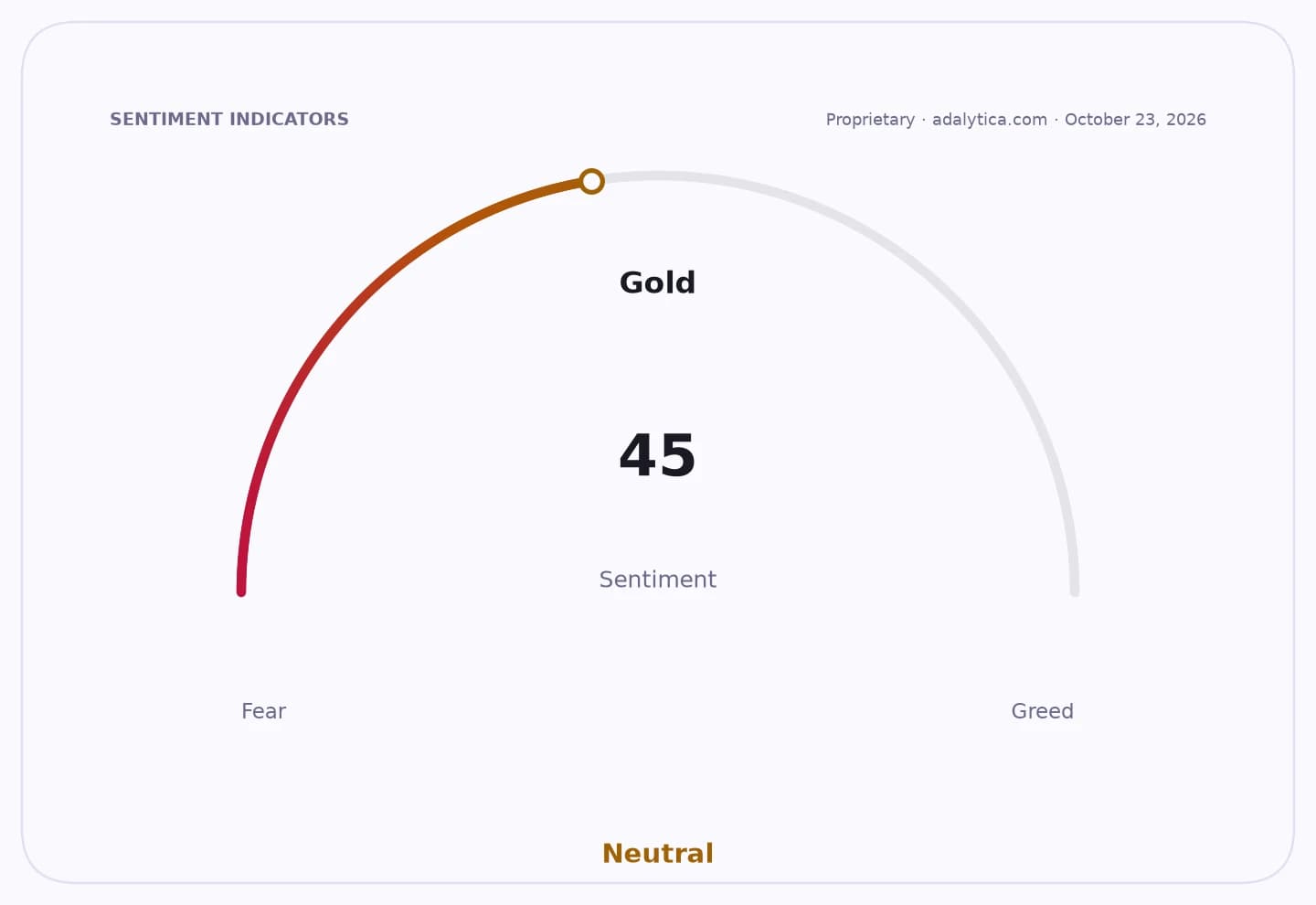
Sentiment IndicatorsⓘProprietary · adalytica.com · October 22, 2026
This is a snapshot — live sentiment, awareness and momentum for 130+ markets update continuously in the dashboard.Open AlphaPulse
The project matters economically because it targets ferromagnetic material that has long been uneconomic to recover. Researchers say prior studies estimated Taklamakan sand contains about 6% iron, and they argue autonomous harvesting could cut both energy use and logistics costs versus conventional mining in a desert that spans roughly 337,600 square kilometers.
That makes the test relevant for miners and equipment makers as the industry looks for cheaper, lower-carbon ways to access raw materials. The timing also lands as iron ore prices have weakened to a two-year low, pressuring producers such as BHP, Rio Tinto and Vale even after BHP reported record output in Western Australia and continued cost leadership in iron ore.
For investors, the story is less about immediate earnings impact than about the long-term option value of automation in mining. Technologies that can operate without a human in the loop, powered by solar panels and guided by navigation algorithms, point to a future where marginal deposits or remote resources may become viable earlier than expected.
The wider market backdrop is mixed: iron ore demand still leans on China, but supply growth and softer pricing have kept pressure on miners’ shares. BHP and Rio Tinto have both been volatile, while Vale remains sensitive to iron ore price swings and the market’s view on demand resilience.
If the Taklamakan tests prove scalable, the bigger implication is not a single desert robot but a new model for resource extraction in extreme environments. The next catalysts are follow-up field results, any move toward commercialization and whether larger miners or industrial robotics firms decide the economics are worth copying.
| Entity | Gains | Losses |
|---|---|---|
| Tarim University researchers | ▲Technical validation | ▼Engineering risk if scaling fails |
| Mining automation firms | ▲New use case | ▼Slow adoption if costs stay high |
| Iron ore producers | ▲Cheaper extraction options | ▼Pressure to invest in new tech |
| Traditional miners in high-cost regions | ▲Potential efficiency gains | ▼Marginal deposits remain uncompetitive |