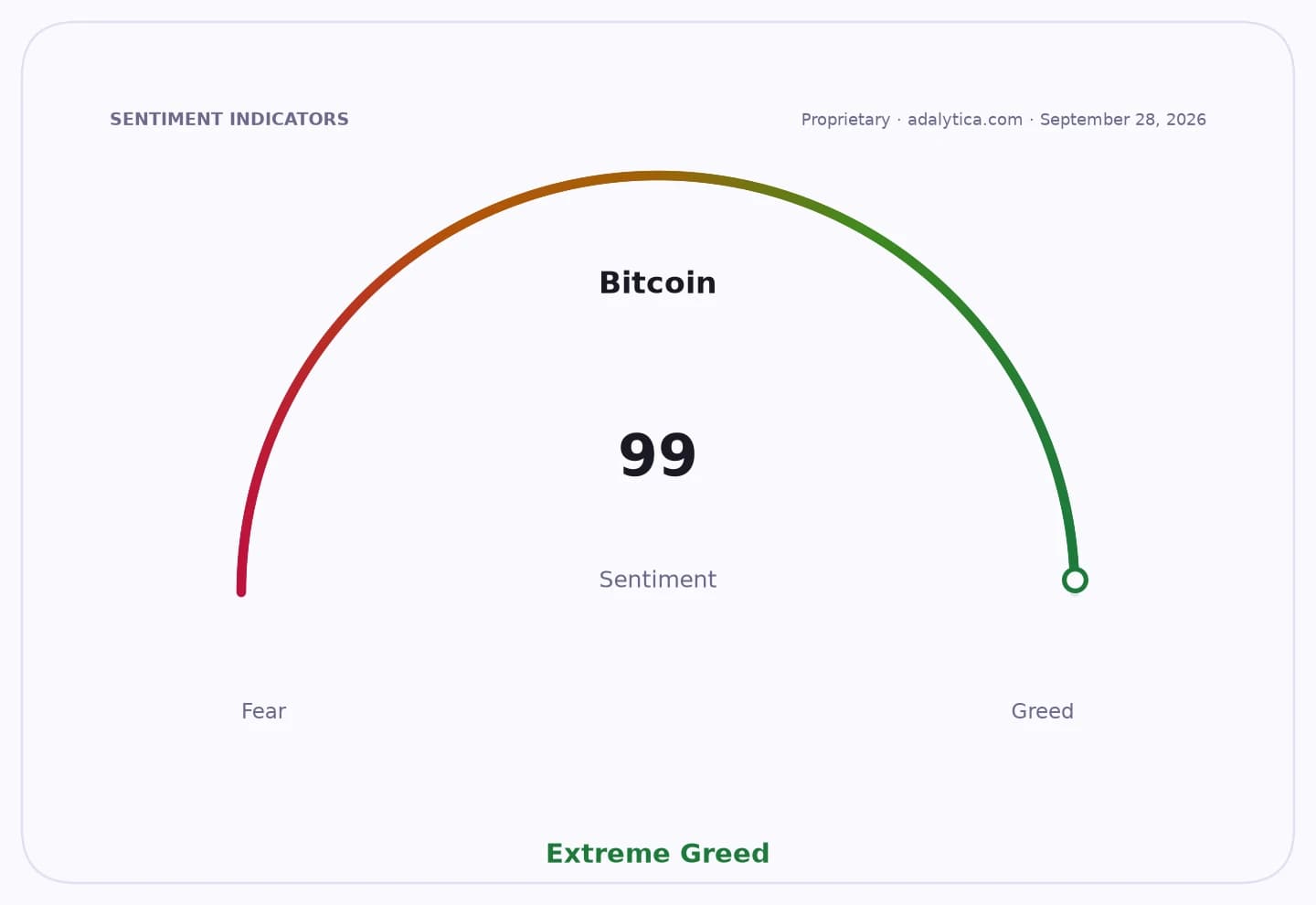
Circle’s Arc blockchain is now live with a fee structure that puts USDC at the center of onchain payments, a design that could make the network more usable for institutions and less dependent on the volatility of a native token.
Circle Arc Mainnet Launches With USDC Fees
The public mainnet launched Sept. 16 with EVM compatibility and sub-second settlement finality, and Circle says transaction costs are meant to run at about 1 cent apiece in USDC terms. That matters because treasury teams, payment processors and market infrastructure firms can budget in dollars without worrying about a network fee that swings with crypto prices.
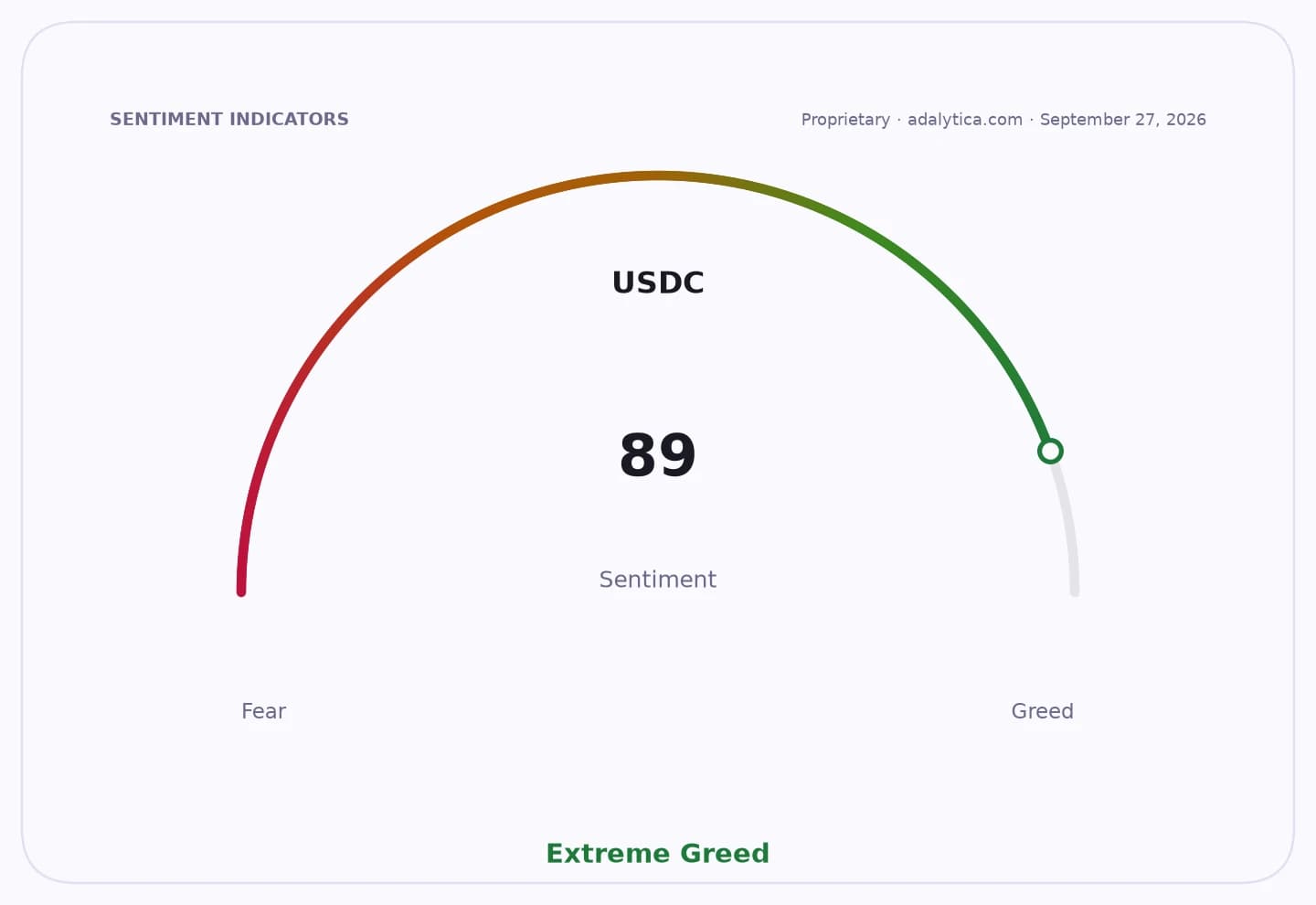
Sentiment IndicatorsⓘProprietary · adalytica.com · September 27, 2026
This is a snapshot — live sentiment, awareness and momentum for 130+ markets update continuously in the dashboard.Open AlphaPulse
Chief Executive Jeremy Allaire called Arc “the most consequential major platform launch” in Circle’s history, even more than USDC itself. The statement underscores Circle’s ambition to turn its stablecoin into core financial plumbing rather than just a trading pair or settlement asset.
The key twist is that ARC, the network’s native token, is not the gas token. Circle minted the full initial supply of 10 billion ARC tokens at genesis, but said the token is not publicly available and that the mint does not amount to a commitment to launch it publicly.
Instead, ARC is framed as a coordination asset for security, utility and governance, while fees stay in USDC. For investors, that setup keeps the economics anchored to Circle’s flagship stablecoin while avoiding the immediate problem of forcing institutions to hold and spend a volatile governance token.
The launch is aimed squarely at major financial firms. Founding validators include BlackRock, Visa, Mastercard, ICE and DTCC, with more than 100 institutions and companies involved at launch, giving Arc an unusually heavyweight roster for a new layer-1 chain.
Circle is also pitching Arc as a settlement layer for cross-border and multi-currency use cases. The network supports more than 20 fiat-backed stablecoins, including EURC, JPYC, KRW1 and TRYB, and connects to more than 20 blockchains through Circle’s Cross-Chain Transfer Protocol.
The permissioned validator model reinforces that institutional focus. Arc currently runs on approved proof-of-authority validators, and Circle says it is exploring a transition to proof of stake in 2027, a path that could eventually give ARC a larger role in network security.
Circle is also working on opt-in privacy features that would allow confidential transactions and balances to be read through view keys by authorized parties. That could be important for banks and asset managers that want public-chain settlement without exposing positions, though the feature has not shipped yet.
Circle shares have been volatile around the launch, with the stock recently trading near $89 after a sharp run-up earlier in the year. For investors, the main question is whether Arc helps Circle expand USDC usage beyond crypto trading into institutional payments and market infrastructure, or whether the new chain remains a high-profile but limited pilot.
The next catalysts are straightforward: validator adoption, any progress on privacy tools, a possible future path for ARC governance, and whether Circle can turn the launch into measurable USDC transaction volume.
| Entity | Gains | Losses |
|---|---|---|
| Circle | ▲More USDC utility | ▼Higher execution risk |
| Institutions | ▲Predictable dollar fees | ▼Less token flexibility |
| ARC token | ▲Governance optionality | ▼No gas demand |
| Competing layer-1s | ▲Institutional benchmark pressure | ▼Potential share loss |