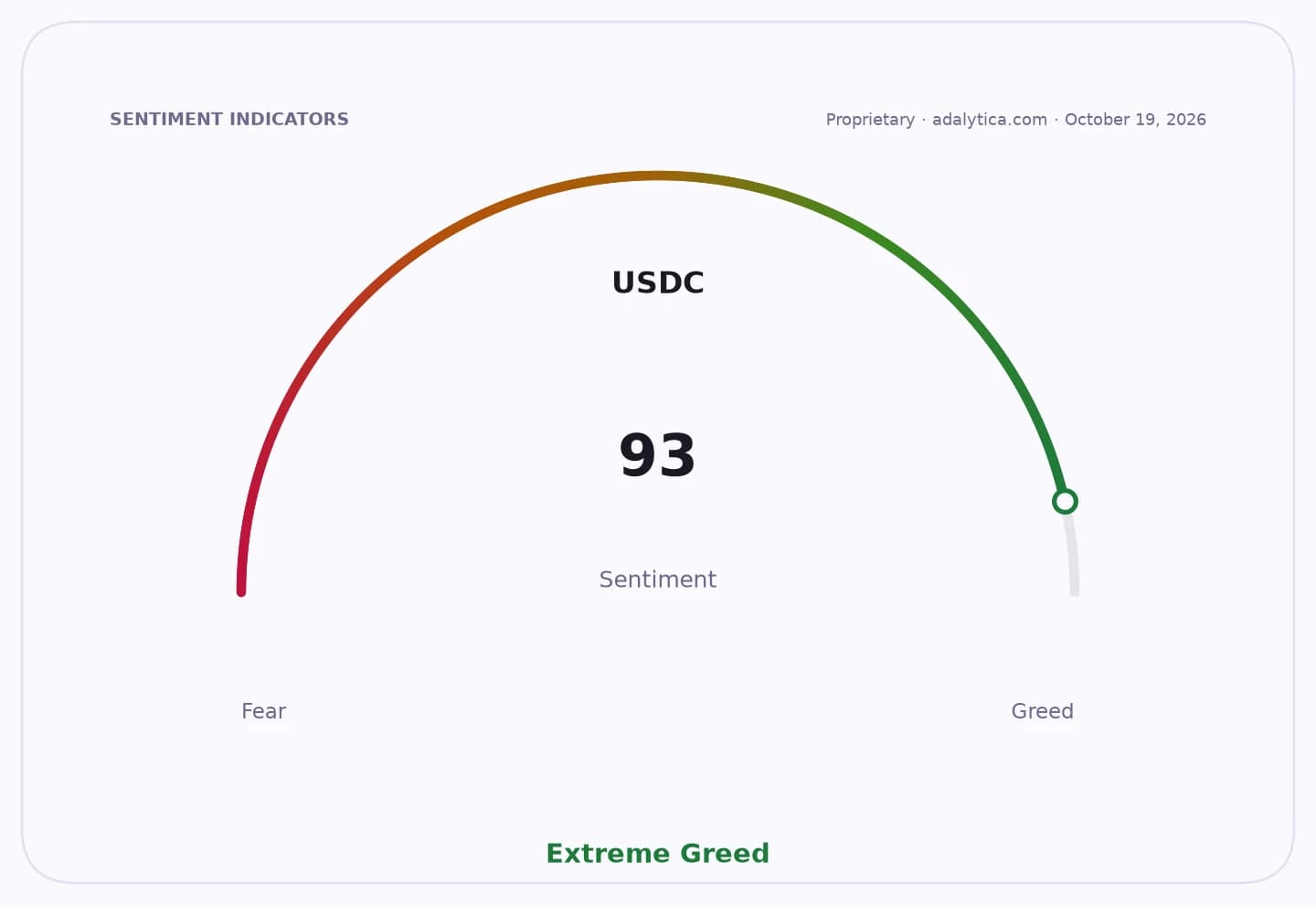
USDC’s push into about 40 emerging markets is the most important signal yet that stablecoin liquidity is moving from a crypto-native niche to a global payments rail, and that matters because fresh dollar-linked demand is what can restart a sluggish digital-asset cycle.
Circle USDC expansion into emerging markets

Circle said it plans to expand across Southeast Asia, Latin America, Africa and the Middle East as organic demand for stablecoins broadens beyond trading. That is not just a growth story for Circle Internet Group; it is a bid to place USDC at the center of cross-border commerce, remittances and treasury flows in regions where dollars are often scarce, banking is fragmented and capital mobility is constrained.
Sentiment IndicatorsⓘProprietary · adalytica.com · October 21, 2026
This is a snapshot — live sentiment, awareness and momentum for 130+ markets update continuously in the dashboard.Open AlphaPulse
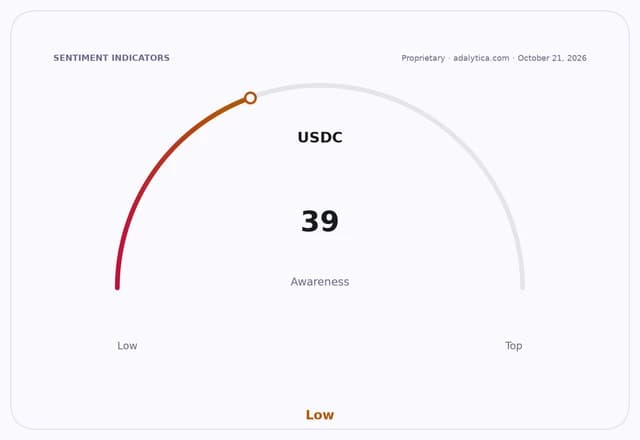
For investors, the significance is twofold. First, more real-world usage can deepen USDC circulation and tighten Circle’s grip on a market where it already processed more than $36 trillion in on-chain transaction value and accounted for about 77% of stablecoin transaction volumes in June, up from 60% a year earlier. Second, a larger, stickier base of USDC users can support Circle’s valuation by making its revenue engine less dependent on crypto trading sentiment and more tied to structural adoption.
The timing matters. Crypto entered the fourth quarter with liquidity still weak, as the stablecoin market cap struggled to clear $310 billion and bitcoin slipped 2.5% while failing to regain the $90,000 area. DeFi total value locked has also fallen by more than $6 billion this month after a sharp Q3 run. In plain terms, the market is missing the fuel needed for a sustained rally, and stablecoins are the fuel.
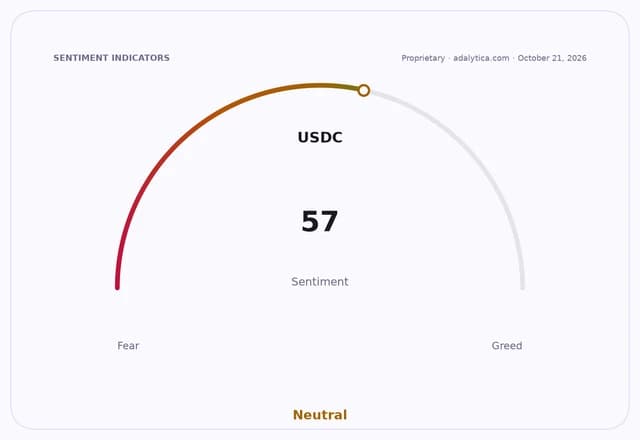
That is why Circle’s capital allocation is important. The company said it generated about $1.4 billion in revenue in the first half of 2026, with $819 million paid to distribution partners and transaction costs and $473 million invested in infrastructure, compliance and product development. Circle is effectively spending to build a global liquidity network, not just to defend a token.
The stock market is already treating that as a high-conviction growth story. Circle shares rallied 31% in the third quarter alongside a $3 billion increase in USDC market cap, while USDT’s market value slipped modestly. That divergence shows investors are beginning to price in a world where regulated, dollar-backed stablecoins take share from older incumbents and become more embedded in payments and settlement.
Our thesis is simple: the market underestimates how quickly stablecoin adoption can compound once it crosses into emerging-market payments and commerce. If USDC’s expansion accelerates, it can pull more capital into crypto markets, strengthen Circle’s network effect and create a second-order lift for exchanges, custody platforms and payment rails tied to digital dollars. The next catalyst is not another speculative meme cycle — it is whether USDC can become the default liquidity layer for the global south. Position early.
| Entity | Gains | Losses |
|---|---|---|
| Circle / USDC | ▲More circulation, higher adoption | ▼Execution and compliance costs |
| Crypto market | ▲Fresh liquidity, stronger flows | ▼None if liquidity stays weak |
| Coinbase (COIN) | ▲More stablecoin activity, trading support | ▼Crypto slowdown, lower volumes |
| USDT / Tether | ▲Less share if USDC keeps gaining | ▼Market share pressure |