Coal prices fell on Monday as a sharp drop in crude oil and weaker Chinese fossil-fuel power generation reinforced a bearish outlook for the fuel, pressuring producers and keeping investors on edge.
Coal Prices Fall as Oil and China Demand Weaken
Coal
Newcastle coal for November delivery slipped 50 cents to $145.25 a ton, while the December contract fell $2.35 to $144.40 and January 2027 eased to $144.10. Rotterdam prices also weakened, with November down $1.40 to $135 a ton and January off $2.55 to $133.20.
Sentiment Indicators
The move matters because coal remains highly sensitive to broader energy pricing and to Chinese industrial demand. When oil loses ground, traders often reassess the competitiveness of other fossil fuels, while softer power burn in China points to a cooling of one of the world’s biggest coal markets.
Brent crude dropped $3.40, or 3.6%, to $92.44 a barrel and U.S. West Texas Intermediate fell 3.2% to $85.72 after concerns eased over supply through the Strait of Hormuz. That oil slump added pressure across the energy complex and fed into expectations that global supply could outpace demand.
China, the world’s largest coal consumer, provided the other major drag. Official data showed thermal power generation fell year on year for a fourth straight month through October, while fossil-fuel power output dropped 7.3% in October alone. For January through October, fossil-fuel generation was essentially flat, down 0.1% from a year earlier.
For investors, the slide underscores how fragile the coal rally has become even after recent support from winter demand and supply constraints. U.S.-listed coal stocks reflected the strain: Peabody Energy closed at $16.92, near the lower end of its recent range, while Warrior Met Coal finished at $80.06, below its 50-day and 200-day moving averages.
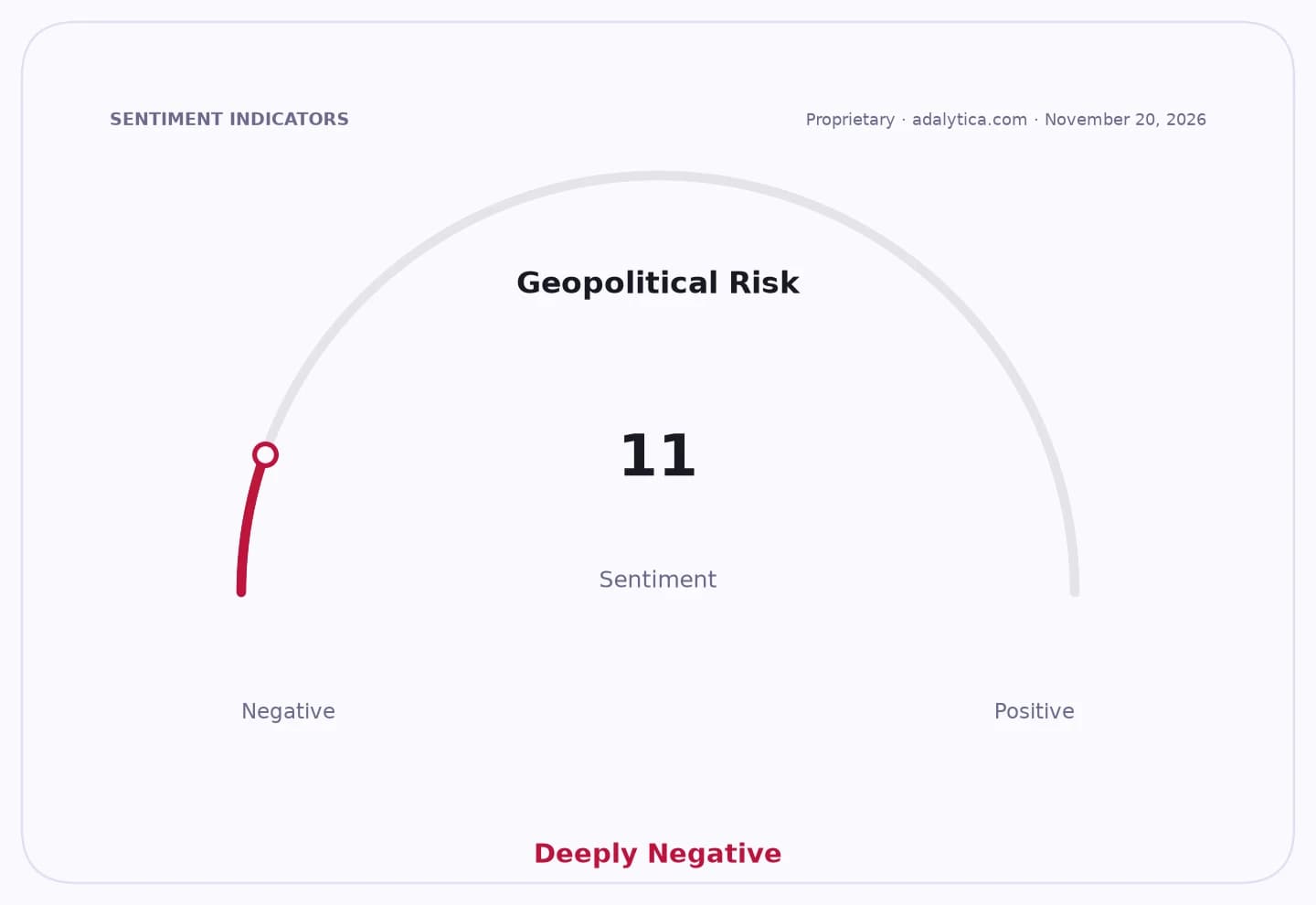
Adalytica’s Coal Fear & Greed Index stood at 4, or “Extreme Fear,” while its global stability gauge also showed extreme fear, signaling a market where negative sentiment is dominating positioning. The next key watchpoint is whether China’s power demand stabilizes or whether further crude weakness keeps coal under pressure into year-end.
| Entity | Gains | Losses |
|---|---|---|
| Coal consumers | ▲Lower input costs | ▼— |
| Coal producers | ▲— | ▼Softer spot pricing |
| Energy traders | ▲Volatility opportunities | ▼Long coal exposure |
| China power generators | ▲Cheaper fuel backdrop | ▼Weak demand signal for coal miners |