Mauricio Reina’s warning in Cartagena was not just about Colombia’s growth rate — it was about the country’s economic model, and why investors should care that it may be running out of room.
Colombia growth model faces spending and investment debate
The Fedesarrollo research chief said Colombia has been expanding on the back of public spending and consumption since the pandemic, but that pattern is unsustainable because it has left the economy overheated, pushed up inflationary pressures and weakened productive capacity. His prescription was blunt: the government has to cut public spending, reduce the state’s role in driving growth and make room for a stronger private sector.
Sentiment IndicatorsⓘProprietary · adalytica.com · October 1, 2026
This is a snapshot — live sentiment, awareness and momentum for 130+ markets update continuously in the dashboard.Open AlphaPulse
That argument matters because Colombia’s recent expansion has been supported less by investment and more by demand. Reina said the country grew close to 5% a year in the first 15 years of the century, but is now growing at roughly half that pace. In his view, the slowdown from around 4.7% growth to about 2.7% reflected a contraction in productive capacity as investment lagged the economy’s earlier peak. He estimated the unused expansion potential at about 7 percentage points of GDP, or roughly 140 trillion pesos a year, implying a sizable gap between what Colombia produces and what it could produce if capital formation recovered.
For investors, the message is two-sided. The bullish case is that Colombia still offers scope for a rebound if policy becomes more disciplined and private investment returns, especially after years in which consumption, dollar-driven import power and public outlays did most of the heavy lifting. Reina said that under the government’s preferred path, growth could eventually rise above 4% within four years, which would materially improve corporate earnings, tax receipts and asset valuations.
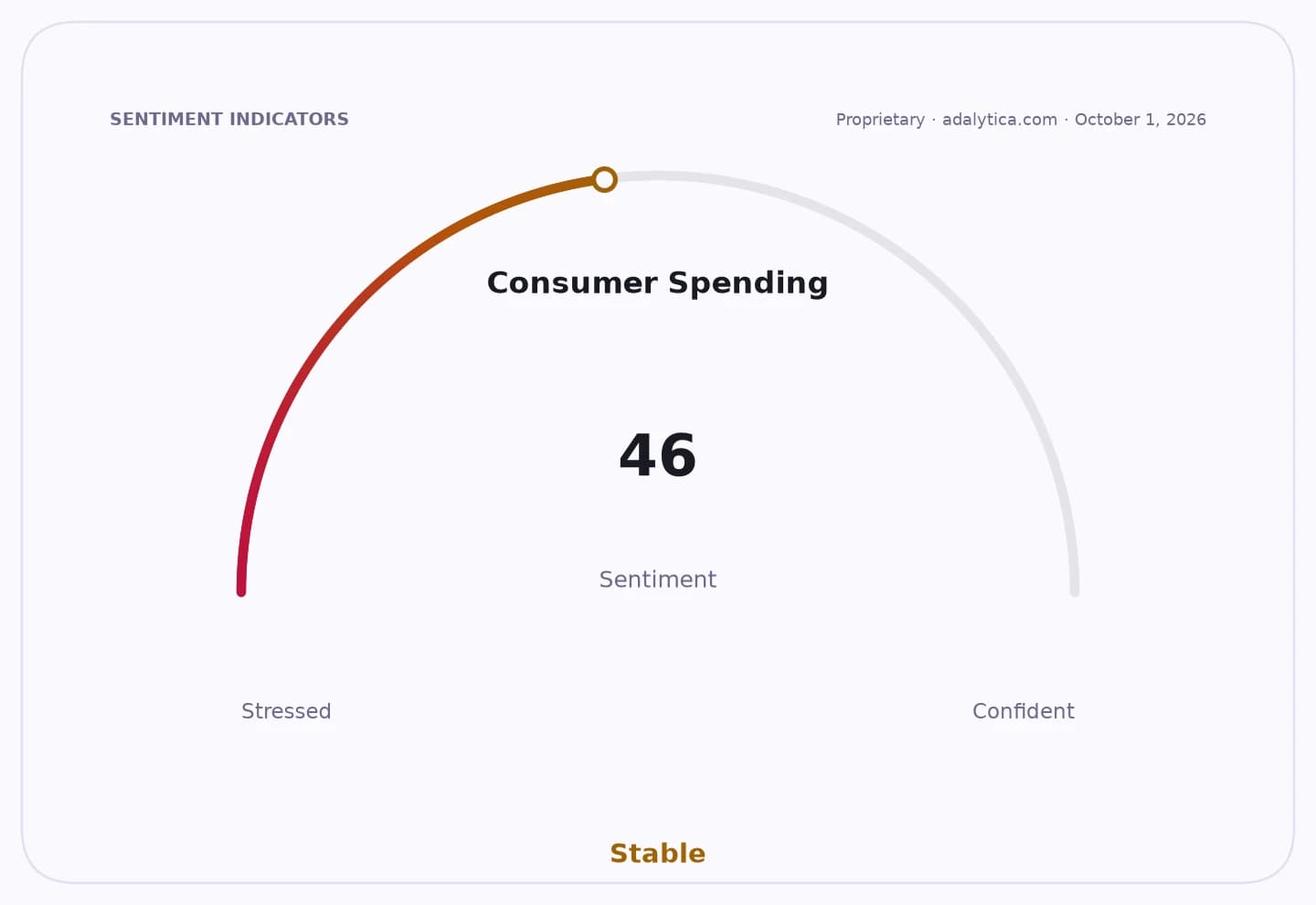
Consumer Spending — 30-day sentimentadalytica.com
Explore this data interactively — full history, time series and cross-market comparisons.Open AlphaPulse
The bearish case is that the adjustment will not be painless. Cutting public spending in an economy that has relied on it for demand support risks slowing activity in the near term, while the country’s ability to attract capital will depend on whether fiscal restraint comes with policy credibility, lower inflation and a better environment for business formation. The equity market data in the background reflects that tension: Colombia-linked stocks have been volatile even as some financial names have outperformed on expectations of stabilization, while technical readings on several names have turned weaker after recent gains.
The broader narrative is that Colombia is moving into the same fiscal debate now gripping parts of Europe: whether governments can preserve growth while tightening budgets. Reina’s view is that the answer in Colombia is no, unless the private sector is allowed to take over the role the state has been playing. For markets, that means the next phase of the story will be less about headline GDP and more about whether austerity, credibility and investment can arrive at the same time.
| Entity | Gains | Losses |
|---|---|---|
| Private sector | ▲More room to invest | ▼State crowding-out |
| Fiscal credibility | ▲Lower deficits, better confidence | ▼Short-term demand support |
| Consumers | ▲Lower inflation over time | ▼Weaker public spending tailwind |
| Government spending | ▲Budget discipline | ▼Political and growth influence |