Colombia’s inflation is now expected to end 2026 at 6.82%, underscoring why the central bank is likely to keep borrowing costs elevated and why local assets remain hostage to a slower normalization cycle.
Colombia Inflation Seen at 6.82% in 2026 Survey
That is the key market message from Fedesarrollo’s latest Financial Opinion Survey: price pressures are easing only gradually, still well above the Banco de la República’s 3% target, and nowhere near a level that would justify aggressive rate cuts. For investors, that keeps the entire Colombian rate complex, the peso and domestic equities tied to a restrictive policy backdrop for longer than the market would like.
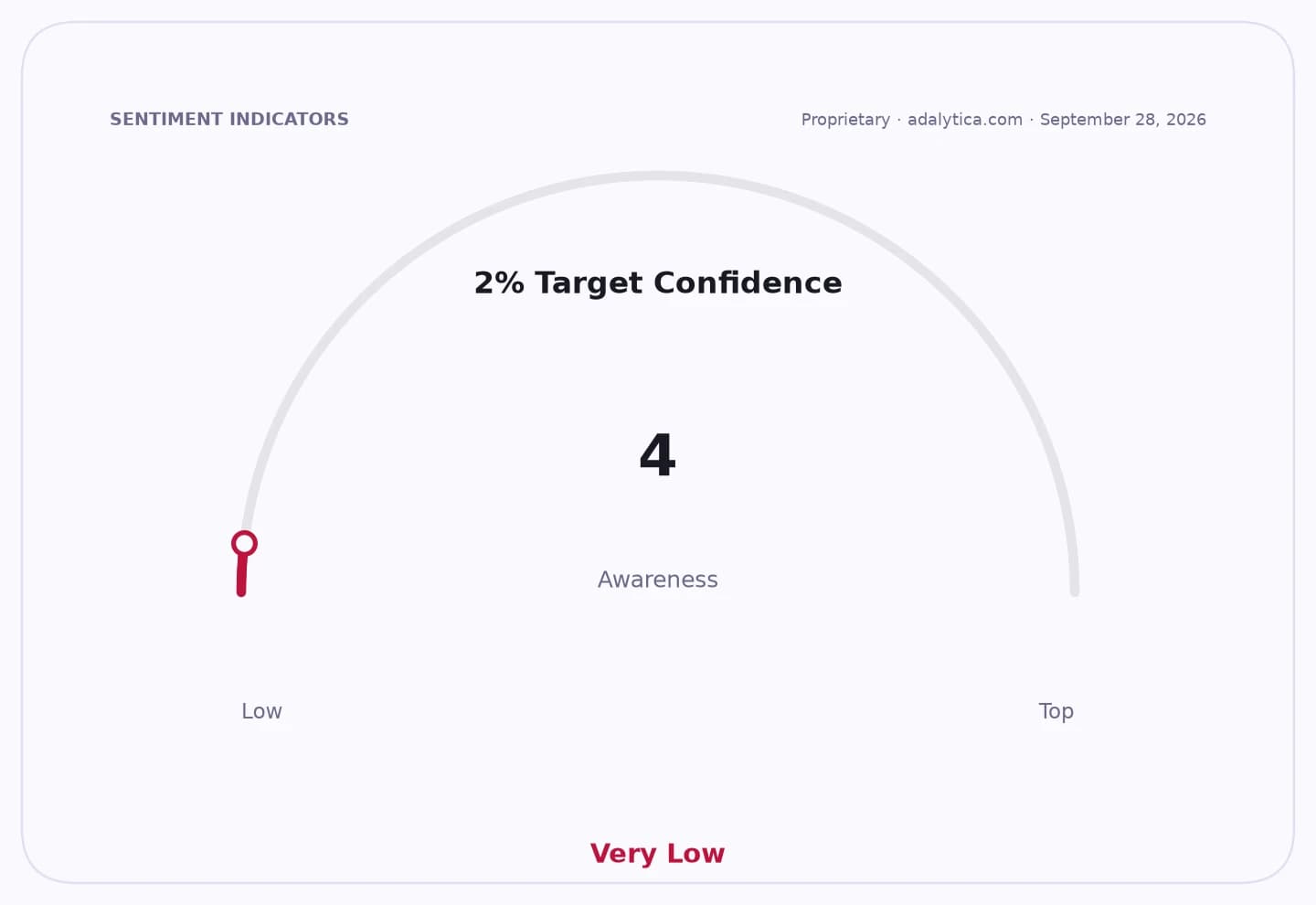
Sentiment IndicatorsⓘProprietary · adalytica.com · September 28, 2026
This is a snapshot — live sentiment, awareness and momentum for 130+ markets update continuously in the dashboard.Open AlphaPulse
The latest forecast is more than a statistical tweak. It implies inflation remains stubborn even after the annual reading has drifted down from recent peaks, with analysts now seeing year-end consumer prices at 6.82% instead of a cleaner glide path back toward target. Fedesarrollo’s survey also shows expectations for the policy rate staying at 12% at the next meeting and ending the year at 12.25%, a clear signal that monetary easing is still a distant prospect. In practical terms, Colombia’s central bank is being forced to choose between supporting growth and preserving credibility on inflation — and right now, credibility is winning.
That matters because high rates filter through every corner of the economy. They keep funding costs elevated for households and businesses, pressure credit demand, and constrain valuation multiples for interest-rate sensitive sectors. They also matter for foreign investors, who continue to weigh Colombia’s carry against currency risk and policy uncertainty. The survey’s exchange-rate view still points to a year-end peso near COP 3,240 per dollar, while the economy is projected to expand 2.5% in 2026 — respectable, but not strong enough to offset the drag from tight money.
The broader macro picture is one of lingering inflation inertia rather than a decisive disinflation trend. Analysts also lifted their Brent outlook, now seeing crude at $95 a barrel by December, which could help Colombia’s external accounts and fiscal receipts, but it does little to solve the domestic price problem. Higher oil can support export revenues and the peso at the margin, yet it can also complicate the inflation outlook if imported costs stay sticky.
For investors, the asymmetry is in being selective. Banks and lenders can benefit from higher-for-longer rates only if credit quality holds; otherwise, the earnings upside is quickly swallowed by slower loan growth and higher provisioning. Consumer-facing names remain exposed to weak real purchasing power. The more attractive setup is in exporters and firms with dollar-linked revenues, while rate-sensitive domestic plays likely stay capped until inflation convincingly breaks lower.
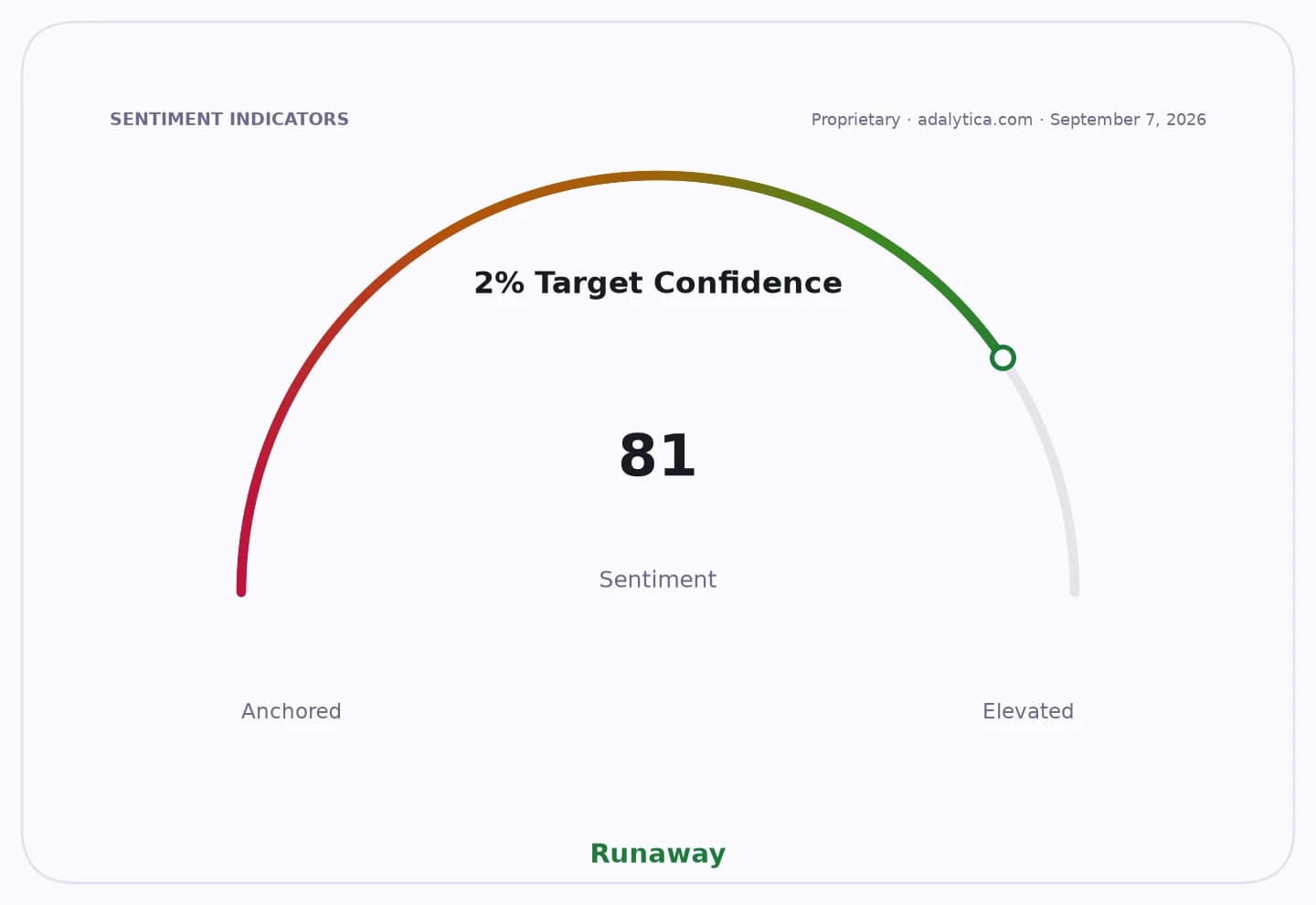
Adalytica’s confidence gauge on the Fed’s 2% inflation target remains in fear territory, and long-term inflation expectations are also flashing caution — a reminder that credibility is still being rebuilt. In a market like this, the winning strategy is not to chase an early easing trade. It is to position for prolonged policy restraint, sticky inflation, and the companies that can thrive while Colombia waits for prices to come down.
| Entity | Gains | Losses |
|---|---|---|
| Banco de la República | ▲Policy credibility | ▼Growth support |
| Colombian exporters | ▲Peso tailwind | ▼Import costs |
| Domestic borrowers | ▲None | ▼High financing costs |
| Banks/lenders | ▲Higher yields | ▼Credit demand risk |